
The difficult part of working out what to pack for a day hike isn’t actually remembering the obvious things – it’s knowing when to stop!
I’ve done it myself plenty of times. You start with water, a jacket and something to eat, then begin thinking about everything that could possibly go wrong. Perhaps you should take another warm layer. A second lunch might be sensible. Maybe a larger first-aid kit, extra batteries, spare clothes and enough snacks to keep a small walking group alive until the first Tuesday of next month. Before long, a straightforward afternoon hike has somehow acquired the packing requirements of a major expedition.
The problem is that every extra item seems harmless while you’re packing at home. Another warm layer hardly feels excessive, a few extra snacks barely take up any room, and that piece of gear you’ve never actually used suddenly seems like exactly the sort of thing you’d regret leaving behind. It’s only halfway up a hill, with the straps digging into your shoulders, that you start wondering why you brought half of it.
What to pack for a day hike depends on the route, weather and how far you’ll be from help, but most hikers need water, food, a waterproof jacket, a warm layer, navigation, a charged phone, personal medication, a compact first-aid kit and a headtorch. Start with those essentials, then add only what the conditions and the particular walk genuinely require.
That final part is what keeps the bag under control, because a day hike can mean almost anything. A two-hour woodland loop near home is very different from a full day across open moorland, and neither should be packed for in exactly the same way. The weather matters, the terrain matters, and so does how easy it would be to shorten the route or reach help if something went wrong.
The aim isn’t to carry the lightest possible bag at any cost – although that does make an interesting challenge! But leaving behind water, navigation or a waterproof jacket just to save weight isn’t clever, especially in the sort of British weather that can produce sunshine, rain and a cold wind before you’ve finished your first sandwich. But carrying bulky equipment for situations you’re not likely to encounter doesn’t make you safer either. It mostly just makes the hike harder work (and much less fun!).
A well-packed daypack should cover the things that would genuinely matter if the walk took longer than expected, the weather changed or somebody developed a minor problem. Beyond that, every item should have a reason for being there. Not a vague sense that it might somehow prove useful, but an actual job connected to the day ahead.
So rather than starting with a huge checklist and trying to squeeze all of it into a backpack, begin with the hike itself. Once you know how long you’ll be out, what the terrain is like, what the forecast is doing and how remote the route will be, the packing becomes much easier.
Contents
- Start With the Hike, Not the Backpack
- The Day Hike Packing Checklist
- What You Can Usually Leave at Home
- How to Pack Your Day Hiking Backpack
- Frequently Asked Questions
- Final Thoughts
Start With the Hike, Not the Backpack
Before you put anything in the bag, take a proper look at the walk you’re planning.
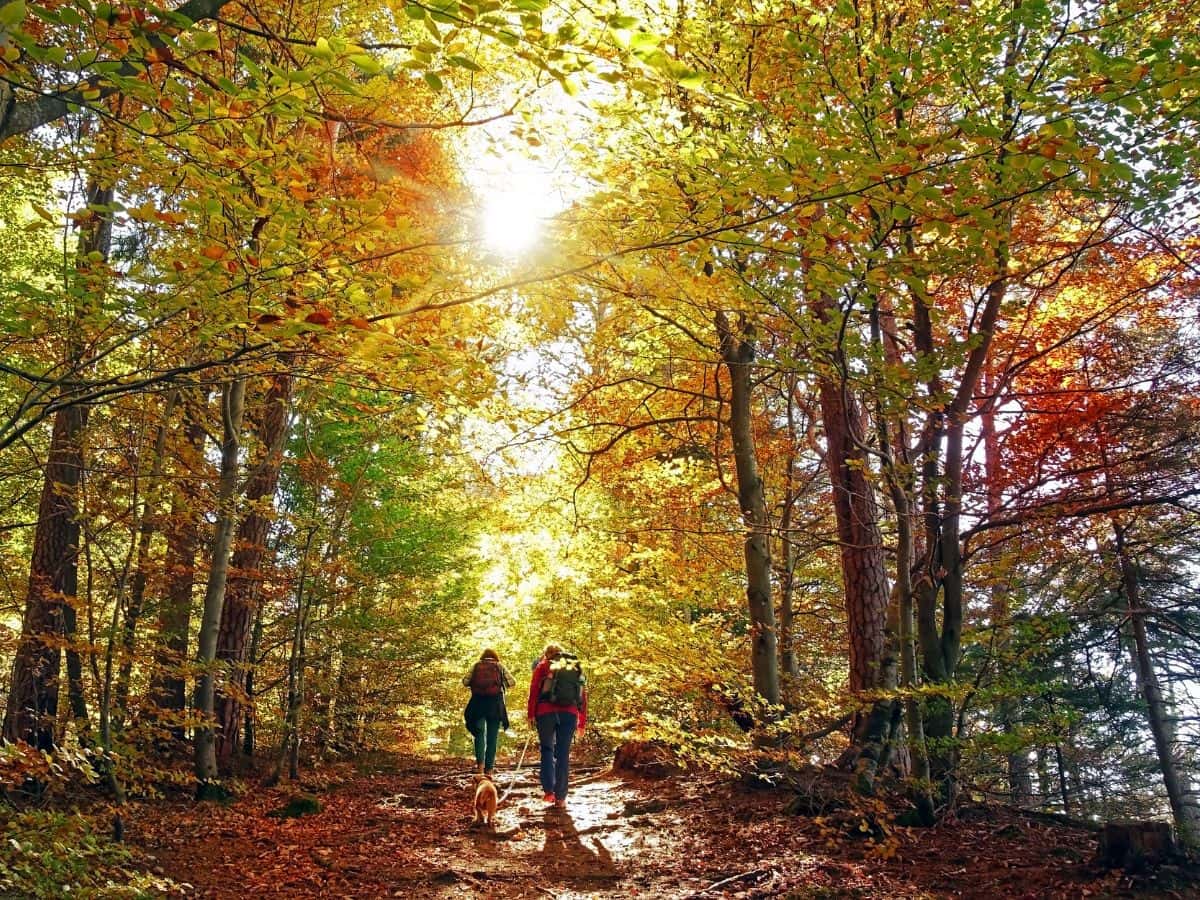
Distance is the obvious place to start, but it doesn’t tell you everything. Five miles along a flat, well-marked path near home is one thing. Five miles over steep ground, loose stones or a muddy route that refuses to let you move at a normal pace can take far longer and ask much more of you.
The time shown by a route-planning app is only an estimate. It doesn’t know how often you’ll stop, whether the path has recently become a swamp or how long you’ll spend at one junction trying to decide which of three equally unconvincing tracks is the correct one.
So think about how long the walk should take, then allow for the possibility that it may take longer. If you’re expecting to be out for four hours, you don’t need to prepare for an overnight stay, but you should have enough food, water and daylight to cope with five or six.
How easy it is to change the plan matters too. Some routes pass through villages, cross roads or loop back towards the start, giving you several chances to shorten the walk. Others head steadily away from civilisation until turning back takes almost as long as carrying on. The farther you’ll be from an easy exit, the more carefully you need to think about navigation, clothing and emergency kit.
The terrain also affects all of that because it changes both your pace and your exposure. A woodland path may be sheltered and fairly easy to follow, while open hills leave you with very little protection from wind, rain or poor visibility. Coastal routes can feel mild when you set off, then surprisingly cold once you’ve been walking into the breeze for an hour. Even a field path can become slow, slippery work after several days of rain.
That’s why the forecast needs to be considered alongside the route rather than checked as a separate formality before you leave. Ten degrees on a sheltered path near town may feel perfectly comfortable, but the same temperature can feel very different on higher ground with a strong wind and nowhere to get out of it. Look at the rain, temperature, wind and daylight hours, then imagine what those conditions will actually feel like on the terrain you’ve just been studying.
By this point, you should have a much clearer idea of how much you’ll need to carry. A short local walk in mild weather might fit comfortably into a 10 to 15-litre bag, because there’s less food, clothing and emergency kit to account for. Most ordinary day hikes sit somewhere around 18 to 25 litres, while winter routes, family walks and more remote days may need a little extra room.
I’d still avoid choosing a large backpack simply because it gives you options. Empty space has a habit of making perfectly unnecessary items look worth bringing, and before long you’re carrying a 30-litre bag for a walk that could have been managed with half of it.
The same thinking runs through our guide to lightweight camping. Carrying less isn’t about stripping away useful equipment for the sake of a number. It’s about deciding what each item contributes before giving it space in the bag.
Once you know the likely duration, terrain, weather and available ways back, the actual packing list becomes much easier to judge.
The Day Hike Packing Checklist
Water and Food
Water is the one thing I’d rather bring slightly too much of than not quite enough.
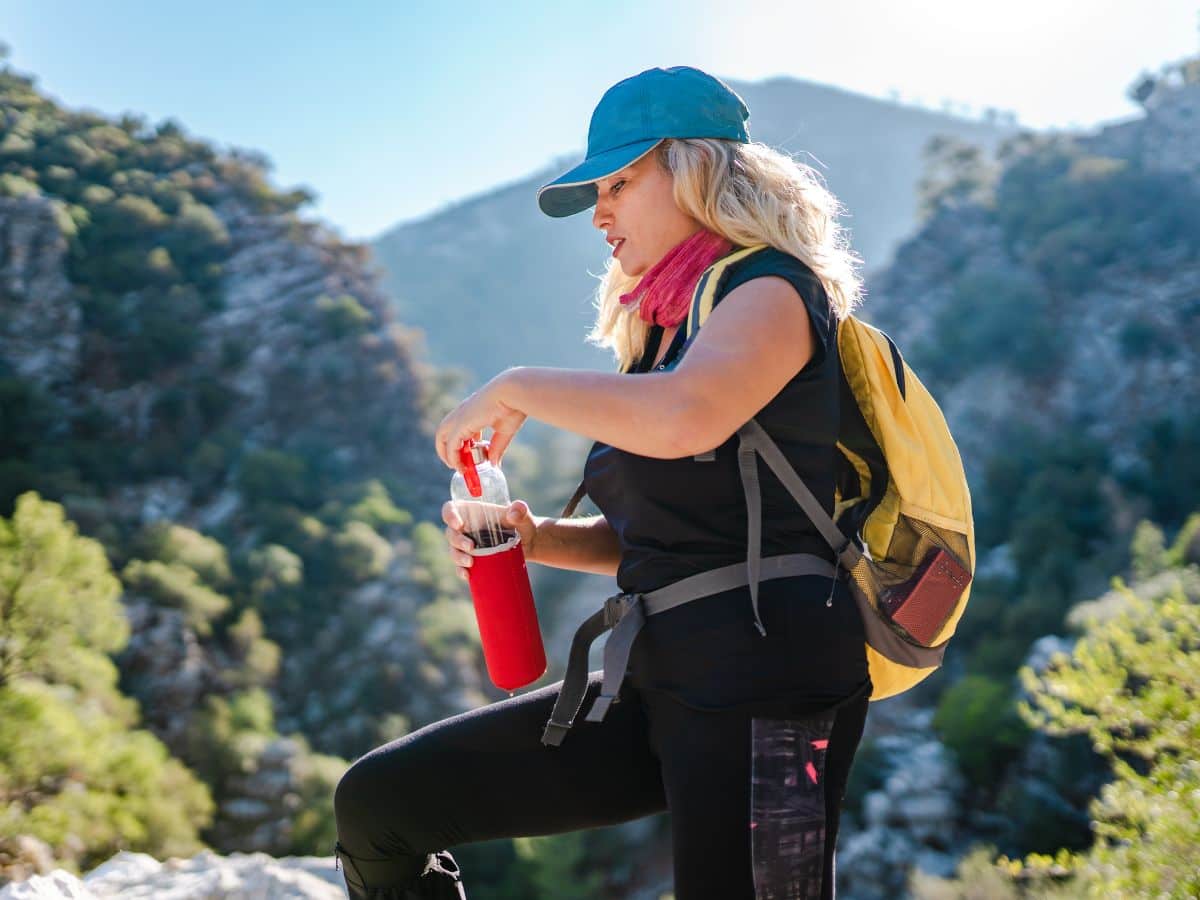
There’s no single amount that works for every hike, because the route you’ve just looked at changes how quickly you’ll get through it. A gentle two-hour walk on a cool day won’t require the same amount as a long climb in warm weather, and trying to force both into one fixed rule isn’t especially helpful.
I usually think about the length of the route, how strenuous it will be and whether there’s anywhere reliable to refill. Then I add enough of a margin that I’m not rationing the last few mouthfuls while still an hour from the end.
Warm weather and exposed ground will normally increase what you need, as will long climbs, a faster pace or carrying a heavier bag. Cold weather can be deceptive because you may not feel especially thirsty, even though you’re still losing water as you walk.
Where you put it matters almost as much as how much you bring. A bottle buried beneath clothing and lunch tends to stay there until you’re properly thirsty, while one in a side pocket gets used throughout the day. A hydration bladder works well too, provided you keep an eye on how much is left.
Once the water is sorted, food is a much easier decision.
It’s easy to become unusually virtuous when shopping for hiking food. Suddenly you’re buying dried fruit, nuts and serious-looking energy bars when what you’ll really want halfway round is a sandwich and a packet of crisps. There’s nothing wrong with trail mix, but there’s no prize for packing a lunch you don’t enjoy.
For a short walk, one or two snacks may be enough. On a longer day, I’d take a proper lunch, a few things that are easy to eat along the way and one extra snack in case the route takes longer than expected.
Children often need a little more than the distance alone would suggest, partly because hunger can arrive very suddenly once they’ve been walking for a while. Our guide to family camping covers the wider practical side of keeping children comfortable outdoors, but the same principle applies here: food breaks work best before everybody is tired and irritable.
Dogs need their own water as well, particularly in warm weather or on routes where clean streams aren’t guaranteed. A collapsible bowl weighs very little and makes life much easier. We’ve covered food, water and the rest of the dog-specific kit in our guide to camping with dogs.
For a normal day hike, cold food is usually the simplest option. A stove and cooking kit can be enjoyable if making a hot drink or meal is part of the day you want, but they aren’t essential simply because you’ll be eating outside. If the walk is part of an overnight trip, our guide to easy camping meals has plenty of options that are easy to carry and prepare.
With enough food and water to keep you going, the next question is what happens if the conditions change while you’re out.
Clothing
The weather forecast you checked earlier should give you a good idea of what belongs in the bag, but I’d still allow for the fact that conditions rarely stay exactly as predicted across an entire route.
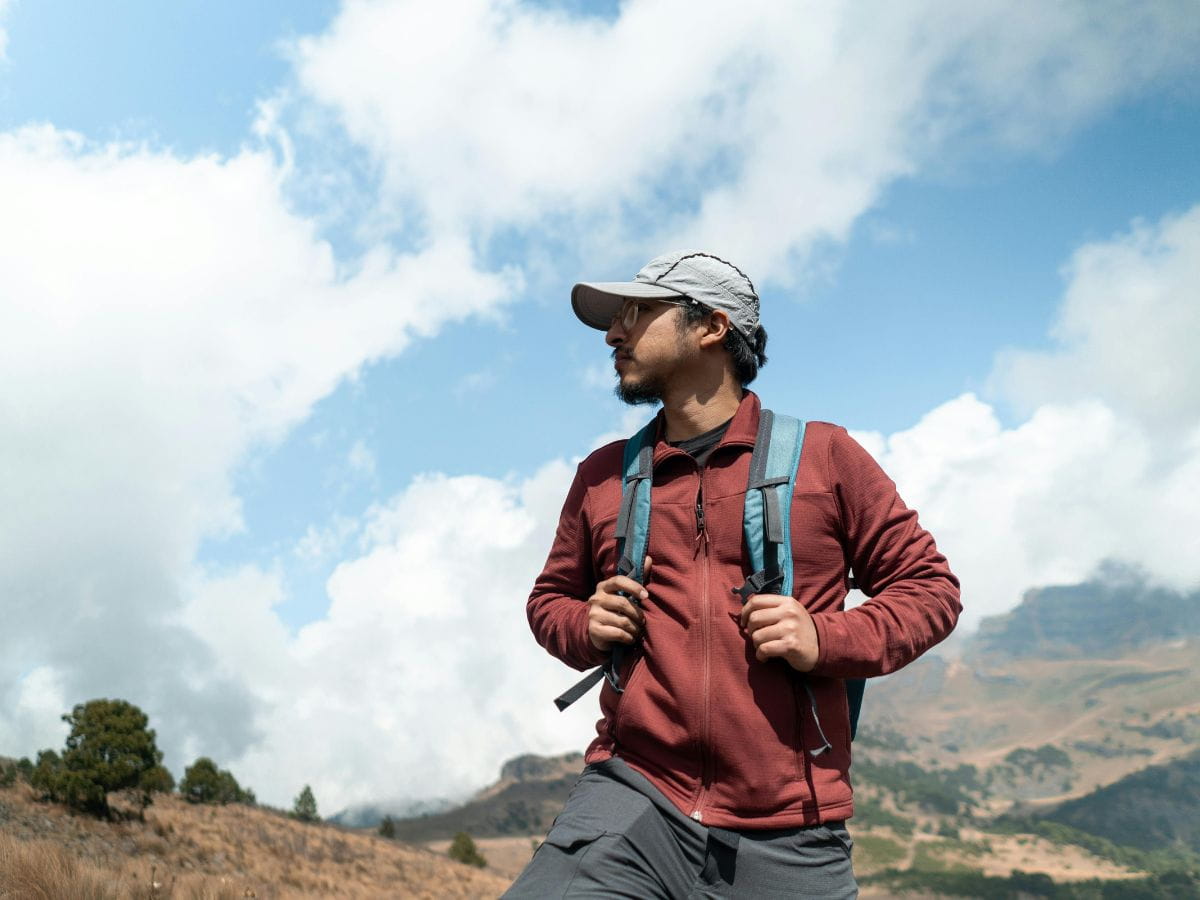
A bright morning at home doesn’t tell you much about an exposed hill several hours later. For most day hikes, I’d carry a proper waterproof jacket and one warm layer. That gives you enough flexibility to deal with a shower, a colder section of the route or a lunch stop that feels much chillier once you’ve stopped moving.
The warm layer might be a fleece or a light insulated jacket. It doesn’t need to be the warmest thing you own. It just needs to take the edge off when the temperature drops, without filling most of the backpack.
The waterproof matters more on longer walks and exposed routes. I’ve left one at home before because the forecast looked decent, then spent the second half of the day getting steadily wetter while knowing exactly where the jacket was hanging.
Make sure it’s genuinely waterproof rather than something designed for a brief shower. If prolonged rain is likely, our guide to camping in the rain covers the wider problem of keeping both yourself and your kit dry.
Waterproof trousers depend more on the route. I wouldn’t bring them for every short woodland walk, but they make sense for exposed hills, boggy ground, sustained rain and paths through wet grass. Long grass can soak ordinary trousers very quickly, even when it isn’t raining at the time.
A warm hat and gloves earn their place more easily in winter and during the colder parts of spring and autumn. They’re small, light and useful once the wind picks up. In summer, they’ll often be unnecessary unless you’re heading high or the forecast is unusually cold.
What you probably don’t need is a complete change of clothes. A dry top or spare socks may be sensible in particularly wet conditions, but spare trousers, several jumpers and a second outfit soon take up a lot of room.
Thunderstorms need slightly different thinking, because at that point the answer may be to change the route rather than add more clothing. This matters particularly if the walk crosses high or exposed ground. Our guide to camping safely in a thunderstorm explains what to do if you’re caught outside, but avoiding the most exposed terrain in the first place is usually the better option.
Clothing protects you from what the weather does to your body. Navigation becomes important when the same weather begins changing what you can see around you.
Navigation and Staying in Touch
I use my phone for navigation most of the time, as plenty of hikers do. It’s convenient, it shows exactly where you are and it saves you wrestling with a paper map every time the wind gets involved.
That convenience only helps if the map still works when the signal disappears, so download the route before leaving. I usually save it offline, make sure the battery is properly charged and check that the app still opens without a data connection.
On a straightforward, well-marked route, that may be enough. Remote hills, open moorland and paths that become difficult to follow in poor visibility deserve a proper backup, which usually means a paper map and compass.
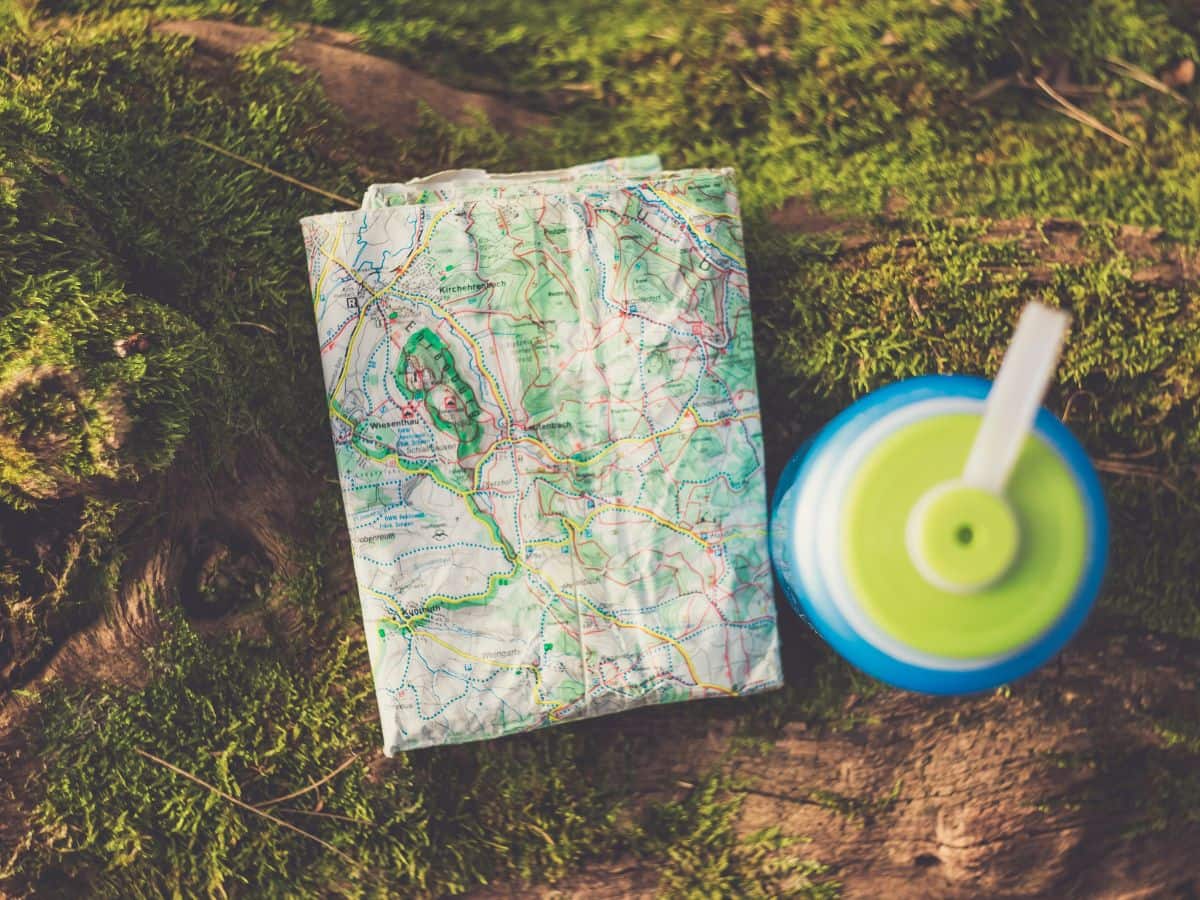
Those only help if you know the basics of using them. You don’t need to become an expert navigator before every country walk, but you should understand enough to orient the map, identify your direction and work out where you are if the phone stops helping.
A small power bank is useful when the phone is handling navigation, photographs, messages and weather updates. Take the correct cable as well, because a fully charged battery pack isn’t much use if there’s no way to connect it.
The farther the route takes you from roads and buildings, the less comfortable I’d be relying on the assumption that I could simply call for help. Coverage can disappear quickly, and even a phone showing signal bars doesn’t guarantee that a call will go through at the exact moment you need it.
That makes it sensible to tell somebody where you’re going and when you expect to return, especially on solo or remote walks. Give them the route, the starting point and a realistic time to expect an update. If the plan changes while you’re out, send a message while you still have signal.
Good planning reduces the chance of getting into trouble, but it can’t prevent every cut, blister or awkward step. That’s where the first-aid kit comes in.
First Aid and Personal Medication
A day-hike first-aid kit should contain things you know how to use for the minor problems you could reasonably deal with yourself.
A few plasters, antiseptic wipes, sterile dressings, medical tape and blister treatment will cover most small cuts, grazes and sore spots. You don’t need a huge ready-made kit filled with equipment you’ve never handled and wouldn’t know what to do with.
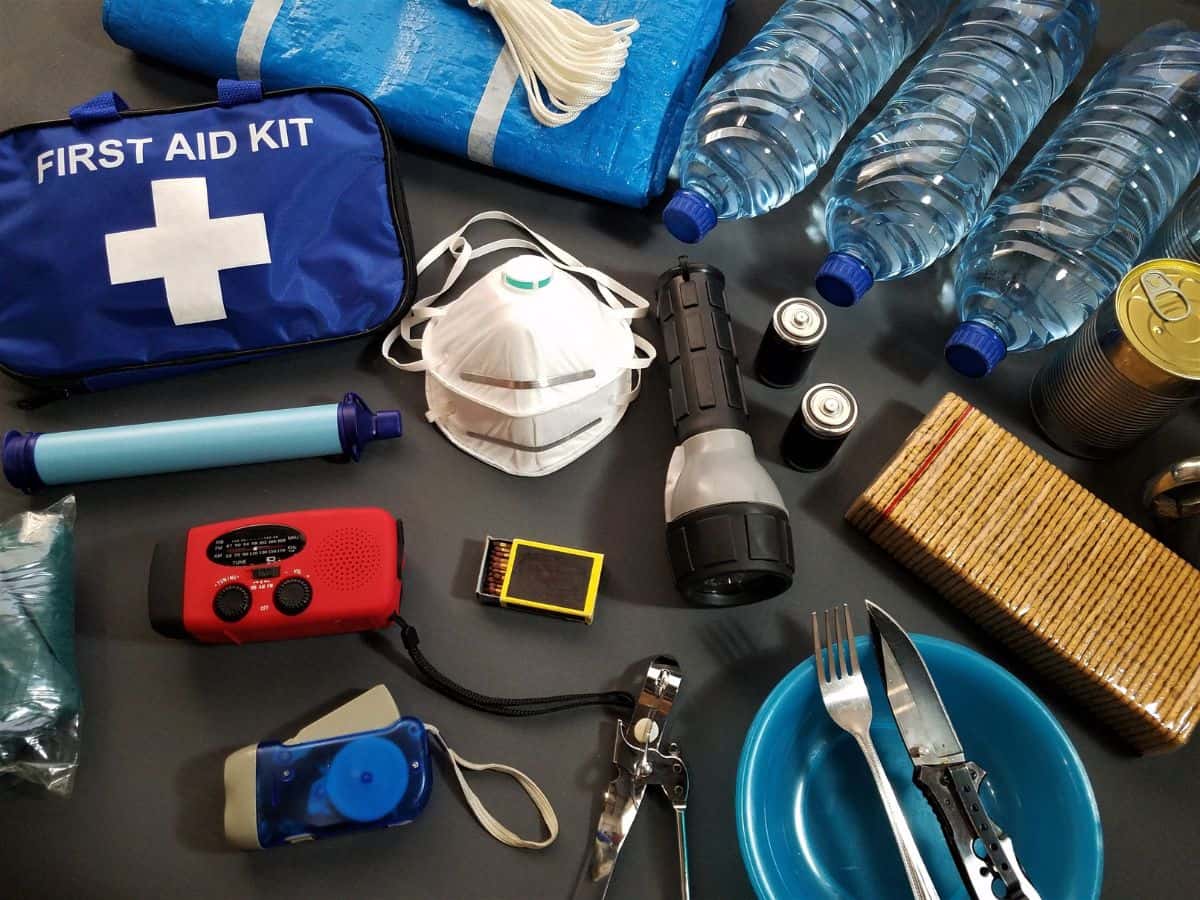
Blister plasters or tape are particularly useful because a small hotspot can make the last few miles feel much longer than they should. Deal with rubbing when you first notice it rather than waiting for the skin to become properly damaged. Our guide on how to stop blisters when hiking explains what to do while the problem is still manageable.
I’d also carry any pain relief I know I can safely take. It can help with a headache or minor ache, but an injury that changes the way you walk needs more than a tablet. Slow down, shorten the route or stop if necessary.
Personal medication matters more than filling the kit with every possible item. If you use an inhaler, EpiPen, diabetes supplies or anything else you may need while you’re out, check that it’s in the bag before leaving.
Keep important medication somewhere easy to reach, and make sure anybody walking with you knows where it is. They don’t need your complete medical history, but they should know what might be needed and where to find it.
The kit itself needs an occasional check too. Plasters lose their stick, wipes dry out and medication expires. A few minutes before a longer walk is usually enough to make sure everything is still usable.
First aid covers the smaller problems you can manage yourself. The next group of items is there for situations where the walk has been delayed, somebody can’t continue or you need to attract attention.
A Headtorch, Whistle and Emergency Blanket
A headtorch is easy to overlook on a walk that begins in daylight, but routes run late for ordinary reasons. You stop more than expected, take a wrong turn or discover that the final section is slower than it looked on the map.
A phone torch is better than nothing, but it uses the battery you may need for navigation or communication and leaves one hand occupied. A small headtorch weighs very little, so I’d carry one on longer or more remote walks. Check that it works before leaving rather than assuming the battery is still fine.
A whistle serves a different purpose. If you need to attract attention, sound carries much farther than a voice, and blowing a whistle takes far less effort than repeatedly shouting. Many hiking backpacks have one built into the chest strap, so check yours before buying another.
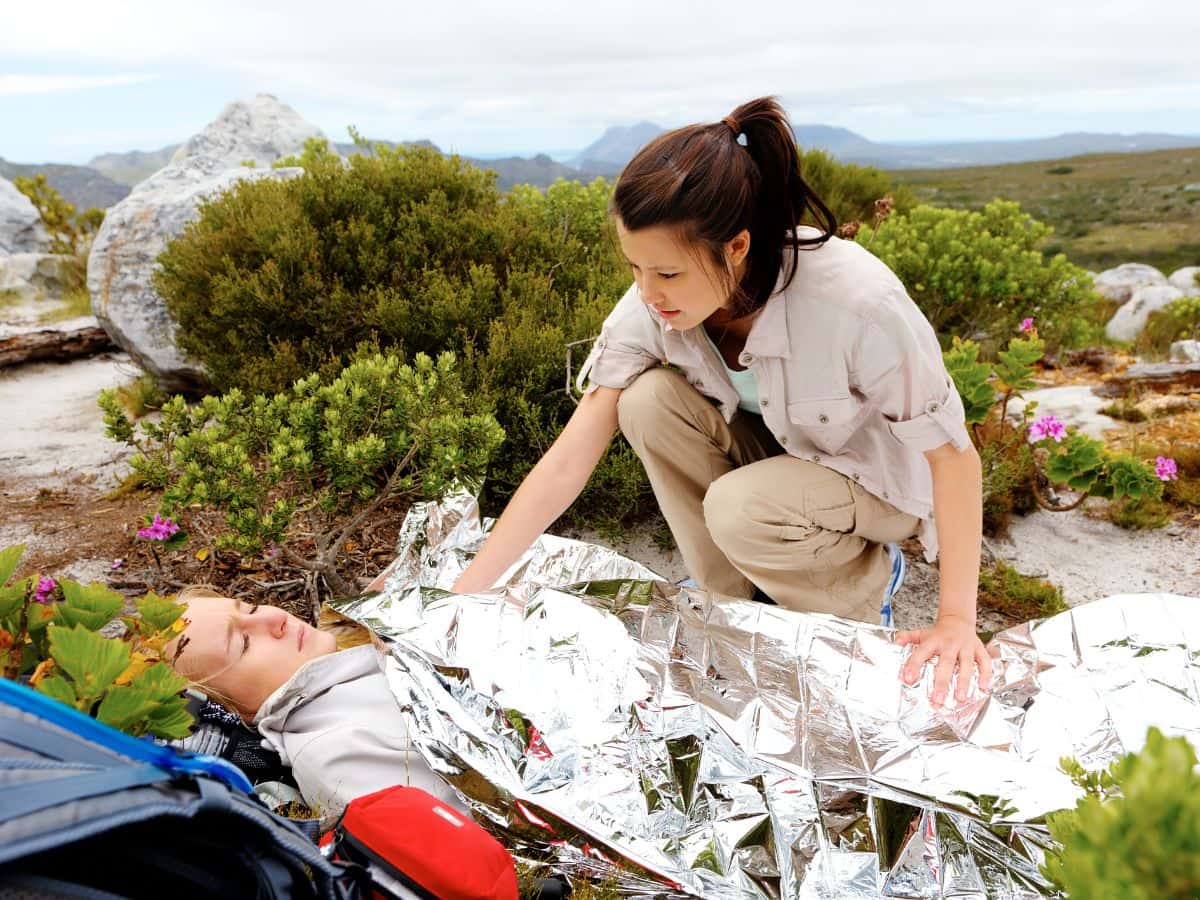
For remote routes, I’d also pack a lightweight survival bag or emergency blanket. It won’t make an unexpected night outdoors comfortable, but it can help someone retain warmth if an injury means they have to stop moving while waiting for assistance.
Mountain Rescue England and Wales recommends carrying suitable clothing, food and water, navigation, a torch or headtorch, a whistle and basic first-aid supplies when heading into the hills.
A busy country-park loop doesn’t need the same emergency kit as an isolated mountain route, but the farther you’ll be from help, the easier these small items become to justify.
If you’re planning to stay outside overnight, rather than carrying a little protection against an unexpected delay, the packing changes completely. Our guide to essential camping gear covers what you’ll need when sleeping outdoors is part of the plan.
The larger safety items are now covered, which leaves the smaller things that tend to depend on the season, the route and your own needs.
Sun Protection and the Small Things People Forget
Sunscreen is easy to forget when the morning begins cloudy or cool, but open hills, coastal paths and higher ground can leave you exposed for hours. The breeze can also make the strength of the sun less noticeable until later in the day.
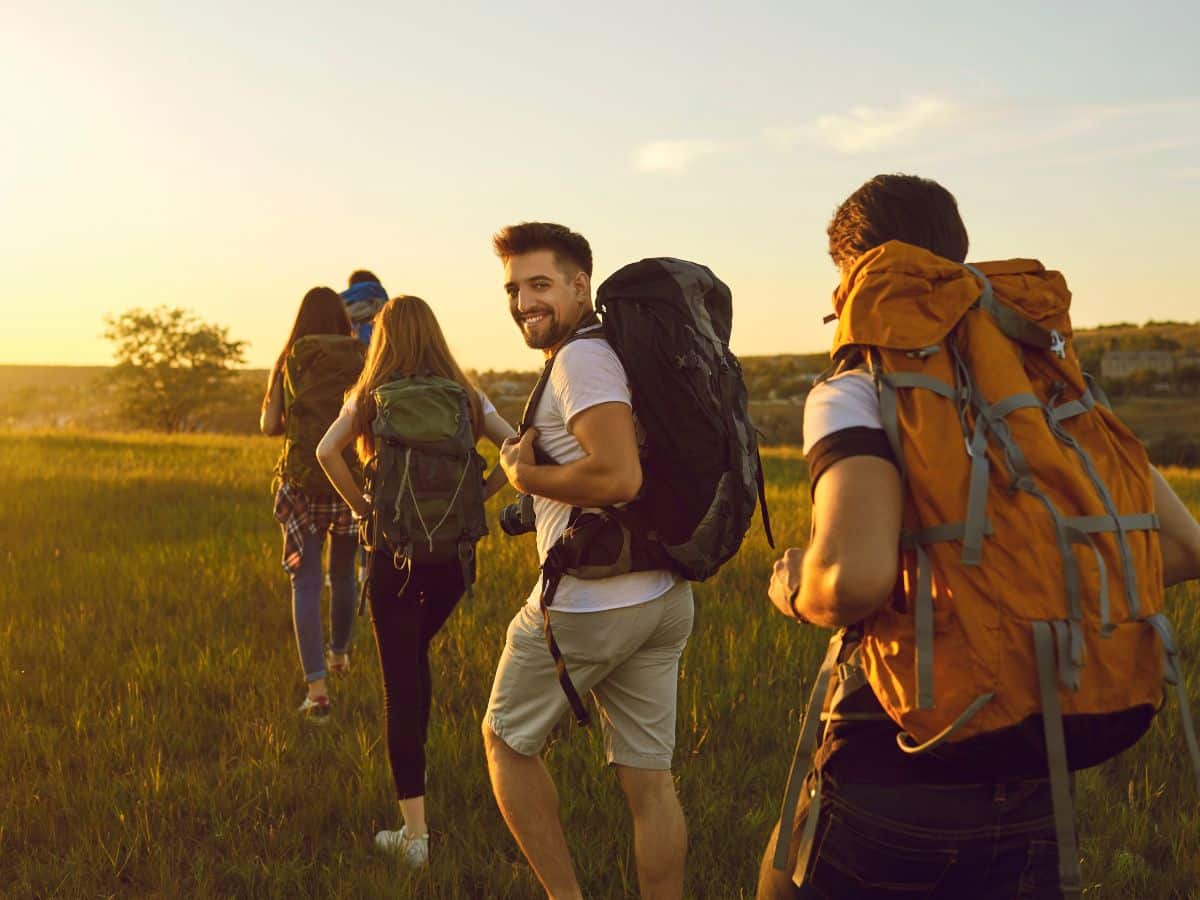
Put some on before setting off and carry a small amount on longer walks. A sun hat and sunglasses are useful in hot weather or on routes with very little shade, and they take up almost no space once they’re in the bag.
Tissues or a small amount of toilet paper are useful too, along with hand sanitiser. A small rubbish bag gives you somewhere to put wrappers, used tissues and anything damp or sticky without spreading it through the backpack.
Everything you carry in should come back out with you. Fruit peel, tissues and scraps of food still count as litter, and they can affect wildlife even if they’ll eventually break down. Our guide to eco-friendly camping covers the same low-impact approach on longer trips.
Insect repellent depends on the season and where you’re walking. Woodland, heathland and wet ground can make it worthwhile during warmer months. A tick remover is also useful in areas where ticks are common, particularly if the route crosses long grass or you’re bringing a dog.
Then there are the personal things no universal checklist can predict. House or car keys, a bank card, identification, spare contact lenses or anything else you’d struggle without. They may not look like hiking equipment, but forgetting one of them can cause far more trouble than leaving behind most specialist gadgets.
A small sit mat can also be pleasant on longer walks when the ground is cold or wet. It isn’t essential, but it weighs very little and makes lunch stops more comfortable.
At this point, you should have a sensible pile of kit in front of you. The next job is making sure everything else stays out of it.
What You Can Usually Leave at Home
The words “just in case” can justify almost anything while you’re packing.
One extra item rarely seems important, but several of them soon add a noticeable amount of weight. A third warm layer, an oversized first-aid kit, duplicate electronics and a complicated multi-tool may all seem harmless on the bedroom floor. Carry them for several hours, though, and they start to feel less harmless.
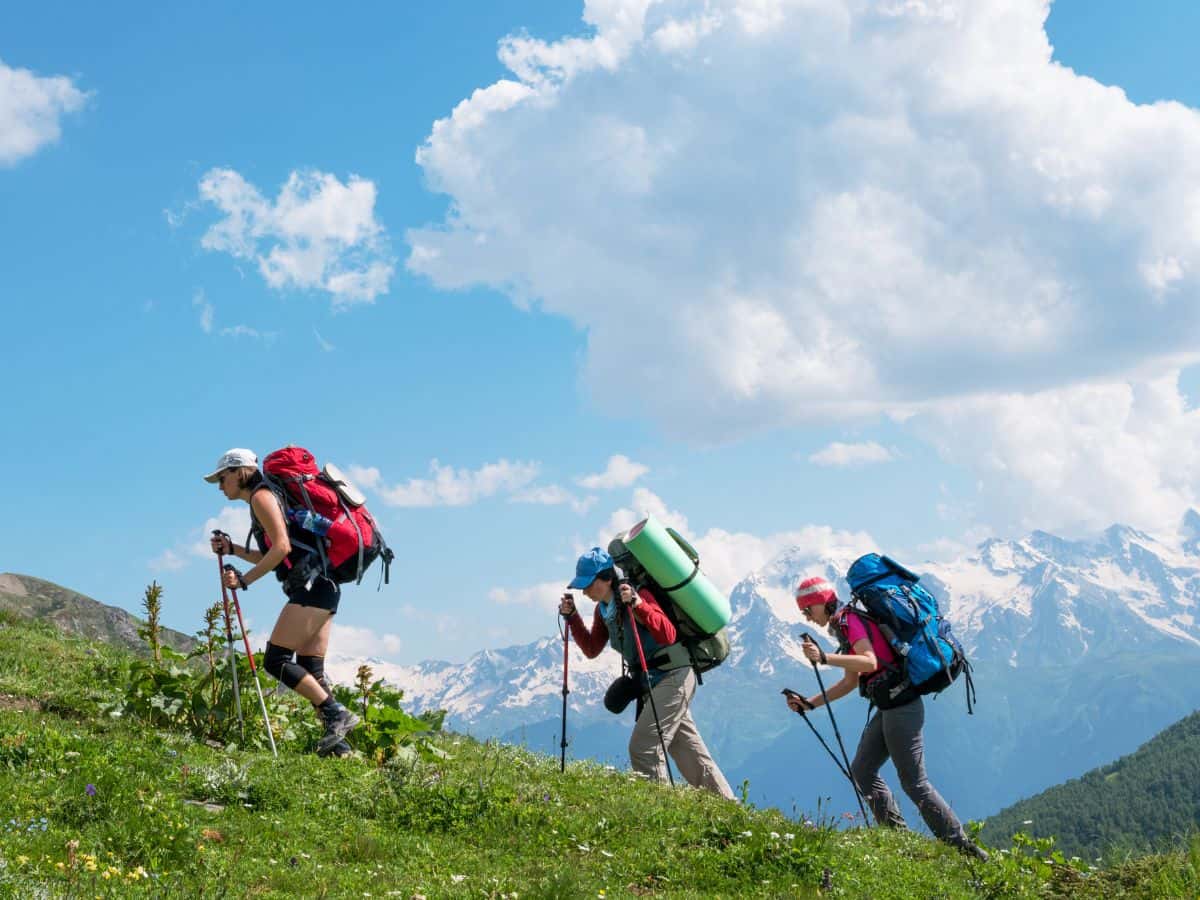
The easiest place to begin is with duplication. You may need a warm layer, but probably not three. You may want one extra snack, but not enough food for several additional days. You may need your phone and a power bank, but not several devices performing the same jobs.
Once the duplicates are gone, look at anything that belongs to a different kind of trip. Cooking equipment is a good example. There’s nothing wrong with stopping for a hot drink or meal if that’s part of the day you want, but a stove, fuel, pan, mug and utensils add a fair amount of bulk. For many walks, cold food will do the job more simply. Our guide to choosing a camping stove is more useful when cooking is genuinely part of the trip.
Large knives and elaborate multi-tools fall into the same category. They can be useful when there’s a likely job for them, but carrying equipment for repairing machinery makes limited sense when the most complicated object with you is a sandwich box.
Outdoor gadgets deserve the same scrutiny. Some genuinely improve a trip, while others solve problems that rarely arise outside product demonstrations. Our guide to the best camping gadgets includes plenty that can be useful, but even good outdoor equipment doesn’t need to come on every walk.
Full-size toiletries, bulky towels, spare footwear and camping comforts can normally stay at home too. They may belong on an overnight trip, but hiking and camping create different packing needs.
Laying everything out before packing helps because it shows you the whole decision at once. Keep the essentials and anything clearly linked to the route, weather or people coming with you. Look again at anything you’re carrying mainly because you own it or because a generic checklist included it.
You’re not trying to remove the things that keep you safe. You’re removing the weight that arrived without a clear reason.
Once that’s done, the final task is arranging the bag so the load feels comfortable and the things you need are easy to reach.
How to Pack Your Day Hiking Backpack
A badly packed backpack can feel heavier than it really is, especially when the weight sits too far from your body or shifts around as you walk.
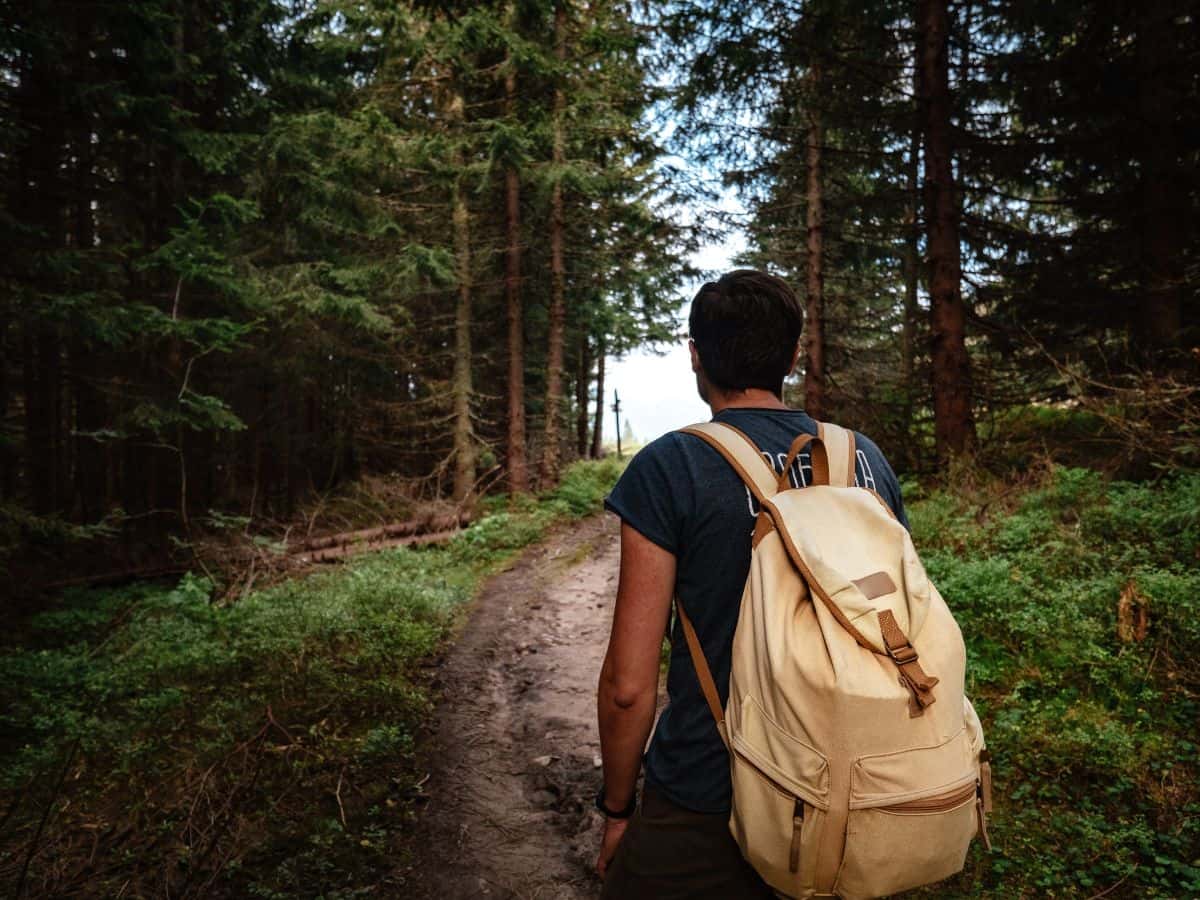
Put heavier items close to your back and around the middle of the bag. That keeps the load more stable and stops it pulling you backwards. Softer items such as a fleece can fill the gaps around them, which prevents bottles and containers moving every time you step downhill.
Once the weight is sitting properly, think about when you’re likely to use each item. Your waterproof, warm layer, snacks, first-aid kit and headtorch should be near the top or in an outside pocket, because they’re the things you may need without much warning.
Water belongs somewhere accessible for the same reason. Side pockets work well for bottles, while a hydration bladder lets you drink without stopping. Whichever system you use, check that no hard edge presses into your back once the bag is on.
Your phone, map and compass need to be secure but easy to reach. Hip-belt pockets, chest pockets and the top compartment all work well. Car keys are better kept in one zipped pocket and left there until the end of the walk.
Rain protection needs a little thought too. An external cover can help, but water still finds its way around straps, seams and the back panel when the wind picks up. A pack liner protects everything from inside, while smaller dry bags are useful for medication, electronics and anything else that really needs to stay dry.
The things that become wet or dirty during the walk should have somewhere separate to go. A small bag is enough for wrappers and used tissues, while a damp waterproof can be packed away without soaking the clothing around it.
Try not to hang too much from the outside. Trekking poles and a wet jacket may occasionally need to go there, but loose bottles, mugs and assorted equipment tend to swing around and catch on branches. The bag will usually carry better when most of the contents are inside.
Once everything is loaded, put the backpack on and walk around for a minute. Tighten the shoulder straps enough to bring it close to your body, then adjust the hip belt so it takes some of the weight. You’ll notice quickly if the load is uneven, the bag is pulling backwards or something hard is pressing into your back.
A minute spent rearranging it at home is much easier than unpacking everything beside the path later. Once the weight feels stable and the useful things are within reach, you’re ready to go.
Frequently Asked Questions
Can I use a normal backpack for a day hike?
Yes, particularly for shorter and easier walks. A normal backpack will carry the same equipment, and there’s no need to buy specialist gear before you’ve worked out what kind of hiking you enjoy.
A hiking backpack becomes more useful over longer distances because it tends to sit closer to the body, manage weight better and provide easier access to water and smaller items. If your current bag feels comfortable when loaded and doesn’t move around excessively, it’s perfectly reasonable to begin with that.
How heavy should a day-hiking backpack be?
There’s no ideal weight because water, weather and the demands of the route all change what you need.
The bag should feel comfortable enough to carry for the full distance without affecting your balance or turning the walk into a test of your shoulders. Before cutting water or safety equipment, look for duplicate clothing, unnecessary gadgets and oversized versions of simple items.
Are trekking poles worth carrying?
They can be useful on steep climbs, long descents, loose ground or routes where balance is likely to be a problem. They may also reduce some of the strain on the knees during repeated downhill sections.
On flat, easy paths they may spend most of the day attached to the backpack. Take them when the terrain gives them a clear job rather than treating them as compulsory hiking equipment.
Do I need a water filter on a day hike?
Usually not, provided you can carry enough water for the route.
A filter becomes more useful on long or remote walks where carrying the full amount would be difficult and reliable natural water sources are available. Don’t assume every stream is safe to drink from, and check that the filter you carry is suitable for the likely contaminants.
Should I carry emergency shelter on every hike?
Not on every short local walk. A busy route close to roads and buildings presents a very different risk from an exposed hill several hours from help.
For longer or remote routes, a survival bag or emergency blanket weighs very little and can be valuable if somebody becomes injured and has to remain still.
What should I add for a solo day hike?
You may not need much extra equipment, but the planning needs to be more careful.
Share the route and expected return time with somebody, make sure your phone is charged and be realistic about the terrain you can manage alone. On remote routes, carry an appropriate navigation backup and keep emergency information somewhere easy to find.
Are spare socks worth carrying?
They can be on wet, boggy routes or walks involving stream crossings. Changing into dry socks won’t solve a boot full of water, but it can make a significant difference once the worst of the wet ground is behind you.
Our guide to the best hiking socks for wet feet explains which materials cope best when conditions are damp.
What extra kit do I need for a winter day hike?
Winter usually requires more insulation, gloves, a warm hat and closer attention to daylight. Snow and ice may also call for more suitable footwear, gaiters or additional traction depending on the route.
Our guide on whether hiking boots are good for snow explains when ordinary boots may be enough and when more specialised equipment becomes necessary.
Final Thoughts
Most people arrive at their ideal day-hike kit gradually.
You take too much on the first few walks, notice which items return home untouched and slowly stop packing them. At the same time, you discover the things you genuinely miss when they aren’t there. After a while, the contents of the bag begin to reflect the way you actually hike rather than a universal checklist written for every possible route.
That’s when packing starts to feel much less complicated. You already know which items live in the bag, which ones depend on the weather and which ones only come along when the terrain gives them a reason.
There will always be some variation from one walk to the next, but that’s the point. A daypack shouldn’t be packed once for every hike you may ever do. It should change with the route in front of you.
Look at the walk, think through what it’s likely to ask of you and pack for that. Once you get used to doing it that way, you spend less time worrying about what you may have forgotten and more time looking forward to where you’re going.
