You pack away the tent, shake out the groundsheet, and perform a quick sweep of the area to make sure you haven’t left a sock behind. The place looks exactly as it did when you arrived.
Job done. Right?
Eco friendly camping often gets reduced to that final glance over your shoulder. If it looks tidy, we assume we’ve done our bit. But low-impact camping isn’t just about what you leave behind; it’s about what you used, where you pitched, how you cooked, what you burned, what you buried, and what you drove there in.
That doesn’t mean camping has to turn into a sustainability workshop.
Eco friendly camping means reducing your environmental impact before, during and after your trip. That includes choosing durable surfaces to camp on, minimising waste, disposing of fuel responsibly, respecting wildlife, conserving water, and using long-lasting gear instead of single-use alternatives. Small, thoughtful changes in behaviour can significantly reduce the footprint of your outdoor adventures without making camping complicated.
You don’t need bamboo cutlery, a solar-powered espresso machine and a guilt complex every time you light a stove. And in fact, most of the impact we make outdoors comes from small, ordinary decisions, not dramatic ones. And the good news is that most of those decisions are easy to adjust once you’re aware of them.
Eco friendly camping isn’t about perfection; it’s about awareness, planning and a bit of respect for the places we enjoy.
In this guide, we’ll look at practical ways to minimise your impact in the great outdoors. No lectures, and no unrealistic purity tests. Just sensible, low-impact habits that make a genuine difference, whether you’re wild camping in the hills, pitching up by the coast, or staying on a managed campsite.
Contents
- What Does Eco Friendly Camping Actually Mean?
- The Leave No Trace Principles (Without the Lecture)
- Choosing Campsites Responsibly
- Managing Waste Properly
- Reducing Single-Use Gear
- Smarter Food and Cooking Choices
- Water Use and Hygiene
- Travel and Getting There
- A Simple Eco Friendly Camping Checklist
- Eco Friendly Camping: FAQ’s
- Final Thoughts
What Does Eco Friendly Camping Actually Mean?
The phrase “eco friendly camping” gets used so often that it’s started to blur at the edges.
For some people it means bringing a reusable coffee cup. For others it means buying a tent made from recycled plastic bottles, or swapping out plastic cutlery for something that looks more ethically responsible on Instagram. And sometimes, if we’re honest, it’s just a label printed on packaging because it sounds reassuring.
Strip away the marketing and the buzzwords though, and it becomes much simpler.
Eco friendly camping is about reducing the negative impact your trip has on the environment, both while you’re there and after you’ve gone home. It’s recognising that even a small weekend away leaves some kind of footprint, and deciding to shrink that footprint where you reasonably can, without turning the whole experience into an exercise in guilt.
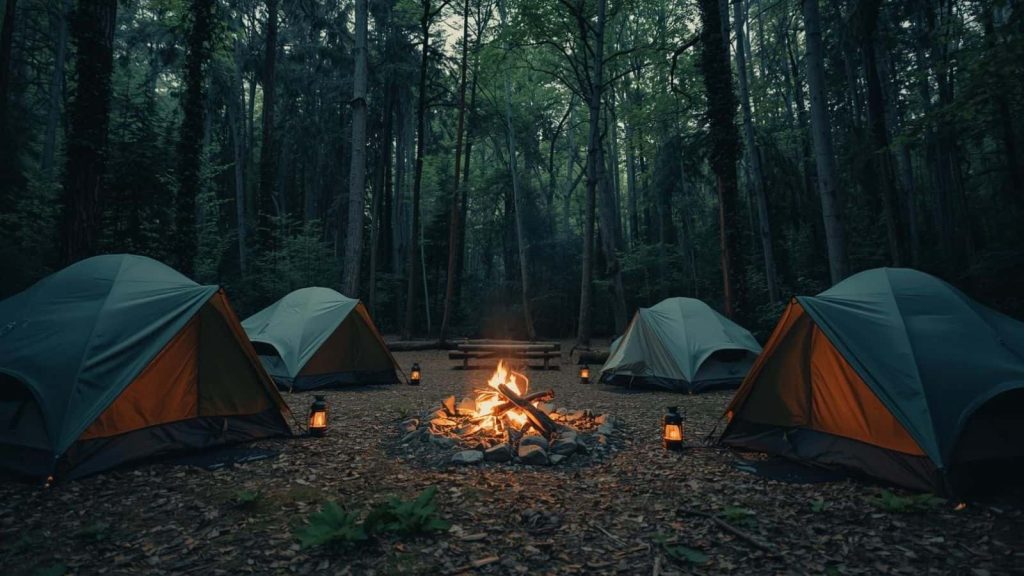
That footprint rarely looks dramatic, and it’s almost never a single obvious scar across the landscape. More often it’s the accumulation of small, ordinary choices – where you decide to pitch, how much fuel you burn cooking, whether you carry waste home properly, how you travel to get there, and whether the gear you bought will last five seasons or barely survive one. None of those decisions feel significant in isolation, but repeated over time and multiplied across thousands of campers, they start to matter.
It’s also not just about litter; it’s about pressure on the environment over time. Repeated foot traffic on slow-recovering ground, wildlife adapting to easy food sources, fuel wasted through poor planning, and gear that’s replaced far sooner than it needs to be all add up quickly, and that accumulation is where the real impact sits.
None of this means camping is inherently harmful. In fact, spending time outside, especially when done thoughtfully, often builds a deeper respect for natural spaces than any documentary ever could. The aim isn’t to stop camping or make it complicated. It’s to camp in a way that allows the next person to arrive and feel like they’ve discovered something intact, not something worn down.
Low Impact, Leave No Trace, Sustainable – What’s the Difference?
You’ll see a few terms used almost interchangeably.
Low impact camping tends to focus on behaviour during your visit. It’s about the choices you make on the ground, how you move through a place, how you set up, and how you leave.
Leave No Trace is a more structured framework built around seven principles that guide outdoor behaviour. We’ll walk through those in a moment, but in plain English rather than park-sign language.
Sustainable camping stretches slightly wider. It includes the decisions you make before and after the trip as well, like buying durable gear instead of disposable kit, reducing waste over time, or thinking about your overall travel footprint.
They overlap heavily, but the differences are mostly about scope.
If you want a working definition that feels realistic rather than performative, it’s this: eco friendly camping means making deliberate decisions that reduce harm to the places you enjoy, without turning the outdoors into a moral obstacle course.
It’s not about being flawless; it’s about being consciously considerate.
The Leave No Trace Principles (Without the Lecture)
You’ve probably seen the phrase “Leave No Trace” on signs at trailheads or visitor centres. It can sometimes feel like something people nod at politely before carrying on exactly as they were.
But when you slow down and translate the principles into everyday behaviour, they’re not abstract at all. They’re simply a way of formalising common sense with a bit more awareness layered on top.
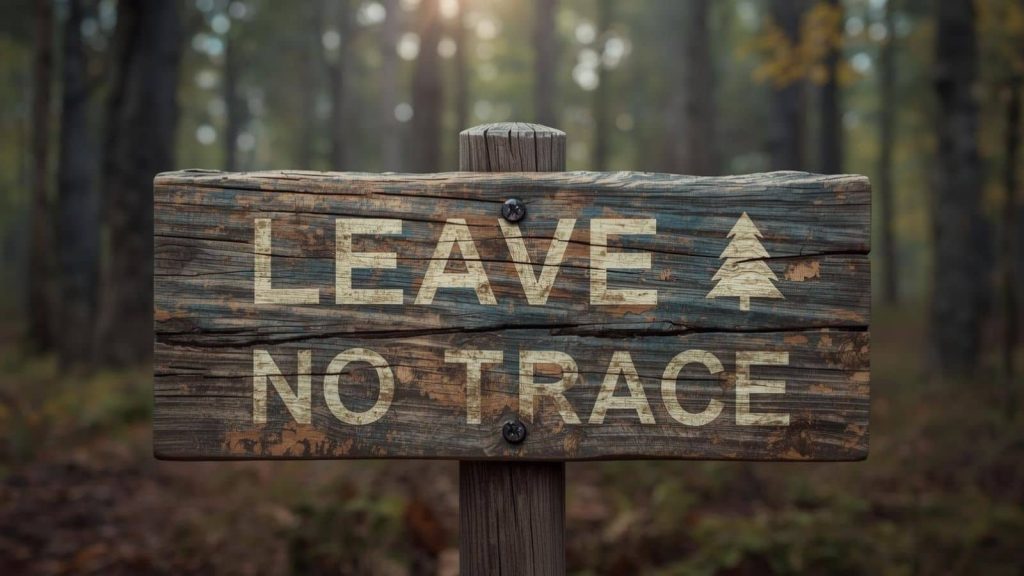
Rather than listing them like bullet points on a classroom wall, it’s easier to think about how they show up during a normal camping trip.
Plan Ahead and Prepare
Preparation isn’t particularly exciting I know, but it quietly prevents most avoidable problems.
When you check local regulations before you go, you avoid pitching somewhere fragile or restricted. When you plan meals properly, you reduce unnecessary packaging and the temptation to leave half-used food behind. When you look at the weather forecast properly, you’re less likely to build a last-minute fire because you underestimated how cold it would feel after sunset. You get the idea…
Fewer mistakes mean fewer reactive decisions, and reactive decisions tend to cause damage.
Travel and Camp on Durable Surfaces
Some ground handles pressure well, and some doesn’t.
Rock, gravel, sand and established campsites are generally resilient. Delicate alpine plants, dune systems and moss-covered upland areas are not. The difference isn’t always obvious at first glance, which is why this principle exists.
That perfect, untouched patch of wildflowers might look inviting for a tent photo, but repeated trampling flattens it quickly, and in some environments recovery takes years rather than weeks.
Choosing ground that can cope with your presence is one of the simplest, most effective low-impact decisions you can make.
Dispose of Waste Properly
This extends well beyond picking up obvious rubbish.
Food scraps, wet wipes, tissue paper, stray bits of packaging – these are the items that often get rationalised away. “It’ll biodegrade” sounds comforting, but biodegradable doesn’t mean harmless, especially when repeated across popular camping sites. Even something as harmless as an orange peel can alter wildlife behaviour if enough people decide to leave one behind.
We’ll look more closely at waste management shortly, including fuel disposal and greywater, because this is where small habits accumulate into larger consequences.
Leave What You Find
It’s surprisingly easy to forget that natural spaces aren’t props.
Moving stones to level a pitch, rearranging driftwood for a better photo, pocketing an interesting shell – none of these feel significant in isolation. But the more we reshape a place to suit us, the more we subtly change it for everyone else.
Leaving things as they are preserves the sense of discovery that makes outdoor spaces feel wild in the first place.
Minimise Campfire Impact
Campfires are one of the most memorable parts of camping, which is precisely why they need care.
Fire scars linger long after the flames are gone, collecting wood can strip small habitats, and fire embers travel further than most people expect when the wind shifts.
In some regions, particularly in dry climates or sensitive ecosystems, avoiding open fires entirely is the responsible choice. In others, using established fire rings or contained stoves significantly reduces impact. The nuance matters, and we’ll explore it properly later.
Respect Wildlife
Respecting wildlife goes beyond not feeding animals, although that’s a good starting point.
It’s about maintaining distance, storing food properly, being aware of nesting seasons, and understanding that even noise and scent can alter animal behaviour. Wildlife that becomes accustomed to human presence often loses its natural caution, and that rarely ends well for the animal.
Be Considerate of Other Visitors
Environmental impact isn’t purely ecological; it’s experiential.
Excessive noise, visible mess, blocking access routes – these affect how others experience a place just as much as physical damage does. Eco friendly camping includes social awareness, because shared spaces rely on shared respect.
The outdoors isn’t indestructible, even if it feels vast and resilient. Once you recognise that, the principles stop feeling restrictive and start feeling like a framework for preserving the very things that drew you there in the first place.
Choosing Campsites Responsibly
Understanding low-impact principles in theory is straightforward enough. The real test comes when you arrive somewhere that looks untouched and inviting, with no obvious signs telling you where to stand or where not to. That’s the moment when eco friendly camping stops being an idea and becomes a decision.
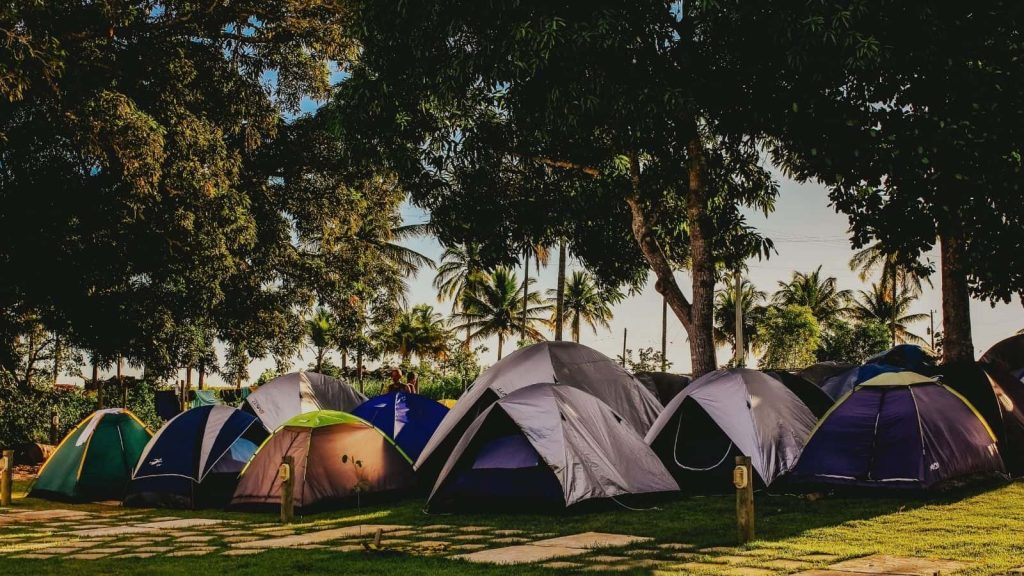
When you reach a potential pitch, it helps to shift the question slightly. Instead of asking whether the spot is scenic, it’s worth asking whether the landscape can realistically cope with your presence. Some environments are naturally resilient, while others are more fragile than they appear at first glance. Coastal dunes, for example, do more than provide a soft backdrop for sunset photos; they stabilise shorelines and protect inland areas from erosion. Alpine vegetation often survives in harsh conditions, but it grows slowly, and once it’s repeatedly compressed underfoot it can take years to recover. Moss and lichen in upland areas look robust, yet they’re easily damaged and rarely bounce back quickly.
None of that means you should avoid wild places altogether. It simply means paying attention to the kind of ground you’re choosing to occupy. Established pitches, hardened soil, gravel clearings and areas that are already regularly used exist for a reason. Concentrating impact in places that can withstand it prevents the slow spread of damage into areas that are still functioning as they should.
Water Changes Everything
A similar principle applies when water is involved. Lakeshores, riverbanks and stream edges often feel like the most natural places to camp, and the temptation is understandable. The view is better, access is easier, and it feels convenient to be close to a water source.
The difficulty is that these margins are some of the busiest ecological zones in any landscape. Wildlife relies on them, plants hold the banks together, and soil near water erodes far more quickly when disturbed. Moving back even fifty or sixty metres reduces disruption more than most people expect, while still allowing you to enjoy the atmosphere that drew you there in the first place.
When Popular Becomes Problematic
Context also matters…
In remote areas with very little traffic, the impact of one careful night is minimal. In popular destinations, however, individual decisions accumulate. What feels insignificant in isolation can become part of a visible pattern when repeated by hundreds of visitors over the course of a season.
This is often why certain areas introduce restrictions or designated zones, not to discourage access but to prevent gradual degradation. In places like parts of the UK, understanding local wild camping regulations is not just about avoiding a fine; it’s about recognising where pressure has already reached a tipping point.
Leave the Landscape Intact
There’s also a temptation to “improve” a pitch once you’ve chosen it.
Levelling a patch of ground, clearing away vegetation, digging a shallow trench in case you find yourself camping in the rain, or rearranging stones to make things more comfortable can feel harmless in the moment. The problem is that those small alterations remain after you’ve gone.
If a site requires significant modification to function as a campsite, it’s usually a sign that it isn’t the right location to begin with. Adapting your setup to the landscape, rather than reshaping the landscape to suit your setup, is often the more responsible choice.
Eco friendly camping, at its core, is less about finding the perfect untouched corner and more about understanding how your presence interacts with the place you’ve chosen. Once you start looking at it through that lens, the decisions tend to make themselves.
Managing Waste Properly
Once you’ve picked a sensible place to camp, the next thing that really shapes your impact is what you take home with you. Most people aren’t deliberately careless, but this is where the small justifications tend to creep in.
Nobody is leaving tents behind, but it’s easy to overlook the minor bits. A tea bag tossed into the bushes. An apple core dropped because it’s “natural”. A scrap of packaging that slips out of a pocket and isn’t noticed until it’s too late.
To be fair, the issue isn’t that one apple core destroys an ecosystem. It’s that popular camping areas see the same behaviour repeated over and over again. Food scraps linger longer than most people assume, especially in cooler weather, and while they’re sitting there they attract animals to places where they shouldn’t be learning to expect human food. Once wildlife starts associating campsites with easy meals, behaviour shifts, and those shifts usually end up being dealt with by people rather than reversing themselves naturally.

The most reliable approach is still the simplest one: if it came with you, it goes home with you. That includes the things that feel harmless or biodegradable. Nature isn’t a bin, even when what you’re leaving behind technically came from a tree.
Human Waste and the Awkward Bits
Human waste is the part nobody enjoys discussing, but it’s a big part of the responsibility of eco friendly camping.
In established sites, the solution is obvious. In more remote settings, it’s about doing the job properly rather than quickly. That means digging a suitable cat hole well away from water and paths where guidance allows it, and packing out used toilet paper rather than assuming it will disappear in a few days. In heavily used areas, even that isn’t always enough, which is why some locations require full pack-out systems. It’s not overkill; it’s a response to what happens when volume increases.
Greywater Isn’t Harmless Either
Greywater sits in a similar category of “probably fine” decisions that add up over time.
Washing dishes directly in a stream might feel efficient, but even biodegradable soap isn’t designed to be poured straight into natural water. Carrying water a short distance away, washing there, and dispersing it broadly over soil keeps the most sensitive parts of an ecosystem from becoming a concentrated dumping point.
Fuel and Hidden Waste
Fuel is another one that doesn’t immediately register as waste.
Disposable gas canisters feel like just another empty container at the end of a trip, but they’re pressurised and need proper handling. Making sure they’re fully empty and recycling them correctly prevents them from ending up in landfill or creating safety risks further down the line.
If you’re unsure what that involves, we’ve covered it in detail in our guide on how to recycle camping gas canisters.
The “It’s Only Small” Problem
Most visible damage in popular camping areas doesn’t begin with someone deciding to trash the place. It begins with the assumption that one small thing won’t matter. And when enough people make that calculation, the landscape changes slowly, then noticeably.
Managing waste properly isn’t about becoming obsessive. It’s about recognising how easily small habits scale up when lots of people share the same space, and deciding not to contribute to that pattern.
Reducing Single-Use Gear
A surprising amount of environmental impact happens before you even reach the campsite. It’s built into the gear you choose to buy and how often you replace it.
Camping has quietly become more disposable than it used to be. You see it at festivals every summer, tents left behind because they were cheaper to replace than to dry out. You see it in chairs that last a season before the fabric tears, in headtorches that chew through disposable batteries, in stoves upgraded not because they failed, but because something newer appeared in a catalogue. None of it feels irresponsible in isolation; it just feels convenient.
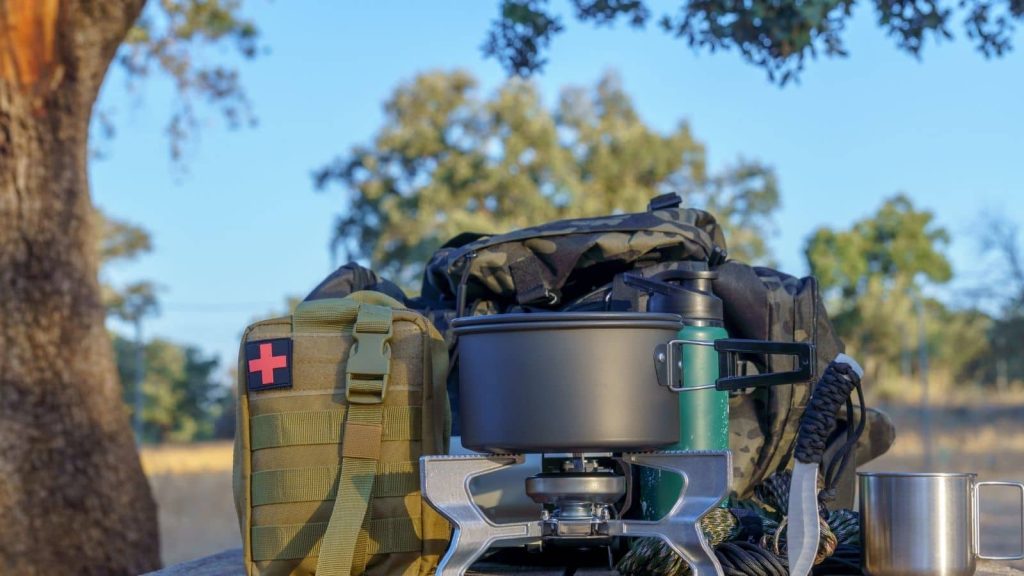
But the problem isn’t one cheap item – it’s the cycle. Buy something because it’s inexpensive, use it a handful of times, replace it when it starts to fail, and repeat.
Over time that pattern creates far more waste than most people realise, and it rarely gets counted because it happens gradually.
Durability is hardly an exciting thing to think about, and it’s rarely marketed as aggressively as “eco materials” or “sustainable fabrics”, but it often makes the bigger difference. A tent that lasts ten years will almost always have a smaller footprint than one made from recycled material that falls apart after two. The same logic applies to sleeping mats, cookware, clothing and just about everything else in your kit.
That doesn’t mean chasing premium brands or spending money for the sake of it. It means paying attention to how something is built, whether it can be repaired, and whether you’re likely to still be using it in five years’ time. Sometimes the most sustainable option is simply resisting the urge to upgrade when the current version is working perfectly well.
There’s also a natural overlap here with simplicity. The more gear you accumulate, the more you end up storing, maintaining and eventually replacing. Trimming your setup down to what you actually use doesn’t just make walking easier, it reduces the churn of equipment over time. We talk about that in more detail in our lightweight camping guide, because carrying less and buying less often end up being the same decision viewed from two angles.
If budget is a concern, durability and affordability don’t have to be opposites either. Simple, repairable gear often outlasts more complicated equipment that fails in ways you can’t fix. Our camping on a budget guide covers how to build a comfortable setup without defaulting to throwaway kit, and many of those same principles apply here.
Reducing single-use gear isn’t about creating a perfectly minimalist system or turning every purchase into an ethical dilemma. It’s about stepping out of the habit of treating camping equipment as temporary. The longer something stays in use, the smaller its footprint becomes, and that’s usually where the real gains are made.
Smarter Food and Cooking Choices
Food is another area in which camping can swing from low-impact and sensible to wasteful, and it usually happens by accident rather than intention.
At home, most of us have routines that keep things roughly under control. You’ve got cupboards, a bin, a fridge, and the ability to fix mistakes without much drama. Camping removes all that scaffolding, so when something goes wrong, it tends to show up as rubbish, leftover food you can’t store safely, and extra fuel burned because the plan fell apart on night one.
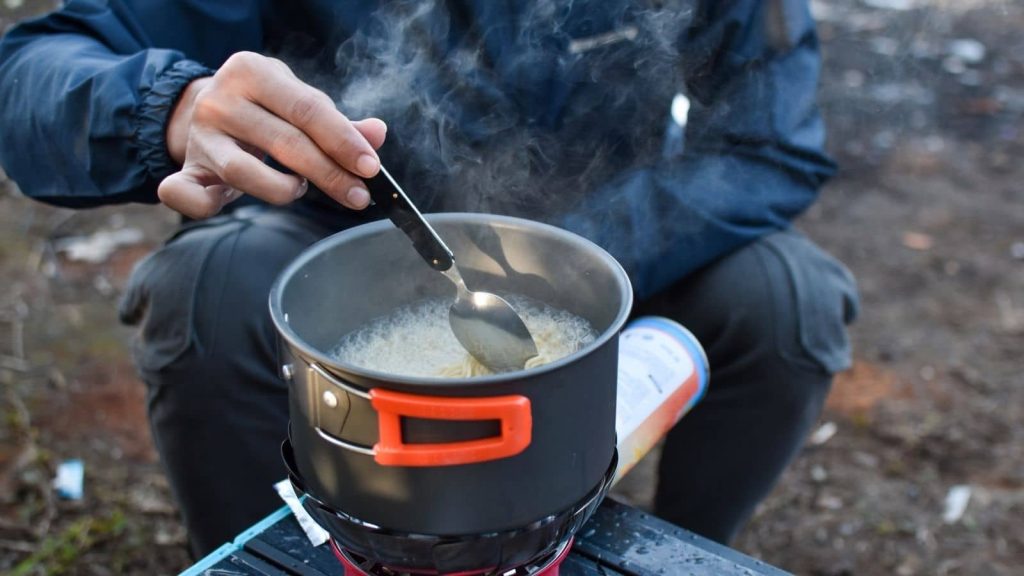
The easiest way to keep things eco friendly here is not to buy special “green” camping meals or overthink every ingredient. It’s to plan properly, keep it simple, and avoid creating a situation where you’re standing beside a stove at 10pm, tired and hungry, trying to make three different meals out of half a bag of pasta and a packet of wet wipes.
Plan Meals Like You’re Packing for Reality, Not Optimism
A lot of food waste in camping comes from packing with good intentions and then discovering, halfway through the trip, that you can’t be bothered with the complicated option.
You bring ingredients that require too much chopping, too many pans, too much washing up, and too many little packets. You imagine a campsite dinner that looks like something off a YouTube channel, and then the wind turns, the light fades, the ground is wet, and suddenly you’re eating the easiest thing you can get hot.
If you’re aiming for eco friendly camping, the goal is to pack meals that you’ll actually cook when you’re cold, slightly fed up, and not in the mood to perform. One-pot meals help, or a small rotation of dinners you know you’ll eat. Or even just pre-portioning ingredients at home, because it cuts down on packaging and stops you bringing half a supermarket with you “just in case”.
If you’re stuck for ideas that are genuinely realistic rather than Instagram-ready, our easy camping meals guide breaks down simple options that work in actual outdoor conditions, not just in theory.
There’s also a benefit to this that nobody talks about enough. The less messy your cooking system is, the less likely you are to leave food scraps behind, the less likely you are to pour greasy dish water onto the ground in the wrong place, and the less likely you are to generate a little cloud of micro-rubbish that follows you around for the weekend.
Packaging is the Hidden Part of the Meal
It’s not usually the food itself that creates the mess, it’s what it comes wrapped in.
A single camping dinner can involve a surprising amount of plastic if you’re not paying attention, especially if you buy everything in its original packaging and just throw it into a bag. It’s not that you need to decant your entire life into reusable jars like you’re preparing for a documentary, but it’s worth noticing how quickly wrappers multiply when you’re eating outside.
If you can combine items into a single container, do it. If you can remove outer packaging at home, do it. If you can take one larger bag instead of five small ones, do it. None of this has to be perfect. You’re just trying to reduce the amount of “stuff” that can blow away, get left behind, or end up jammed in the corner of a backpack until you find it a month later.
Cook Efficiently, Not Excessively
Fuel is part of impact too, and the funny thing is that a lot of fuel waste comes from habits rather than necessity.
People boil more water than they need. They cook with no lid on the pot. They simmer meals that could be done faster. They keep relighting stoves because they haven’t got the timing right. Again, none of this makes you a villain, it’s just what happens when you’re outdoors and you’re improvising.
Small adjustments make a bigger difference than most people expect. Boil only what you need, use a lid, and keep the wind off the flame if you can. Alternatively, pick meals that don’t require constant heat for twenty minutes. Even choosing the right stove setup can reduce fuel use and frustration, especially if you’re trying to cook in windy conditions, which is where a lot of people end up cranking the flame higher than necessary just to compensate.
If you’re planning a new stove setup, or you’re not sure what actually works well without wasting fuel, it’s worth checking out our guide on choosing a camping stove, because the “cheap and cheerful” options vary wildly once you’re outside and the conditions aren’t ideal.
Food Waste Isn’t “Natural”, It’s Still a Disturbance
We’ve covered this briefly already, but it’s worth mentioning again as it catches people out because it feels harmless.
If you drop an apple core in the woods it doesn’t feel like litter, it feels like you’re “feeding” the earth. But food scraps still change behaviour, especially in places that see regular visitors. Animals learn quickly, birds learn quickly, and even insects shift patterns when food becomes predictable. It’s not just about what decomposes, it’s about what the presence of that food does in the meantime.
So the same simple rule applies here as it does with packaging. If it came in with you, it goes back out with you, even if it’s technically compostable, even if it feels like it should belong there, and even if it’s small.
Water Use and Hygiene
Once you start paying attention to waste and food, water is the next thing on the list, and it’s often here where people assume they’re already doing fine.
If you’re camping near a lake or a stream, it feels logical to do everything there. Wash your hands, brush your teeth, rinse your pan, maybe even splash your face while you’re at it. It’s convenient, and it doesn’t feel especially harmful. After all, it’s just water going back into water.
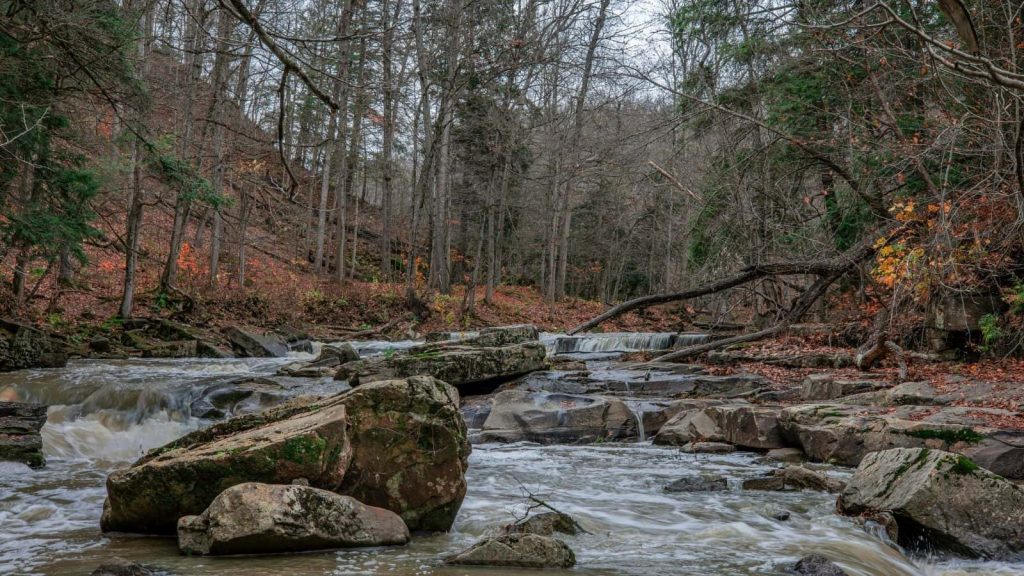
The problem isn’t that one person rinsing a plate ruins a river, it’s that popular spots see the same behaviour repeated day after day. Soap residue, food particles and toothpaste foam don’t just disappear the moment they hit the current, and even biodegradable soap is designed to break down in soil under the right conditions, not to be poured straight into a stream.
A simple adjustment makes a difference. Collect the water you need, step back from the edge, wash there, and scatter the strained greywater over durable ground. It takes a minute longer and keeps the most sensitive part of the ecosystem from becoming the default washing-up station.
The same applies to brushing your teeth or washing your hands. Moving a short distance away from the shoreline protects the area wildlife actually relies on, without meaning you have to overthink every drop.
There’s also a tendency to use more product than necessary when you’re outside. A squeeze of soap becomes a generous squirt, toothpaste foams more than it needs to, and in reality, you can get by with far less. Camping tends to simplify routines anyway, and once you’re a day or two in, you realise how little is actually required to stay clean and comfortable.
In drier or upland areas, water management matters in another way too. Small streams shrink as the season goes on, and shallow pools get churned up quickly if everyone dips bottles directly into the same spot. Using a container to collect water and stepping aside to fill bottles helps keep the source itself clear.
None of this is especially difficult or time-consuming; it’s just about avoiding concentration. When lots of small actions are repeated in the same place, they start to leave a mark. Spreading them out, both physically and habitually, keeps campsites feeling less worn and waterways less disturbed.
Travel and Getting There
It’s easy to focus on what happens once the tent is up, because that’s the visible part of camping. You can see the ground beneath you, the fire ring, and the litter if someone’s left it behind.
What you don’t see quite as clearly is the part that happened before you even arrived.
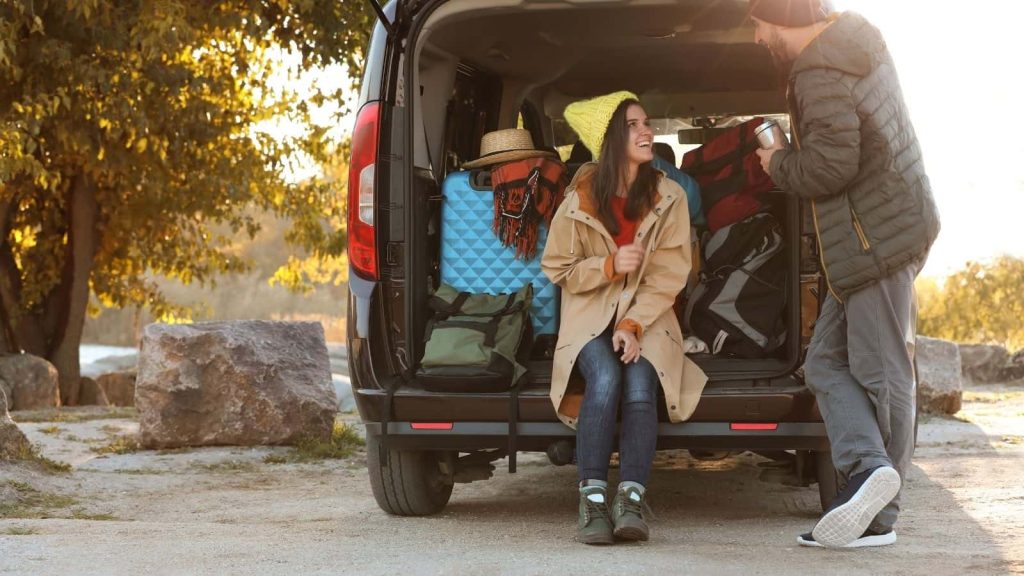
For most of us, the single biggest environmental impact of a camping trip isn’t the stove or the soap or the apple core; it’s the journey.
That doesn’t mean you shouldn’t go, and it doesn’t mean every trip needs to involve a spreadsheet and a carbon calculator. It just means being honest about where the heavier footprint tends to sit.
A two-hour drive in a large vehicle will almost always outweigh the impact of cooking a few simple meals on a gas stove. Flying somewhere for a weekend of “eco tourism” can cancel out a lot of careful behaviour once you land. And yet travel is rarely the first thing people think about when they picture eco friendly camping.
The good news is that this is often the easiest place to make significant (but manageable) adjustments.
Choosing somewhere closer to home reduces fuel use without changing the experience much at all. Car sharing with friends spreads the impact across fewer vehicles, and combining trips rather than doing multiple short drives to the same area cuts mileage without sacrificing time outdoors.
Sometimes it’s as simple as asking whether the distant, photogenic location is genuinely offering something you can’t find closer to home.
There’s also a subtle shift that happens when you camp locally – you’re more likely to return. You’re also more likely to notice changes in the landscape over time, and feel a sense of ownership rather than novelty. And that relationship often leads to more careful behaviour naturally.
None of this requires perfection. It’s not about eliminating travel, and it’s certainly not about guilt. It’s about understanding that eco friendly camping starts earlier than the campsite, and sometimes the most impactful decision is the one made on your driveway.
A Simple Eco Friendly Camping Checklist
If you strip everything we’ve covered back to its essentials, eco friendly camping isn’t about mastering dozens of rules. It’s about running through a handful of questions before, during and after your trip.
Before you leave, ask yourself whether the place you’re heading to genuinely needs a long drive, whether you can combine the trip with something else, or whether somewhere closer might offer the same experience with less fuel burned getting there. Think about the gear you’re packing. Is it built to last? Are you bringing three “just in case” items that will stay in the boot the whole weekend? Have you planned meals you’ll realistically cook rather than aspirational campsite cuisine that ends in wasted food?
When you arrive, pause for a moment before pitching. Is the ground durable enough to cope with a tent? Is there an already-used patch that would concentrate impact rather than spreading it? Are you well back from water? Are you about to move rocks, clear plants or “improve” something that was fine as it was?
While you’re there, keep it simple. Boil only what you need. Use a lid. Wash away from water sources. Keep food sealed. Carry out everything you brought in, including the things that feel small or harmless. Resist the urge to reshape the landscape or leave behind “just one” biodegradable scrap.
And when you leave, do more than glance around for obvious rubbish. Check the ground carefully. Look for small bits. Scatter any disturbed soil back into place if needed. Make sure nothing about your stay makes the next visitor feel like they’ve arrived after someone else’s weekend.
None of this is difficult, and none of it requires specialist gear or extreme discipline. It’s simply a pattern of small decisions that, when repeated consistently, leave places exactly as you found them.
That’s really the thread running through all of this. Eco friendly camping isn’t about perfection, and it’s not about turning the outdoors into a test of moral virtue. It’s about recognising that wild spaces aren’t indestructible, even when they feel vast and resilient, and adjusting your behaviour accordingly.
If enough people do that consistently, the difference is obvious.
And if you’ve ever arrived somewhere beautiful and found it clean, quiet and undamaged, you’ve already benefited from someone else making those same decisions before you.
Eco Friendly Camping: FAQ’s
Can I still have a campfire if I want to camp sustainably?
It depends entirely on where you are and how you do it.
In some areas, especially dry or fragile environments, skipping a fire altogether is the responsible choice. In others, using established fire rings and keeping flames small reduces impact significantly. The key is not defaulting to a fire just because it feels traditional.
If you’re unsure whether your location allows it, always check local guidance first. In places like parts of the UK, wild camping rules vary, and understanding what’s permitted helps you avoid both fines and unnecessary environmental damage.
Is biodegradable soap actually safe for camping?
It’s safer than standard soap, but that doesn’t mean it belongs directly in rivers or lakes.
Biodegradable products are designed to break down in soil under the right conditions. Pouring them straight into natural water can still disrupt delicate ecosystems, especially in popular areas where the same behaviour is repeated daily.
The safer approach is to carry water away from the source, wash at a distance, and scatter greywater over durable ground.
What’s the single biggest impact of a camping trip?
For most people, it’s travel.
The fuel used getting to and from your destination often outweighs the impact of cooking or washing once you’re there. That doesn’t mean you shouldn’t travel, but it’s worth being aware of. Choosing closer destinations, car sharing, or combining trips reduces overall impact without changing much about the experience itself.
And of course if you’re feeling really adventurous, you could could try camping without a car!
Is wild camping worse for the environment than staying on a campsite?
Not automatically.
Wild camping can be extremely low impact if done carefully on durable ground, away from water, and with proper waste management. On the other hand, heavily used areas can suffer if visitors don’t follow low-impact principles.
Managed campsites concentrate impact in designated zones, which can actually protect surrounding landscapes. The most eco friendly option often depends more on behaviour than on the category of camping itself.
Do I need special eco gear to camp responsibly?
No.
You don’t need bamboo cutlery, solar gadgets for everything, or a full rebrand of your kit. In most cases, camping responsibly comes down to:
- Planning properly
- Using what you already have
- Choosing durable gear
- Managing waste carefully
If you’re reviewing your setup and thinking about upgrades, our guide to essential camping gear focuses on what you actually need, rather than what you think you should buy.
Final Thoughts
Eco friendly camping isn’t something you master and tick off. It’s just a way of moving through a place with a bit more awareness than autopilot allows.
Most of the impact we make outdoors doesn’t come from big mistakes, it comes from a stack of small decisions that feel so insignificant on their own that they don’t seem to matter. Where you park. Where you pitch. How much you cook. What you carry home. Whether you reshape something because it’s slightly inconvenient. None of it looks significant in isolation, which is exactly why it accumulates so easily.
The encouraging part is that the opposite accumulates too.
When people choose durable ground without being told, pack out what they brought in without debating it, keep a little distance from water and wildlife, and resist the urge to treat nature like a backdrop, places stay quieter, cleaner and less worn. You arrive somewhere and it feels intact, not curated, not managed back into shape after someone else’s weekend.
That feeling isn’t accidental. It’s the result of thousands of small, unremarkable decisions made by people who understood that wild spaces aren’t indestructible, even when they look it.
Camping doesn’t need to become complicated to be responsible. It just needs a little attention. And once that attention becomes habit, the rest follows naturally.
