
You’ve found the perfect stretch of sand. The tide’s low, the sky’s starting to turn that soft orange, and you’re already picturing coffee at sunrise with nothing but waves and silence.
Beach camping looks effortless from the outside. Just pitch up, fall asleep to the sound of the sea, wake up refreshed and slightly smug.
But in reality, it can go one of two ways…
Either it’s one of the best nights you’ll ever spend outdoors, or you wake up at 3am wondering why your tent is flapping like a crisp packet and the water looks suspiciously closer than it did at sunset.
The sea doesn’t stay where you left it, coastal winds don’t behave like they do inland, and that soft sand you admired at golden hour can turn into a structural engineering problem once you start trying to anchor a tent into it.
None of that means beach camping is a bad idea. Far from it, and in fact if done properly, it’s brilliant. The air feels different, the sunrise feels earned, and there’s something about falling asleep to the rhythm of the tide that you just don’t get in a woodland campsite.
But beach camping rewards preparation and punishes guesswork.
The short answer is this…
Beach camping requires careful planning around tides, wind, sand and local laws. To camp safely on the beach, choose a site well above the high tide line, secure your tent against strong coastal winds, protect your gear from sand, and check whether beach camping is legal in your area before setting up. With the right preparation, camping on the beach can be safe, comfortable and unforgettable.
In terms of the more detailed answer, In this guide we’ll cover exactly how to camp on the beach safely, comfortably and legally, whether you’re planning a wild coastal night under the stars or booking into a seaside campsite. We’ll look at tides, wind, sand, gear, safety, and the rules that change depending on where in the world you are.
Let’s dive in.
Contents
- Can You Actually Camp on the Beach?
- Understanding Tides (Don’t Skip This)
- Choosing the Right Beach
- Wind: The Bit People Underestimate
- Sand Management: The Part Nobody Warns You About
- Beach Camping Gear That Actually Matters
- Safety & Common Mistakes
- Beach Camping FAQ
- Final Thoughts
Can You Actually Camp on the Beach?
It’s tempting to assume that because a beach feels wild, it’s automatically fair game. No fences, no reception desk, just sand and sea. What’s the harm in pitching up for the night?
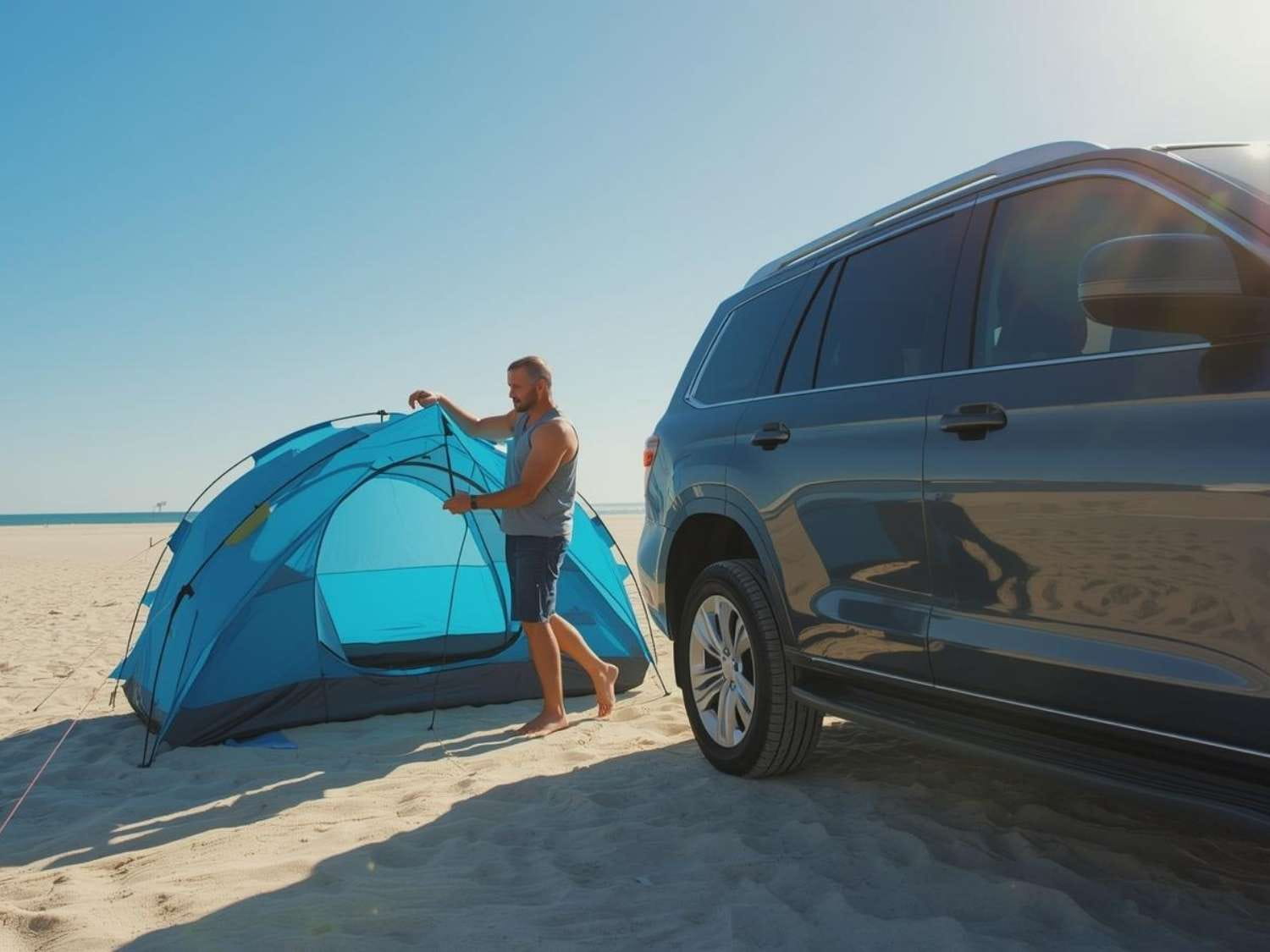
The honest answer is: it depends where you are.
In many parts of the world, beach camping is heavily regulated. Some beaches are privately owned, and others fall under local council control. National parks and protected coastal areas often have strict rules, even if there are no obvious signs when you arrive.
A Quick Global Overview
In the United States, some state parks and national seashores allow beach camping in designated areas, often with permits. In Australia and parts of New Zealand, certain coastal areas are camper-friendly, but others are tightly restricted due to conservation concerns.
Across much of Europe, rules vary by country and even by region. Some Mediterranean beaches are strictly no-overnight-stay zones, especially in summer. In Scandinavia, public access laws are more generous inland, but beaches can still have specific restrictions.
The key point is this: never assume.
A quick check online, or a call to a local ranger station or council office, can save you from being asked to pack up at 10pm.
What About the UK?
If you’re reading this from the UK, the rules are a bit more nuanced.
In England and Wales, wild camping is generally not legal without the landowner’s permission, and that includes beaches. There are exceptions in very specific areas, but as a rule of thumb, you shouldn’t pitch up on a random stretch of sand and expect it to be fine.
In Scotland, access rights are more flexible under the Land Reform Act. Wild camping is permitted in many places, provided you follow the Scottish Outdoor Access Code. That said, beaches near towns, busy areas, or sensitive wildlife habitats can still have local restrictions. Responsible, low-impact camping is the expectation.
In Northern Ireland, access varies depending on ownership and local bylaws, so it’s best to check with the local authority.
If you’re unsure about the wider legality of wild camping in the UK, it’s worth reading our guide on where you can and can’t camp legally, which breaks it down in plain English without the legal waffle.
Designated Beach Campsites vs Wild Beach Camping
There’s also a big difference between camping near the sea and camping directly on the sand.
Many coastal campsites sit just behind dunes or cliffs. You still get the sound of the waves and the sunrise over the water, but with toilets, marked pitches, and far less risk of the tide creeping up on you.
Wild beach camping, on the other hand, is usually about simplicity and self-sufficiency. No facilities, and no marked boundaries. Just you, your tent, and whatever the weather decides to throw at you.
Both can be brilliant, but one just requires a bit more homework.
The safest rule to follow is this: if you wouldn’t feel comfortable explaining your setup to a ranger or landowner, you probably haven’t done enough research yet.
Understanding Tides (Don’t Skip This)
We’ve already touched briefly on this, but it’s worth mentioning again – the sea doesn’t stay where you left it.
That sounds obvious, but it’s the mistake people make over and over again. You arrive at low tide, admire the huge stretch of exposed sand, and pitch your tent somewhere that feels comfortably distant from the water.
Six hours later, that comfortable distance can disappear completely.
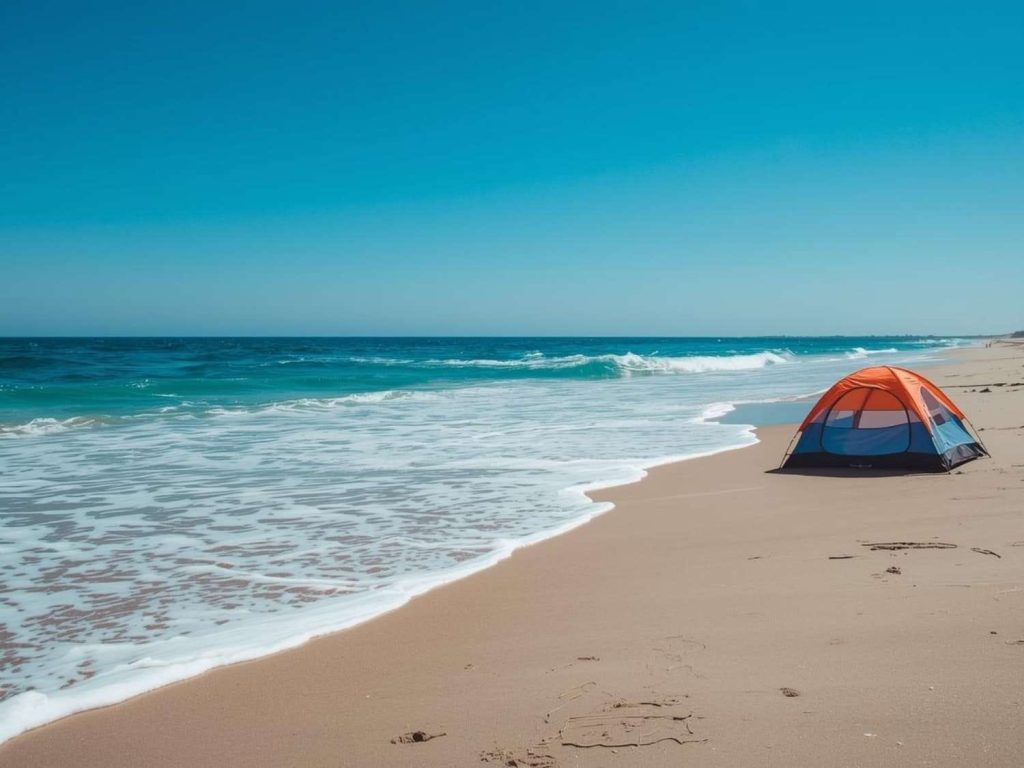
Tides are not subtle, and they don’t respect your camp boundary… They advance steadily, often faster than you expect, and at night they feel even closer because you can hear them long before you can see them.
If you’re going to camp on the beach, understanding the tide is not optional. It’s the difference between a peaceful night and packing up in the dark while trying not to swear too loudly.
High Tide vs Low Tide
Every coastline runs on a rhythm, usually two high tides and two low tides every 24 hours. The gap between low tide and high tide can be dramatic, especially in places like parts of the UK, Canada, or northern France where tidal ranges are large.
The key rule is simple: Never pitch your tent based on where the water is when you arrive.
Instead, look for the high tide line.
You’ll usually spot it by a natural boundary of seaweed, driftwood, shells, and debris that sits higher up the beach. That line tells you where the sea has recently reached, and you’ll want to pitch your tent well above it, not just slightly beyond it.
If you can’t clearly see a high tide line, assume the water comes further in than you think.
Spring Tides and Why They Matter
Here’s where it gets slightly more technical, but it’s worth knowing.
Twice a month, during full and new moons, we get what are called spring tides. These create higher-than-average high tides and lower-than-average low tides. That means the sea can travel further inland than it did the previous week.
So if you checked the tide tables last month and everything looked fine, that doesn’t guarantee anything this weekend.
This is why serious beach campers check the specific tide times and heights for the exact date they’re camping, not just a general “low tide at 6pm” glance.
There are plenty of reliable tide apps and websites that give detailed forecasts by location. It takes about thirty seconds to check, and those thirty seconds can save your sleeping bag from getting a saltwater rinse.
Don’t Forget the Wind
Wind direction can also push water further up the beach than predicted. A strong onshore wind can effectively “stack” water against the coast, especially in shallower bays.
That means even if you’re technically above the projected high tide line, bad weather can shrink your safety margin.
If heavy wind or storms are forecast, give yourself extra distance from the water. More than you think you need.
Night-Time Reality
Everything feels further away in daylight.
At night, when the horizon disappears and you can only hear the surf, the tide feels closer. The sound gets louder, the rhythm changes, and you start wondering if it’s imagination or if the water really is moving towards you.
If you’ve pitched properly above the high tide line, you can roll over and go back to sleep.
If you haven’t, you’ll spend the next two hours checking your torch every fifteen minutes.
Beach camping is meant to be relaxing. Do the tide homework first, and you’ll actually get to enjoy it.
Choosing the Right Beach
Not all beaches are equal.
Some look idyllic in photos and turn into wind tunnels by dusk. Others feel exposed at first glance but turn out to be surprisingly sheltered once you understand how the coastline curves.
The first thing to think about is exposure.
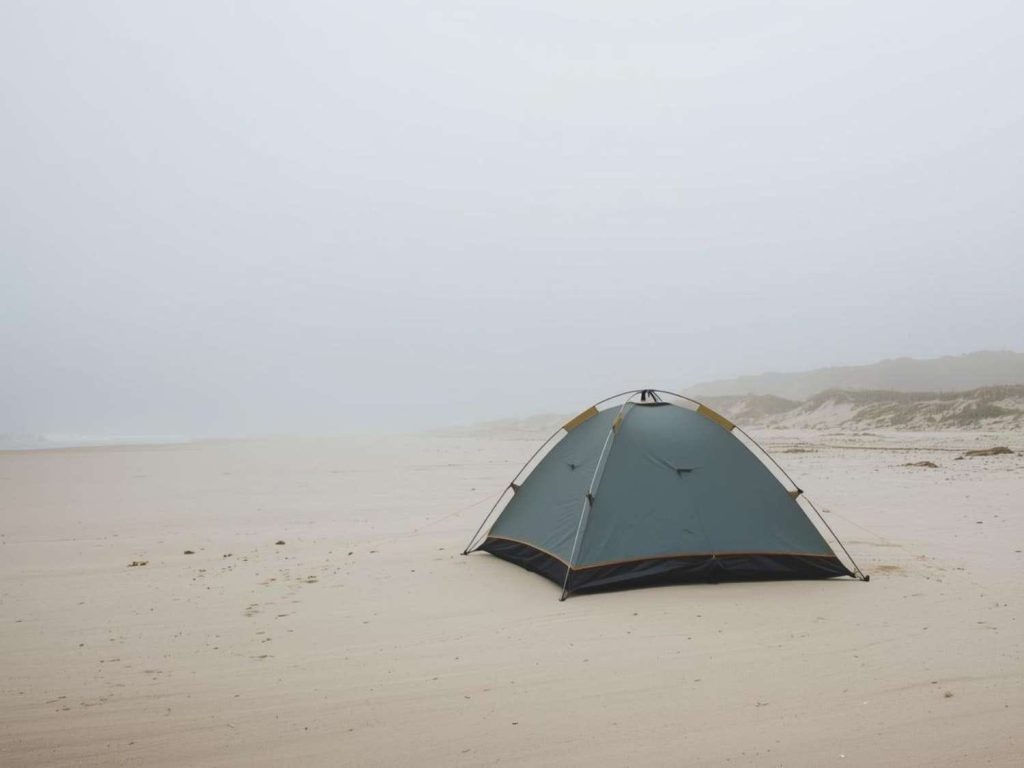
A wide, flat, open beach facing directly into prevailing wind might be beautiful, but it offers very little protection. If there are cliffs, dunes or natural bends in the coastline, those can act as wind buffers. Even a subtle curve in the shore can make a big difference once the breeze picks up.
This is where a bit of lightweight thinking helps. If you’re carrying everything in and out, you don’t want to hike two miles across soft sand only to realise you’ve chosen the most exposed section of the coastline. Our guide to lightweight camping covers how to reduce bulk without sacrificing comfort, which becomes especially useful when beach access isn’t as easy as it looked on Google Maps.
Then there’s the sand itself.
Soft, dry sand near the dunes can swallow tent pegs and make your setup feel unstable. Firmer, slightly damp sand lower down is easier to anchor into, but of course that brings you closer to the tide line. It’s always a balance.
Pebble beaches are a different experience altogether. They drain well, which can be helpful if you’re camping in the rain, but they’re not exactly mattress-friendly. If you’ve ever woken up with a stiff lower back after camping on uneven ground, you’ll know why choosing the right sleeping setup matters. A proper mattress makes more difference than most people realise, especially when the surface underneath isn’t forgiving.
Temperature matters too.
Beaches can feel warm during the day and surprisingly cold at night. Wind chill from the sea can drop the perceived temperature quickly after sunset. Choosing a sleeping bag rated for the actual conditions, not just the daytime forecast, is important here. If you’re unsure how to match a bag to climate and season, our sleeping bag guide breaks it down simply without turning into a science lesson.
And finally, think about people.
Early morning dog walkers. Evening beachgoers. Fishermen arriving before sunrise. Some beaches feel remote at sunset and busy again by dawn, and if privacy matters to you, a little scouting goes a long way.
The right beach isn’t just about the view. It’s about wind protection, tide safety, surface stability and realistic access. Get that right, and the rest of the experience becomes much easier.
Wind: The Bit People Underestimate
The tide gets the headlines, but the wind is what actually ruins your sleep.
Inland, a light breeze feels harmless. On the coast, that same breeze can turn into a steady, persistent force that never quite stops. It builds in the afternoon, peaks around sunset, and sometimes carries on long after you’ve zipped yourself into your sleeping bag.
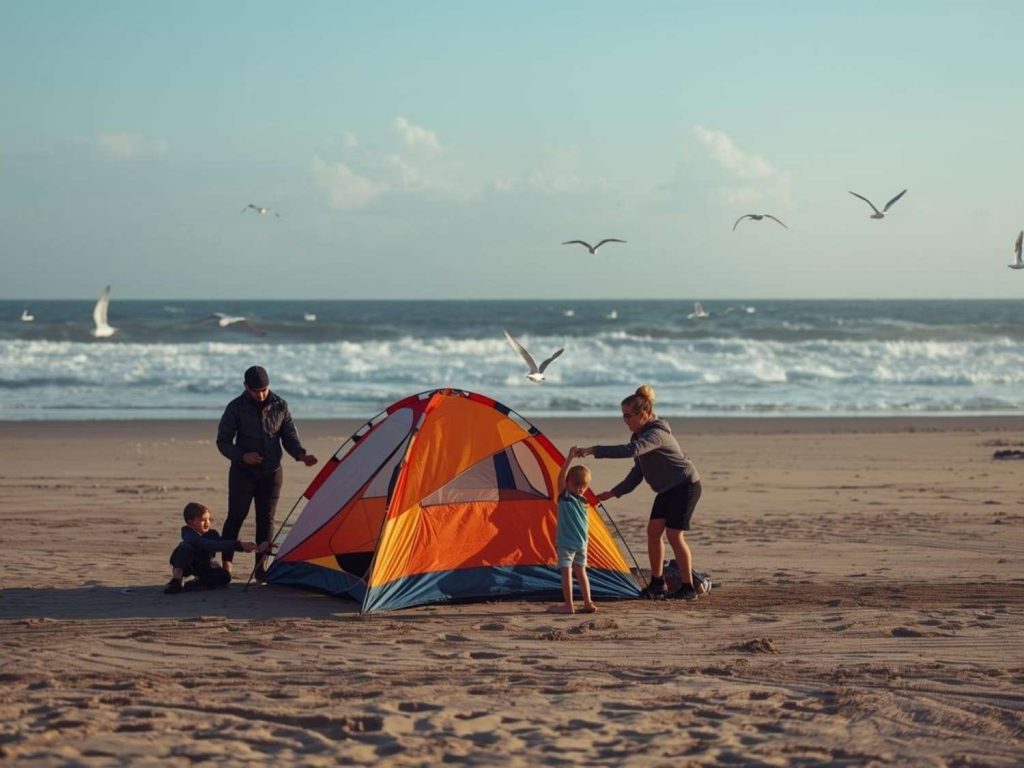
And the thing about coastal wind is that it doesn’t behave like you’d expect it to. It changes direction on a whim, it funnels through gaps, bounces off cliffs, and sneaks under flysheets – turning cheap tents into kites.
If you’ve ever watched someone chase their tent down a beach, you’ll understand why this matters.
Why Beach Wind Feels Stronger
There are fewer natural windbreaks on a beach. No trees, no hedges – just open exposure. Even dunes only help if you pitch in the right position, and that’s not always possible or allowed.
Open coastline means uninterrupted airflow, and once it gathers speed over the sea, it hits the land with very little resistance.
That’s why beach camping demands a more stable setup than a casual festival pitch.
Tent Choice Actually Matters Here
A lightweight pop-up tent might be fine for a sheltered campsite, but on sand it can struggle.
Low-profile dome tents with proper guy lines perform much better. Tents that allow you to tension the fly properly are far more resistant to flapping and flexing. And that constant flapping is what keeps people awake more than anything else.
If you’re camping regularly, this is one of those situations where decent gear genuinely pays off.
Pegging Into Sand Properly
Standard tent pegs often don’t cut it on soft sand.
You’ve got three better options:
- Use longer sand-specific pegs designed with wider surfaces.
- Bury pegs horizontally instead of vertically.
- Use improvised anchors, like burying stuff sacks filled with sand.
Burying your pegs sideways, about 20 to 30 centimetres deep, creates much stronger resistance. Once the sand compacts around them, they hold far better than simply pushing a thin peg straight down.
It takes a bit more effort at setup, but it’s much easier than fixing things in the dark when the wind picks up.
Wind Chill Is Real
Even if the daytime forecast looks mild, coastal wind can strip heat quickly once the sun drops.
That’s why checking evening temperatures, not just daytime highs, is important when planning beach camping. If you’re unsure how sleeping bag ratings actually work, it’s worth understanding the difference between comfort and extreme ratings. A bag that feels fine in a calm woodland clearing might feel underpowered when exposed to sea air and steady wind.
And if rain joins the party, things get uncomfortable quickly. Wet sand, strong wind and a poor setup is not a combination you want to troubleshoot at midnight. If you’ve never camped in bad weather before, it’s worth reading what to do if you’re caught in a storm while you’re camping, because coastal weather can change faster than you expect.
Wind is rarely dramatic enough to make headlines – it just wears you down quietly. Pitch with wind direction in mind, tension everything properly, and give yourself more stability than you think you need. Do that, and beach camping feels peaceful. Ignore it, and it feels like sleeping inside a washing machine.
Sand Management: The Part Nobody Warns You About
Sand looks harmless.
Soft, golden, photogenic. Great in travel brochures – less great once it’s inside your sleeping bag, your stove, your socks and somehow, inexplicably, your toothpaste.
Beach camping has one universal truth: sand gets everywhere.
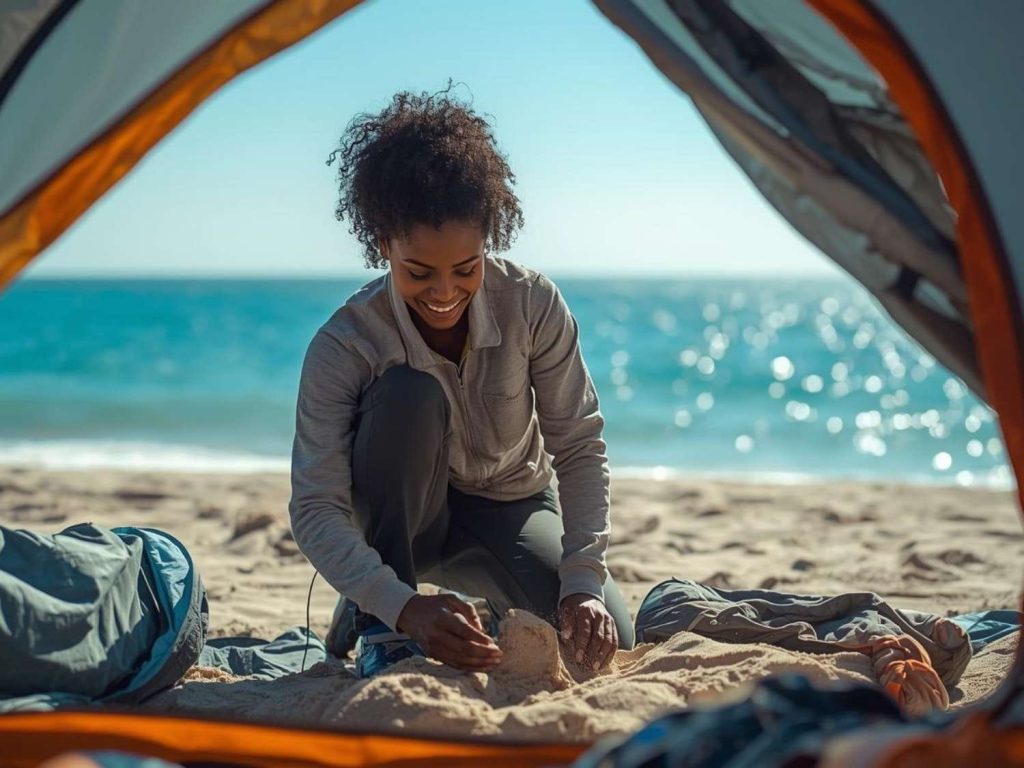
You won’t eliminate it completely, but you can manage it well enough that it doesn’t ruin the experience.
Create a “Dirty Zone”
The easiest win is setting up a small buffer area outside your tent entrance.
Shoes off before you step inside. Shake them properly. Don’t just tap them half-heartedly and hope for the best. Sand hides in laces and folds.
If you’ve got space, lay down a small groundsheet, old towel or even a folded tarp just outside the tent. It gives you somewhere to stand while brushing yourself off before climbing in.
It sounds minor, but this one habit alone keeps your sleeping area noticeably cleaner.
Protect Your Zips
Fine sand and tent zips are not friends.
Once grit gets into the teeth of a zip, it starts grinding. That’s when you get sticking, resistance and eventually damage. If you’re camping on the beach regularly, a quick wipe of your zips with a dry cloth before packing down can help extend their life.
It’s one of those tiny maintenance jobs that takes seconds but saves frustration later.
Keep Cooking Gear Covered
Wind plus sand plus open pans is not a great combination.
If you’re using a stove on the beach, keep your cooking area slightly sheltered if possible. Even turning your body into a windbreak can make a difference. A pot lid is more valuable than people realise, not just for fuel efficiency but for keeping grit out of your dinner.
If you’re still deciding on a stove setup, especially one that handles wind well, our guide to choosing a reliable camping stove breaks down options that perform better in exposed conditions.
Storage Matters More Than Usual
Dry bags become surprisingly useful on the beach.
Even if it’s not raining, they protect clothing and electronics from blowing sand. Zip up your backpack when you’re not using it. Close pockets. Seal things fully.
An open bag on a breezy beach will quietly fill with sand in minutes.
Expect a Bit of Chaos
Even with all of this, you’ll still end up bringing sand home.
It’ll fall out of cuffs days later. You’ll find a small pile in the boot of your car. That’s part of the deal.
The trick isn’t perfection. It’s keeping things manageable so you’re not trying to sleep on what feels like a bag of granulated sugar.
Once you accept that sand is part of the experience, and plan around it instead of fighting it, beach camping becomes much less stressful.
Beach Camping Gear That Actually Matters
You don’t need specialist “extreme expedition” kit to camp on the beach.
But you do need to think slightly differently about what matters.
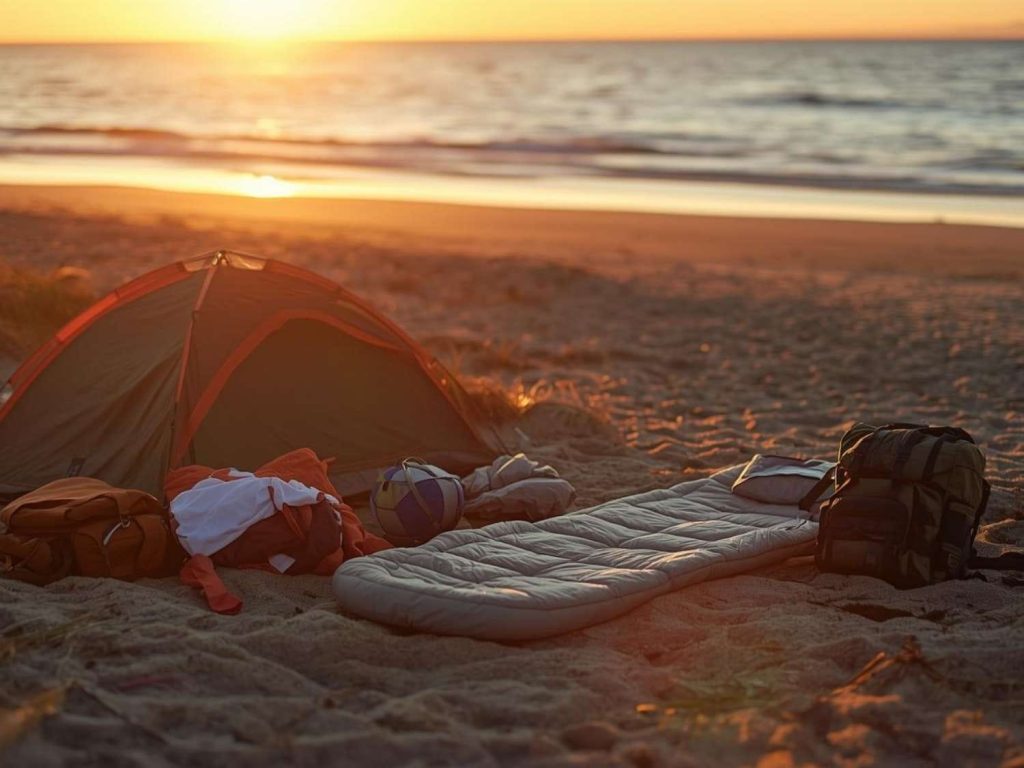
A lot of generic camping advice assumes grass underfoot and trees nearby, but the coast plays by different rules.
A Stable Tent (Not Just a Cheap One)
On a beach, stability matters more than convenience.
Low-profile dome tents with proper guy lines tend to perform better than tall, boxy designs that catch the wind. The ability to tension your flysheet properly is key. Loose fabric plus coastal wind equals a long, noisy night.
If you’re someone who prefers minimal setups, camping without a tent is possible in certain conditions, but on exposed sand it’s rarely the comfortable option unless the forecast is rock solid.
Proper Pegs or Anchors
Standard thin metal pegs are often useless in soft sand.
Longer sand pegs or improvised buried anchors make a huge difference. It’s one of those small upgrades that transforms your setup from “hopeful” to “solid”.
A Decent Mattress
This is where people cut corners and regret it.
Sand shifts. It’s rarely perfectly flat, and if you’re pitched on a slight slope, your body feels it more than you expect. A good camping mattress doesn’t just add comfort, it stabilises your sleep.
If back comfort matters to you, especially on uneven ground, it’s worth understanding what actually makes a mattress supportive rather than just thick. Soft isn’t always the same as supportive.
Beach camping should leave you relaxed, not hobbling slightly stiff along the shoreline in the morning.
We’ve written a guide to camping with a bad back if you’re interested in learning more.
The Right Sleeping Bag
Coastal nights cool quickly.
Even in summer, steady wind and damp air can make temperatures feel lower than forecast. Choosing a bag based on realistic overnight lows, not just daytime sunshine, is important.
If you’re unsure how temperature ratings actually work, our sleeping bag guide explains comfort versus limit ratings clearly so you don’t overestimate your setup.
A Stove That Handles Wind
Cooking on the beach can be surprisingly frustrating if your stove isn’t stable.
Wind affects flame efficiency, which wastes fuel and lengthens boil times. A lid on your pot helps massively. So does positioning your stove in a natural dip or slight shelter.
And when you’re finished, dispose of fuel properly. If you use gas canisters, don’t just toss them in the nearest bin. We’ve covered how to recycle camping gas canisters safely so you’re not leaving behind something that can cause problems later.
Lighting You Can Trust
Beaches are dark.
There are no trees to break the wind, but there are also no overhead canopies to soften the night sky. Once the sun drops, it drops properly.
A reliable headlamp with decent battery life makes a big difference, especially if you need to check your pitch during the night when the tide turns.
Beach camping doesn’t demand more gear; it demands smarter choices. Stable shelter. Reliable warmth. Practical wind resistance. And just enough comfort to actually enjoy waking up by the sea. For more info about the kit you’ll need, our guide to the essential camping gear has you covered.
Safety & Common Mistakes
Beach camping isn’t dangerous in the dramatic, headline-grabbing sense.
It’s just unforgiving if you get lazy.
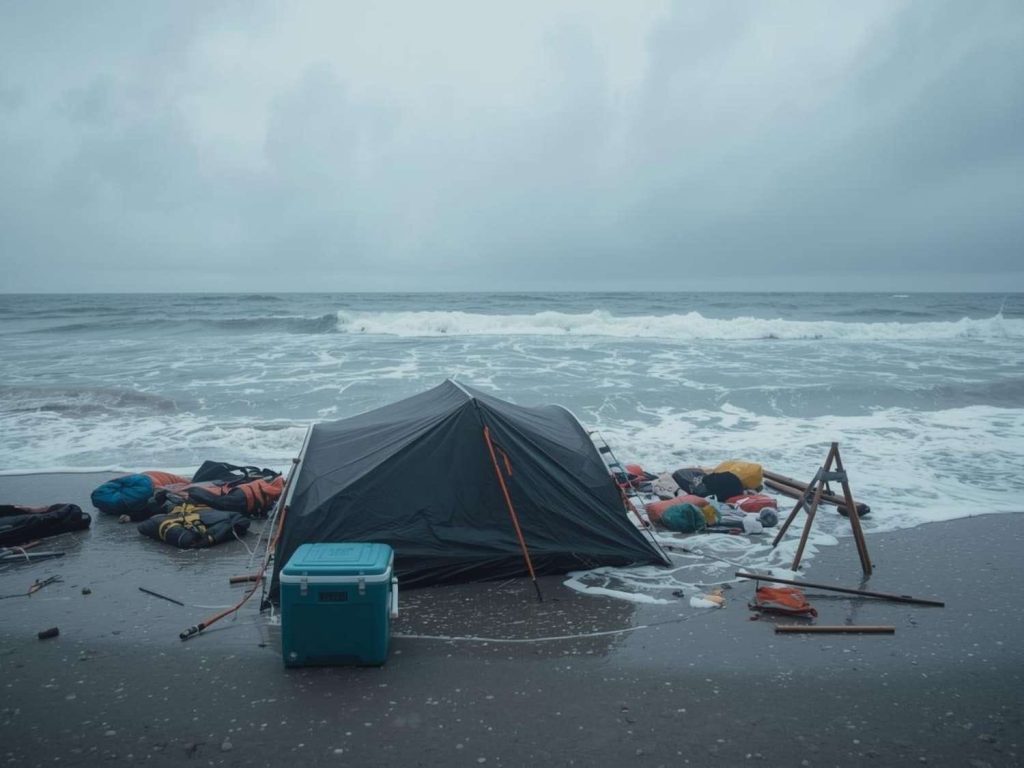
Most problems come from small oversights rather than big disasters. And they’re usually preventable with a bit of thought beforehand.
Don’t Camp Too Close to the Water
We’ve covered this in detail already, but it’s the most common mistake.
People pitch based on the view, not the tide line. The closer you are to the sea, the better the photo looks. But tides don’t care about aesthetics.
Always pitch well above the high tide line, not just a few metres beyond where the water sits when you arrive. Give yourself a buffer. Then give yourself another one.
If in doubt, move higher.
Check the Weather Properly
Beach forecasts deserve more attention than inland ones.
Wind speed matters more. Direction matters more. And storms rolling in from the sea can feel more intense than the same system hitting sheltered countryside.
The sea magnifies weather. Treat it with a little more respect than you would a calm woodland site.
Be Fire-Smart
Open flames on sand can look atmospheric, but they come with risk.
Wind shifts quickly on the coast. Embers travel further than you expect. Many beaches prohibit fires entirely, especially in summer months or near dunes.
If fires are allowed, keep them small and controlled. And never assume burying hot embers in sand makes them safe. Sand insulates heat; it doesn’t extinguish it.
Gas stoves are generally safer, but even then, stability and wind shielding matter.
Respect Wildlife and Other People
Beaches are shared spaces.
Early morning dog walkers. Fishermen. Families. Shorebirds nesting near dunes. Just because a beach feels empty at sunset doesn’t mean it’s yours for the night.
Keep noise down, pack out everything you bring in, and leave the area cleaner than you found it.
And if someone politely asks what you’re doing, respond politely. Calm confidence goes further than defensiveness.
Don’t Assume Remote Means Safe
Some beaches feel wild and isolated, especially outside peak season.
That can be peaceful, but it can also mean you’re further from help if something goes wrong.
Let someone know where you’re camping. Check your phone signal before you rely on it. Keep a basic first aid kit accessible.
None of this is about paranoia. It’s about quiet preparation.
Beach Camping FAQ
Is beach camping safe for beginners?
Yes, provided you plan properly. The main risks come from tides, wind and weather exposure rather than wildlife or terrain. Beginners are often better starting at a designated coastal campsite before attempting fully wild beach camping, so they can get used to the conditions without added pressure.
What’s the best time of year for beach camping?
Late spring to early autumn is generally easiest in most temperate climates. Summer offers longer daylight and warmer nights, but can mean busier beaches and stricter regulations. Shoulder seasons, like May or September, often strike the best balance between manageable weather and quieter surroundings.
Do you need special tent pegs for sand?
In soft sand, standard thin pegs often struggle. Longer, wider sand pegs or buried horizontal anchors provide much better hold. In firmer, damp sand, regular pegs can work if properly secured, but wind resistance should always be considered.
Can you sleep directly on the sand?
You can, but comfort and insulation matter. Sand holds daytime heat but cools quickly after sunset. A proper sleeping mat or mattress provides insulation and evens out small slopes or dips. Without one, you’re likely to feel both cold and slightly uncomfortable by morning.
Is beach camping bad for the environment?
It can be if done carelessly. Sensitive dune systems, nesting birds and fragile coastal plants are easily damaged. Stick to durable surfaces, avoid protected areas, take all waste with you and follow local regulations. Responsible beach camping leaves no visible trace by morning.
What do you do if the tide comes in faster than expected?
If you notice the water approaching your pitch line, move immediately. Don’t wait to “see what happens”. Pack quickly and head to higher ground. This is why choosing a site well above the high tide line from the start is so important.
Can you have a campfire on the beach?
It depends on local regulations. Many beaches prohibit fires due to safety and environmental concerns. Even where allowed, wind can make fires unpredictable. Always check local rules before lighting anything, and never leave embers buried in sand.
Is beach camping colder than normal camping?
Often, yes. Coastal wind increases heat loss, especially at night. Even if daytime temperatures are warm, the combination of sea air and breeze can make nights feel noticeably cooler than inland campsites.
Is it legal to camp on any beach?
No. Laws vary widely by country, region and even individual beach. Always check local regulations before pitching. In many areas, camping is restricted to designated sites or requires landowner permission (not a problem if you know how to ask).
Final Thoughts
There’s something different about sleeping beside the sea.
The air feels cleaner, and the atmosphere can be great for your mental health – you fall asleep to the rhythm of the tide and wake up slightly salty, slightly sandy, and strangely calm.
Beach camping isn’t effortless though. It asks a bit more of you. A bit more planning. A bit more awareness. A bit more respect for wind, water and the fact that coastlines don’t behave like tidy inland campsites.
But done properly, it’s one of the most rewarding ways to spend a night outdoors.
Pitch high. Check the tide properly. Secure everything like you mean it. Leave no trace.
And when the sun comes up and the beach is quiet again, with just that soft wash of waves and a mug of something warm in your hands, you’ll know it was worth the extra thought.
Done right, beach camping doesn’t feel risky or stressful.
It just feels simple.
And that’s the point.
