
Camping with teenagers is a slightly different experience to camping with younger kids, in the same way that sharing a car journey with a toddler is different to sharing one with someone who would quite happily ignore you for six straight hours while staring at their phone.
When they’re little, camping feels like an adventure by default. A tent is exciting, a torch is fascinating, and eating slightly undercooked sausages counts as a highlight of the day. Teenagers, on the other hand, tend to arrive with expectations, preferences, and a fairly well-developed ability to immediately decide that something is, in fact, not worth their time.
Which is where things can start to unravel a bit.
It’s not that teens hate the outdoors, or that they’re incapable of enjoying a camping trip. It’s more that camping often removes the things they’re used to (their space, their routines, their friends, their Wi-Fi) and replaces them with something that feels, at least initially, like a downgrade in comfort and freedom.
And if you handle that badly, what you end up with isn’t a wholesome family adventure. It’s a long weekend of subtle resistance, mild sulking, and the occasional pointed sigh that somehow carries across an entire campsite.
Handled well, though, it can be surprisingly good. Not perfect, not Instagram-worthy every five minutes, but genuinely enjoyable in a subtle, more low-key sort of way that tends to sneak up on you.
Quick Answer: How to Camp With Teenagers Successfully
Camping with teenagers works best when you give them a bit of independence, involve them in decisions before you even leave, and resist the urge to schedule every moment of the trip. Focus on keeping things reasonably comfortable, allow some level of tech use instead of banning it outright, and aim for a balance between time together and time apart, because the less it feels forced, the more likely they are to actually engage with it.
Why Teenagers Often Hate Camping (It’s Often Not Why You Think)
The obvious assumption is that teenagers dislike camping because it’s “boring,” or because they’d rather be indoors doing literally anything else. That’s part of it, but it’s not really the whole picture, and if you treat it like a boredom problem, you usually end up trying to fix it with activities that don’t quite land.
What’s actually going on is a bit more subtle.
For most teenagers, everyday life is built around a certain level of control. They choose what they do with their time, who they talk to, how they relax, and even when they disengage from everything and disappear into their own space for a while. Camping very quickly removes a lot of that in one go.
Suddenly they’re in a shared space, often sleeping closer to people than they normally would, eating at set times, following a loose plan they didn’t really design, and cut off, at least partially, from their usual social world. Even if they don’t consciously think about it like that, it registers.
Then there’s the comfort side of things.
A slightly lumpy sleeping mat, a colder night than expected, or the general faff of living out of bags can feel like a novelty when you’re younger, but as a teenager it can tip into “why are we doing this to ourselves?” surprisingly quickly, especially if they didn’t have much say in the setup.
That’s why getting the basics right matters more than people think. Something as simple as a decent sleep setup can quietly make or break the whole experience, which is exactly why a lot of people end up realising, usually after a fairly restless night, that comfort isn’t really the place to cut corners, particularly if you’re already dealing with things like aches, poor sleep, or just general resistance to being there in the first place.
And finally, there’s the social element.
Teenagers are wired, whether they admit it or not, to stay connected to their world. Friends, messages, group chats, whatever it happens to be, it all plays a part in how they experience their day. Remove that completely, and it can feel less like a break and more like being completely disconnected from everything that matters to them at that moment.
Put all of that together, and it’s not hard to see why a camping trip can get off to a slightly shaky start.
The good news is that none of this means camping with teenagers is doomed, it just means the approach needs to shift a bit.
Contents
- Set Expectations Before You Even Leave
- Give Them Real Independence
- Don’t Try to Entertain Them Like Kids
- Bring the Right Comforts (This Matters More Than You Think)
- Balance Time Together and Time Apart
- Use Tech Strategically (Instead of Banning It)
- Give Them a Role That Actually Matters
- Accept That It Won’t Look Like Instagram
- Camping With Teenagers | Frequently Asked Questions
- Final Thoughts
Set Expectations Before You Even Leave
The success or failure of a camping trip with teenagers is often determined before you’ve even packed the car, and not in any dramatic way, but in the sense that expectations tend to harden early and then quietly follow everyone around for the rest of the trip.
If a teenager goes into it thinking it’s going to be uncomfortable, boring, and slightly inconvenient, they’ll usually find enough evidence to confirm that within the first few hours. Not because they’re being difficult, but because that’s just how people work – we all tend to notice what we expect to see.
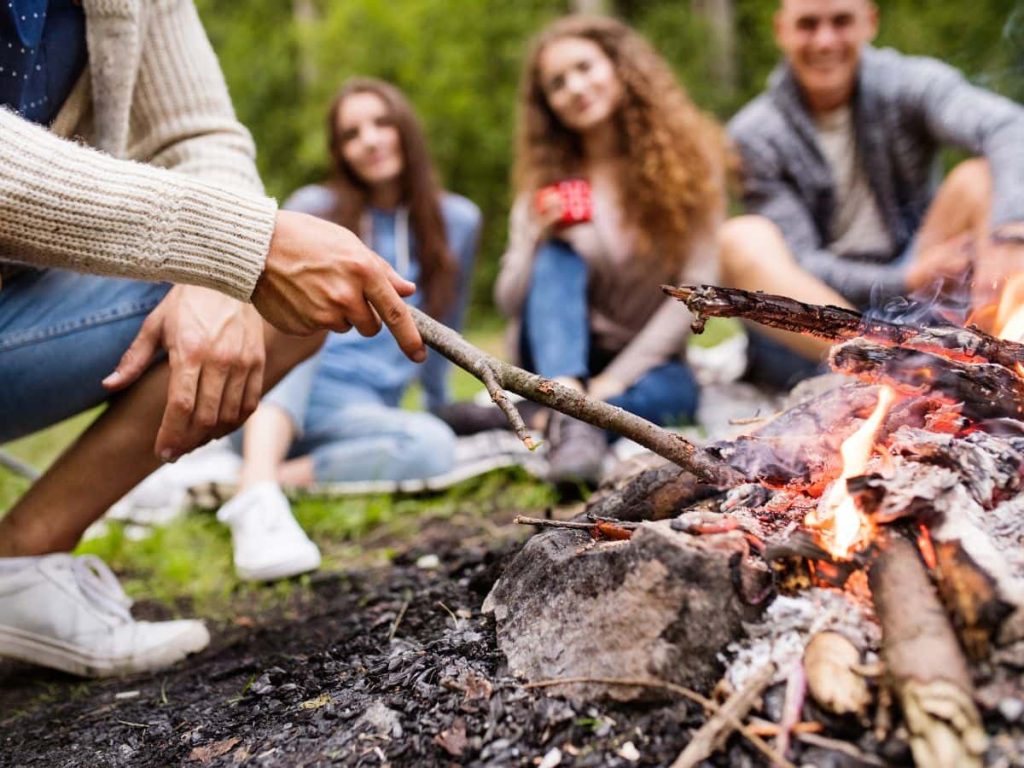
Which is why overselling the trip is one of the first (and easiest) mistakes to make.
It’s tempting to pitch it as this amazing, back-to-nature experience where everyone reconnects, has deep conversations, and somehow enjoys sitting in a field more than they enjoy their normal lives. Camping is often cited as a fantastic way to improve mental health, but the problem is that if reality comes in even slightly below that, which it almost always does at some point, it feels like a letdown rather than just a normal, slightly imperfect trip.
It works much better to be a bit more grounded about it.
Frame it as something different rather than something better. A change of pace, a bit of time outdoors, a chance to switch things up for a couple of days without pretending it’s going to replace everything they already enjoy. That small shift alone takes a surprising amount of pressure off.
The other part of this, which tends to matter more than people expect, is giving them some level of input before you go.
Not in a token “where would you like to go?” way where the decision has already been made, but in a genuine sense of letting them influence parts of the trip. That might be choosing a campsite, planning a walk, deciding what food to bring, or even just having a say in how the days are structured.
A trip that’s been decided for them feels very different to one they’ve had even a small hand in shaping, and that difference tends to show up later on when things don’t go perfectly, which they won’t, because everybody makes mistakes while camping – especially if you’re new to camping.
It also helps to be honest about the practical side of things.
If you know the setup is going to be basic, say so. If there’s going to be a bit of walking, or limited signal, or a slightly cramped sleeping arrangement, it’s better that they know that going in rather than discovering it on arrival while standing in a car park wondering where things went wrong.
In a roundabout way, this is really about trust.
You’re not trying to convince them that camping is brilliant; you’re giving them a realistic picture of what it’s actually going to be like and letting them meet it halfway. And when you do that, you tend to get far less resistance, not because they’re suddenly thrilled about everything, but because they don’t feel like they’ve been sold something that doesn’t quite exist.
Give Them Real Independence
There’s a particular kind of well-meaning parenting move that tends to backfire quite quickly with teenagers, and it usually sounds something like, “Do you want to help set up the tent or organise the food?”
On the surface it looks like a choice, but most teenagers can spot within about half a second that it isn’t really one, it’s just a polite way of assigning a task.
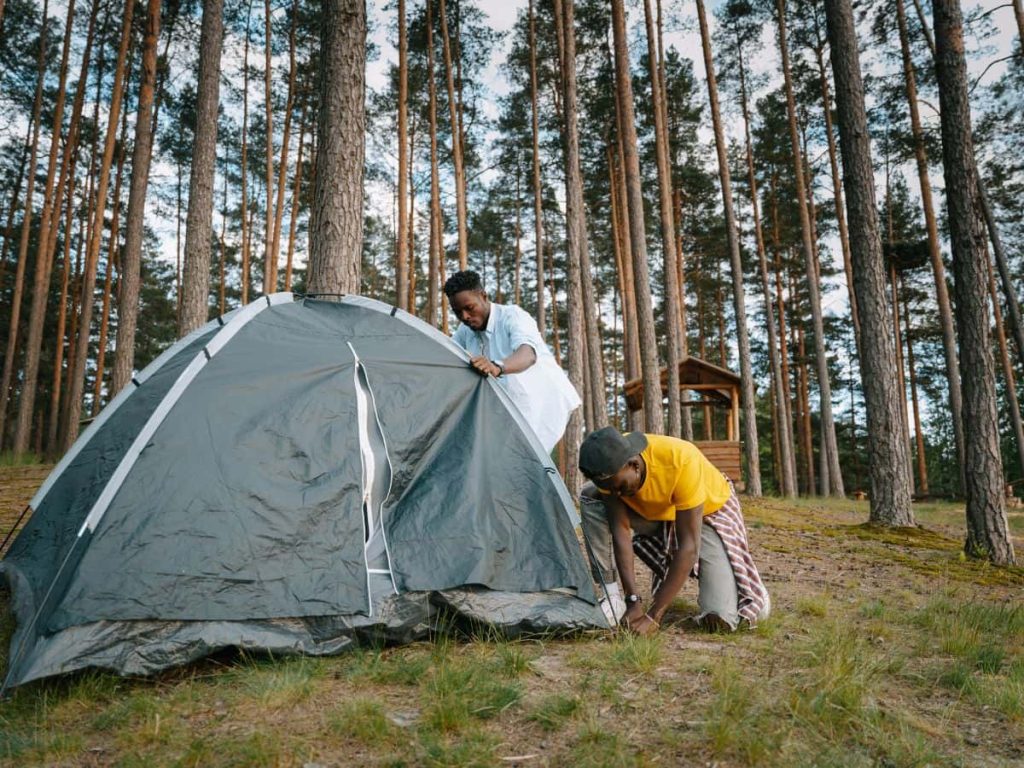
What tends to work much better is giving them independence that actually feels like independence.
That doesn’t mean letting them do whatever they like with no structure at all, because that usually creates a different set of problems, but it does mean loosening the grip slightly in areas where it doesn’t really matter. Let them decide when they get up, within reason. Let them drift off for a walk around the campsite. Let them sit with their headphones on for a bit without treating it like a missed opportunity for family bonding.
It’s a small shift, but it changes the atmosphere quite a lot.
When teenagers feel like they’re being managed too closely, especially in an environment that already feels unfamiliar, they tend to pull back. Not dramatically, just quietly, in a way that shows up as disengagement more than outright resistance. Give them a bit of space, and that tension usually eases on its own.
There’s also something to be said for giving them their own physical space, even if it’s fairly limited.
If you’ve got the option, letting them have their own tent, or at least a separate area within a larger one, can make a noticeable difference. It gives them somewhere to retreat to, somewhere that feels a bit more like theirs rather than a shared family zone where they’re always “on.”
That ties into comfort as well, because the less the setup feels like a compromise, the less resistance you tend to get overall. This is one of those areas where people sometimes try to keep things ultra minimal, which works brilliantly in some situations (if you’re planning a lightweight camping trip for example, or camping without a car) but if you’re balancing that against keeping a teenager reasonably happy, it’s often worth leaning slightly more towards comfort than strict efficiency.
This is something that comes up a lot when people start refining their kit after a few trips and realise that carrying a bit less isn’t always the same as enjoying it more, especially if you don’t have the essential camping gear you need.
It’s also worth remembering that independence doesn’t mean isolation.
Most teenagers won’t disappear for hours on end during a family camping trip, and even if they do drift off for a bit, they usually come back around naturally, particularly if there’s something happening that doesn’t feel staged or overly organised. The key thing is that it feels like their choice to engage, not something they’re being nudged towards every five minutes.
Once that balance is right, you tend to notice a subtle change.
They might still sit on their phone for a while, or wander off with minimal explanation, but they’re also far more likely to join in when something interesting is actually happening, whether that’s cooking, exploring, or just sitting around talking when the day winds down a bit.
And that, more than anything, is what you’re aiming for.
Don’t Try to Entertain Them Like Kids
This is probably where most camping trips with teenagers go slightly off track, and it usually comes from a good place.
There’s a natural instinct to keep things moving, to fill the day with activities, to make sure no one gets bored, because boredom feels like the beginning of the end. With younger kids, that works quite well. With teenagers, it often has the opposite effect.
The moment something feels organised purely for their benefit, especially if it’s a bit forced, it tends to lose its appeal almost instantly.
It’s not that they don’t like doing things, it’s that they don’t like feeling like they’re being managed.
You can usually see it happening in real time. A well-intended suggestion, a game, a planned activity, and instead of enthusiasm you get a kind of polite indifference, or worse, a slightly reluctant participation that feels like everyone’s just going through the motions.
That’s why trying to “keep them entertained” can become exhausting for everyone involved.
A better approach, as counterintuitive as it sounds, is to step back a bit and let the day breathe.
Let there be gaps where nothing is happening. Let there be moments where people drift, sit around, wander off, or just exist without a plan. It might feel like nothing’s happening, but that’s often where things start to shift.
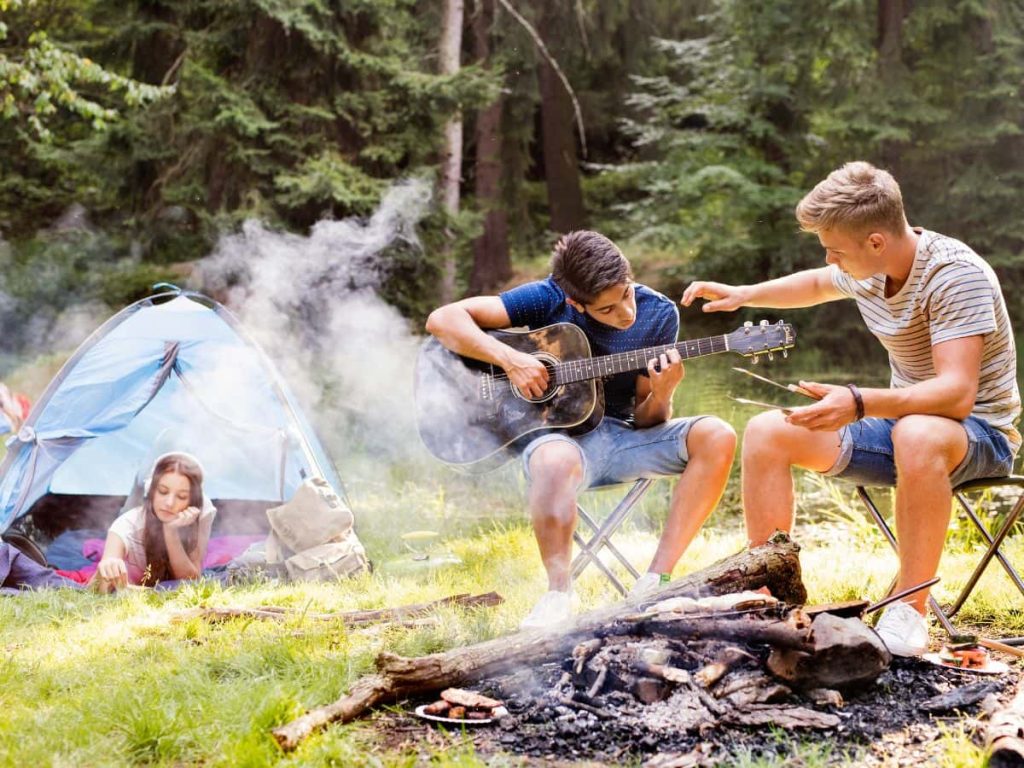
Because boredom, in small doses, isn’t really a problem.
It’s usually just the transition between structured life and something a bit slower, and once that initial restlessness passes, teenagers tend to find their own rhythm. They might start exploring, taking photos, helping out with something practical, or just becoming a bit more present without making a big deal of it.
And the key thing is, when that happens, it feels natural rather than imposed.
That doesn’t mean doing nothing at all, of course.
Having a loose plan – a walk, a place to explore, something easy to cook together – gives the day a bit of shape. But the difference is that it’s there as an option, not a schedule that everyone is expected to follow without question.
It also takes a surprising amount of pressure off you.
You’re no longer trying to engineer a perfect experience, you’re just creating the conditions for something decent to happen and letting it unfold in its own time. Some parts will land, some won’t, but overall it tends to feel a lot more relaxed.
And ironically, that’s usually when teenagers start to engage a bit more.
Not because they’ve suddenly been won over by the idea of camping, but because it no longer feels like something they’re being pushed into enjoying.
Bring the Right Comforts (This Matters More Than You Think)
If there’s one thing that will make or break a camping trip with teenagers, it’s not the activities, the views, or even the weather.
It’s comfort.
Or more specifically, the lack of it.
You can get away with a slightly damp morning, a longer walk than expected, or a bit of boredom here and there, but a bad night’s sleep has a way of lingering into the next day, and the one after that, quickly lowering everyone’s tolerance for everything else.
And teenagers, unlike younger kids, don’t tend to just brush that off.
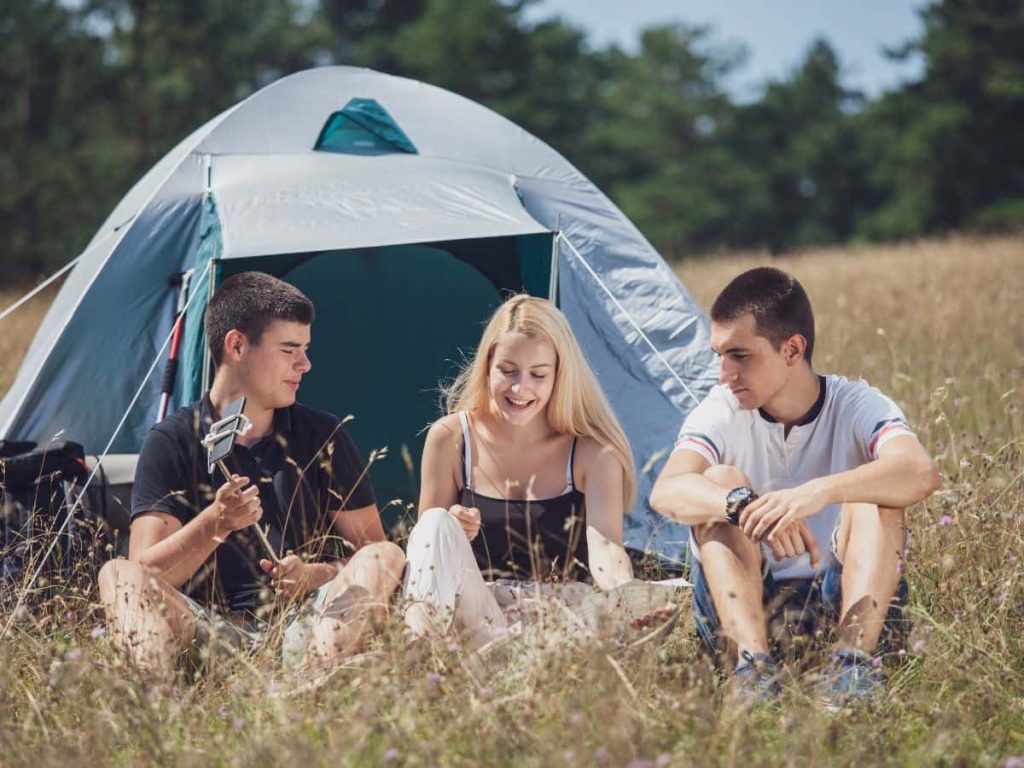
They notice when they’re cold, when they haven’t slept properly, when something feels awkward or inconvenient, and once that discomfort sets in, it becomes the lens through which the whole trip gets judged. Suddenly it’s not “we went camping,” it’s “we slept badly in a field and then did things while tired.”
Which is why the basics matter more than people expect.
A decent sleeping setup is probably the biggest one. Something properly insulated, reasonably comfortable, and actually suited to the conditions you’re in makes a huge difference, not just physically, but mentally. When someone knows they’re going to get a decent night’s sleep, they’re far more relaxed about everything else.
It’s one of those areas where people often try to keep things ultra simple or lightweight, which absolutely has its place, but if you’re trying to keep a teenager on side, it’s usually worth leaning a little more towards comfort than minimalism, at least until everyone’s a bit more used to the experience. That balance between carrying less and still enjoying the trip is something people tend to figure out over time, especially once they realise that cutting too many corners on comfort doesn’t actually make things easier, it just shifts the problem somewhere else.
Clothing is another massive factor.
Being slightly too cold, slightly damp, or just generally uncomfortable doesn’t sound like much on paper, but over the course of a day it adds up. Having the right layers, something warm for the evening, and a backup for when the weather inevitably does its own thing can make everything feel far more manageable.
Food plays into this as well.
It doesn’t need to be elaborate, but it does need to be enjoyable. Camping food has a reputation for being basic, which is fine, but there’s a big difference between simple and disappointing. Letting them have a say in what’s being eaten, or even just making sure there are a few things they actually look forward to, goes a long way.
And then there are the small comforts that don’t seem essential until you don’t have them.
A decent pillow instead of a rolled-up jumper. A chair that’s actually comfortable to sit in for more than ten minutes. A bit of lighting that isn’t just a single torch being passed around like a shared resource.
This is also where it helps to be realistic about what kind of trip you’re doing.
If you’re heading out on a proper lightweight setup where everything has to be carried, then yes, compromises need to be made. But for most family camping trips, especially when you’ve got the car nearby, there’s usually no real benefit to making things harder than they need to be.
You’re not trying to prove anything.
You’re just trying to make the experience comfortable enough that everything else has a chance to work.
Balance Time Together and Time Apart
There’s an idea that camping is all about togetherness – everyone doing everything as a group, sharing every meal, every walk, every moment, and while that sounds nice in theory, in practice it can get a bit intense surprisingly quickly.
Especially with teenagers.
What tends to happen is that the more time everyone spends together without a break, the more small things start to grate. It doesn’t even have to be anything significant, it’s just a gradual build-up of minor irritations, slightly mismatched moods, and the feeling of not having any space to reset.
And once that starts, it can colour the whole trip.
That’s why building in a bit of natural separation makes such a difference.
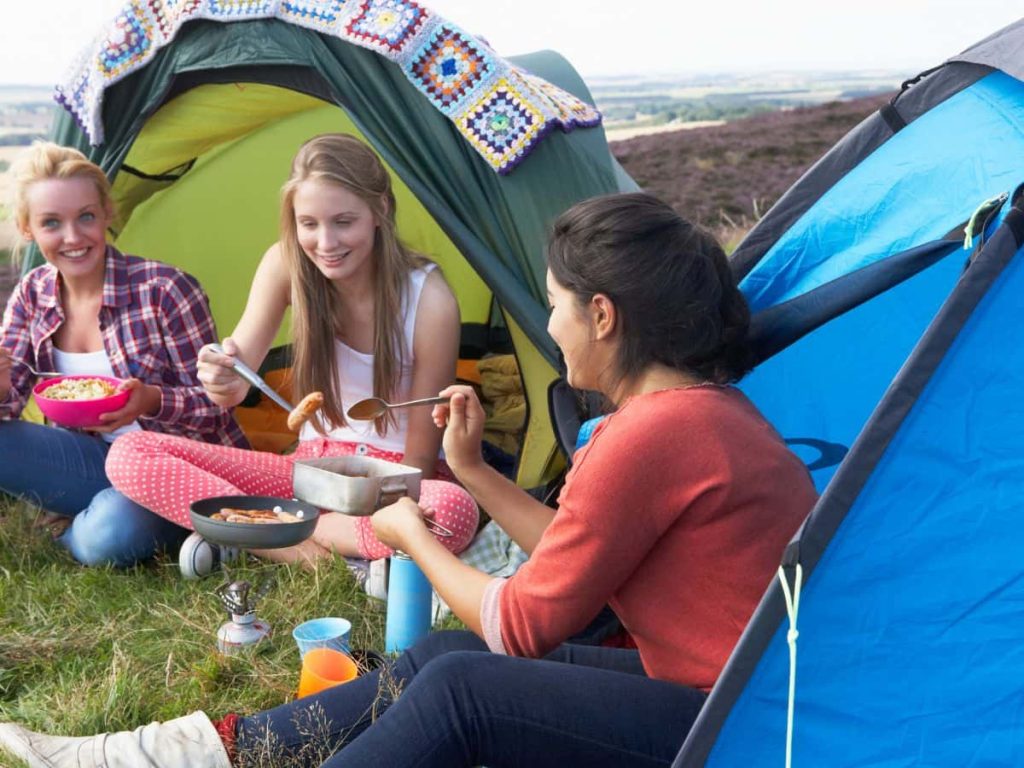
It doesn’t need to be structured or announced like part of the itinerary, it can be as simple as letting people drift into their own thing for a while. One person might go for a short walk, someone else might sit and read, a teenager might retreat to their own space with headphones on, and suddenly the whole atmosphere feels a bit lighter.
Because people have had a chance to breathe.
It also makes the time you do spend together feel more natural.
Instead of it being constant and slightly forced, it becomes something that happens in pockets. Cooking together in the evening, sitting around chatting as it gets dark, heading out for a walk when it actually feels like a good idea rather than something that’s been planned in advance.
Those moments tend to land better because they’re not competing with the need for space.
It’s also worth being relaxed about how those shared moments look.
Not every meal needs to turn into a big social event, and not every activity needs full participation. If someone dips in and out, joins for part of something and then disappears again, that’s usually fine. In fact, it’s often a sign that the balance is about right.
Trying to keep everyone together all the time tends to have the opposite effect.
People start opting out entirely rather than partially engaging, because it feels like an all-or-nothing situation. Give them the option to come and go, and they’re far more likely to show up when it matters.
And over the course of a trip, that balance adds up.
You end up with a mix of shared moments and individual time, which feels far more natural than trying to manufacture a constant sense of togetherness. It’s quieter, a bit less obvious, but usually much more enjoyable for everyone involved.
And perhaps more importantly, it leaves people with a better overall impression of the trip, even if no single moment stands out as particularly special.
Use Tech Strategically (Instead of Banning It)
There’s a fairly common instinct, when it comes to camping with teenagers, to treat it as a kind of enforced digital detox.
No signal, no Wi-Fi, no phones, and no distractions. Just fresh air, conversation, and the gentle crackle of a campfire bringing everyone back to what really matters.
It sounds lovely, but in reality it’s a really bad idea.

Because from a teenager’s point of view, removing their phone entirely doesn’t feel like a refreshing break from technology, it feels like losing access to their world. Friends, conversations, entertainment, routines – it’s all tied up in that one device, and taking it away in one go can feel less like a benefit and more like a restriction.
And once it feels like a restriction, you’ve created resistance before the trip has even properly started.
And while spending time outdoors does have genuine mental and emotional benefits, particularly for stress, mood, and overall wellbeing, it tends to work best when it’s something they ease into rather than something that’s forced on them all at once, which is exactly how the NHS approaches it when talking about the benefits of being outdoors.
That doesn’t mean phones need to take over the experience, but it does mean they’re usually better managed than banned.
A bit of flexibility goes a long way here.
Let them use their phone at certain times, let them check in with friends, listen to music, scroll for a bit if they want to. It doesn’t stop them engaging with the trip, it just removes that underlying tension of feeling cut off from everything else.
In fact, it often has the opposite effect.
Once the pressure’s gone, they tend to dip in and out of it naturally rather than clinging to it out of habit or frustration. It becomes background rather than the main event, which is exactly where you want it.
There are also ways to make tech part of the experience rather than something that competes with it.
Downloading films or series for the evening can give everyone something to wind down with without relying on signal. Music can completely change the feel of a quiet evening around the tent. Even something as simple as using a phone for photos, maps, or planning the next day adds a sense of involvement rather than distraction.
It turns the device into a tool instead of a barrier.
And realistically, this is how most adults approach it as well.
Very few people go camping and genuinely disconnect completely. There’s usually a bit of phone use, a bit of checking in, a bit of convenience mixed in with everything else. Expecting teenagers to operate differently rarely works in practice.
So instead of trying to remove tech entirely, it’s usually more effective to set a tone around it.
Not constant use, not total restriction, just something in between that allows it to exist without dominating everything. A bit of flexibility, a bit of trust, and a general understanding that it’s part of their world, even if you’re trying to step slightly outside of it for a few days.
Once that balance is right, it tends to stop being an issue altogether.
Give Them a Role That Actually Matters
One of the easiest ways to shift a teenager from being a slightly reluctant passenger on a camping trip to someone who’s at least somewhat invested in it is to give them something to do that genuinely matters.
Not in a token way, or as a distraction, but as part of how the trip actually functions.
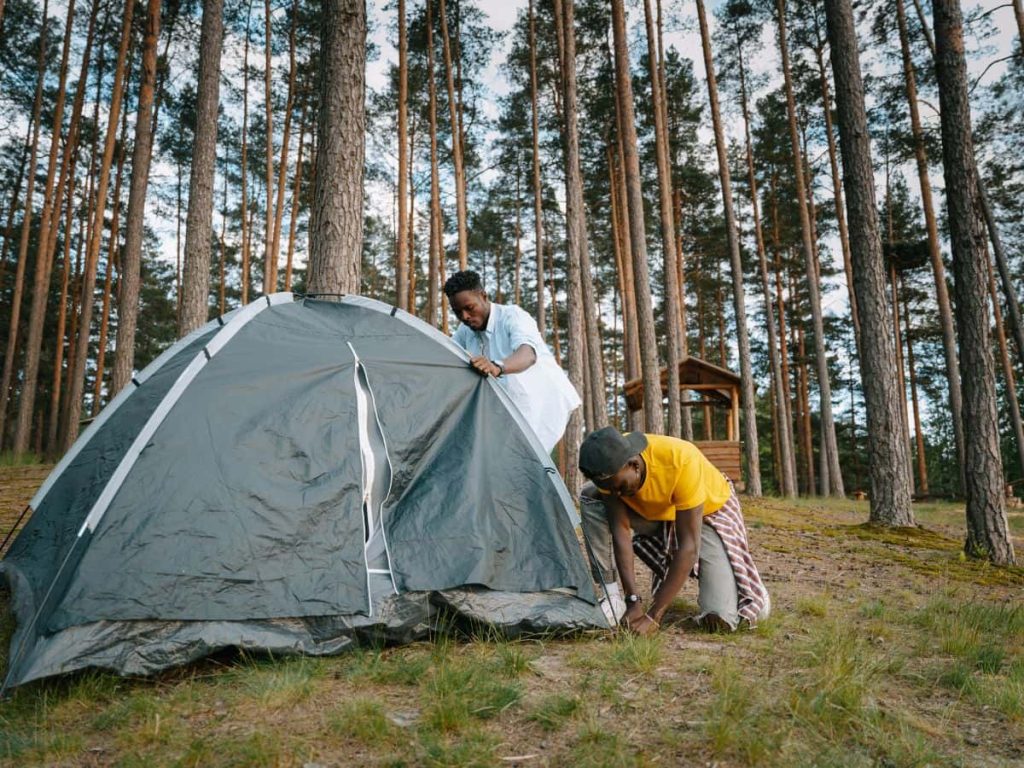
Because there’s a big difference between being asked to “help out” and being responsible for something.
The first tends to feel optional, or worse, like a chore that’s been lightly disguised as involvement. The second carries a bit more weight, and with that usually comes a quiet sense of ownership that changes how people show up.
It doesn’t need to be complicated.
Something as simple as being in charge of the camping stove setup, managing the fire, navigating a walk, or even just organising part of the day gives them a defined role within the trip. It’s theirs to figure out, theirs to get right, and theirs to adjust if things don’t quite go to plan.
And that last part is important.
If everything is pre-arranged and tightly managed, there’s no real space for that sense of responsibility to develop. But if there’s a bit of flexibility, a bit of room for things to be slightly imperfect, it starts to feel more real.
That’s usually when engagement follows.
Not necessarily in an enthusiastic, “this is amazing” sort of way, but in a quieter, more natural shift where they start paying attention, asking questions, or getting involved without being prompted quite as much.
It also helps that these roles tend to connect directly to the experience itself.
Cooking something over a stove or fire, figuring out a route, setting up part of the camp, they’re all things that feel relevant in the moment, rather than activities that have been added on top. That relevance makes a difference, because it feels like part of the trip rather than something extra.
There’s also a bit of trust built into it.
You’re not just asking them to join in, you’re trusting them with part of how things run, and that tends to be noticed, even if it’s not acknowledged directly. It shifts the dynamic slightly, away from being managed and towards being included.
Of course, it doesn’t need to be rigid.
If something doesn’t land, or they’re clearly not interested in a particular role, it’s fine to adjust. The goal isn’t to force responsibility, it’s to offer it in a way that feels natural and relevant.
And when it does land, even in a small way, it often becomes one of the parts of the trip they remember.
Not because it was a big moment, but because it felt like something they were actually part of, rather than something that was just happening around them.
Accept That It Won’t Look Like Instagram
There’s a version of camping that exists almost entirely online… clean tents, perfect lighting, smiling families, and that slightly golden-hour glow that makes everything look calm, effortless, and vaguely life-changing.
Real camping doesn’t really look like that.
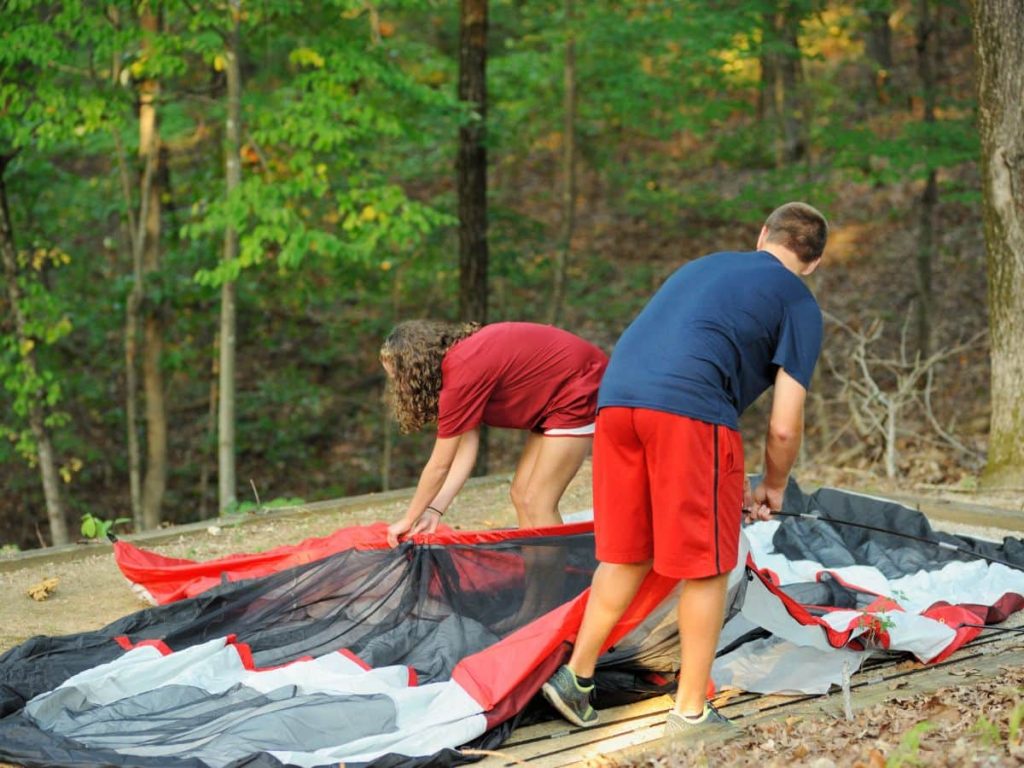
There are moments where it comes close – sitting outside as it gets dark, a quiet morning with a coffee, a genuinely good laugh over something unexpected, but they tend to sit in between the more ordinary parts. The slightly messy setup, the minor disagreements, the weather doing its own thing, someone being a bit tired or not quite in the mood.
And when you’re camping with teenagers, those ordinary parts are still very much there.
They might not be instantly enthusiastic. They might drift in and out of things. There might be moments where it feels like it’s not quite landing in the way you’d hoped. That’s all fairly normal, and trying to smooth it out too much usually makes it feel more forced rather than less.
What tends to work better is letting the trip be what it is.
A mix of good moments, quieter stretches, and the occasional bit of friction that comes with spending time together in a different environment. Not every part needs to be memorable, and not every moment needs to be shared.
Because the reality is, the bits that do stick are rarely the ones you try to engineer.
They’re the small, slightly unplanned moments that happen when no one’s really trying too hard. A conversation that drifts somewhere interesting, a meal that turns out better than expected, a walk that ends up being more enjoyable than it looked on paper.
Those are the things that tend to make the trip.
And when you step back and look at the trip as a whole, that’s usually enough. Not perfect, not seamless, but genuinely worthwhile in a way that doesn’t need to be dressed up to feel successful.
Camping With Teenagers | Frequently Asked Questions
What if my teenager doesn’t want to go camping at all?
This is more common than people expect, and pushing too hard usually makes it worse rather than better.
If there’s strong resistance, it’s often worth stepping back and understanding what’s actually behind it. Sometimes it’s discomfort, sometimes it’s missing out on time with friends, and sometimes it’s just the idea of being taken out of their routine.
Where possible, involve them early, let them have a say in where you go, what you do, or even how long you stay. Even small decisions can make it feel less like something being imposed on them.
And if it still feels like a battle, it’s worth asking whether the first trip needs to be a full weekend or something shorter and easier to ease into. A low-pressure start tends to work far better than trying to force a big experience straight away.
How do I get my teenager off their phone while camping?
Trying to remove phones completely tends to backfire.
A better approach is to allow some use without letting it dominate the whole trip. When there’s no restriction at all, it becomes the default. When it’s completely banned, it becomes the focus of frustration. Somewhere in the middle usually works best.
In practice, this might mean letting them use it during downtime, in the evening, or when nothing much is happening, rather than treating it as something that needs constant control.
Interestingly, once the pressure’s off, most teenagers naturally spend less time on their phone than you’d expect, especially when there are other things going on that don’t feel forced.
Is camping with teenagers actually worth it?
It depends what you expect from it.
If you’re hoping for constant enthusiasm, deep conversations, and perfectly shared moments, it can feel a bit underwhelming. But if you’re happy with something quieter, more low-key, and occasionally quite enjoyable in unexpected ways, then yes, it’s usually worth it.
The experience tends to be less obvious than it is with younger kids, but that doesn’t mean it isn’t there. It just shows up differently, in smaller moments, in shared experiences that don’t feel like a big deal at the time but add up afterwards.
What’s the best way to keep teenagers comfortable while camping?
Comfort comes down to getting the basics right.
A good sleeping setup, warm layers, and food they actually enjoy will usually do more than anything else. If those are off, everything else becomes harder, because tired and uncomfortable people tend to enjoy things less, regardless of what you’ve planned.
This is where it’s worth paying a bit more attention to your setup than you might normally. Something like a proper sleeping system can make a noticeable difference, especially if you’re already dealing with poor sleep or a slightly awkward setup. If that’s something you’re still figuring out, it’s worth taking a look at how different setups affect comfort, particularly when it comes to support and insulation, because getting that right early tends to make the rest of the trip far more enjoyable.
Should teenagers have their own tent when camping?
If you have the space and the setup for it, it can help.
Having their own area gives them somewhere to retreat to, which can make the whole experience feel less intense. It doesn’t mean they’ll spend all their time there, but it does give them a bit of control over their environment, which tends to reduce resistance overall.
That said, it’s not essential. Plenty of trips work perfectly well with shared tents, especially if there’s still some sense of personal space within that setup.
How do I stop arguments while camping as a family?
You probably won’t stop them completely, and that’s fine.
Most tension comes from too much time together, unrealistic expectations, or small discomforts building up over time. Reducing those things usually has more impact than trying to manage behaviour directly.
Giving people space, keeping things flexible, and not overloading the day with plans tends to keep things running more smoothly. It’s less about controlling every moment and more about creating an environment where there’s less to push against in the first place.
What should I bring when camping with teenagers?
Focus on comfort and flexibility rather than packing for every possible scenario.
Good sleep gear, decent clothing, the odd camping gadget and a few small comforts will usually make the biggest difference. Beyond that, it’s more about how the trip is structured than how much you bring.
Final Thoughts
Camping with teenagers isn’t quite the same as camping with young children, and that’s usually the part that catches people off guard.
It’s less wide-eyed excitement, less obvious enthusiasm, and a bit more of a mixed experience where things land in quieter, less predictable ways. Some moments work really well, others feel a bit flat, and most sit somewhere in between without making a big deal of themselves.
But that doesn’t mean it isn’t worth doing.
It just means adjusting what you expect from it.
When you stop trying to recreate the kind of trips you might have had when they were younger, and instead treat it as something slightly different, something with a bit more independence, a bit more space, and a bit less pressure, it tends to settle into its own rhythm.
And once it does, it can be surprisingly good.
Not in a constant, everything’s-perfect kind of way, but in the smaller, more understated moments that tend to stick afterwards. Sitting around in the evening without much going on, a conversation that drifts a bit further than usual, a day that wasn’t particularly planned but ended up working anyway.
Those are the parts that tend to last.
So if you’re heading out with teenagers, it’s probably worth going into it with a slightly lighter grip.
Keep things comfortable, keep things flexible, and don’t worry too much if it doesn’t all come together perfectly. Most of the time, it doesn’t need to.
And when it does work, even in a quiet, low-key sort of way, it’s usually enough to make the whole thing worthwhile.
