
You’re a few miles into a gorgeous trail, the rhythm of your boots is keeping steady time, and the fresh air is doing exactly what it’s supposed to do for your soul. But then you go to scratch your nose or check your watch, and you notice something strange. Your fingers feel stiff. Your rings are pinching. In fact, your hands look less like yours and more like a bundle of freshly packed breakfast sausages.
It’s a bizarre, mildly annoying phenomenon that almost every hiker experiences at some point, often leaving people wondering if they’ve suddenly developed an allergy to the wilderness or if their circulation is packing up for the day. Medically, it’s sometimes described as Post-Ambulatory Swollen Hands, or POTASH for short – catchy, right? The exact mechanism still isn’t completely understood, although the Mayo Clinic’s guidance on hand swelling during exercise points towards changes in blood flow and heat regulation. On the trail, of course, most people just call it “sausage fingers”.
Why do your fingers and hands swell up while hiking? Hands and fingers swell during a hike primarily due to blood pooling, temperature regulation, and gravity. As you walk with your arms swinging by your sides, gravity pulls fluid downward into your extremities. Simultaneously, your body prioritises sending oxygen-rich blood to your hard-working leg muscles, causing the blood vessels in your cooler hands to dilate (widen) to compensate. Furthermore, your body pushes blood toward the skin’s surface to release heat and cool you down, which expands the capillaries in your fingers and leads to that signature puffy, swollen feeling.
The good news is that for nine out of ten hikers, this puffy-fingered transformation is entirely harmless and usually resolves on its own an hour or two after you drop your pack. It’s simply a sign that your body is working hard, shifting its plumbing around, and doing exactly what it needs to do to keep you moving down the trail.
However, just because it’s normal doesn’t mean you have to just sit there and accept having hands that feel like overinflated latex gloves. Understanding exactly why it happens, and how a few small adjustments to your gear and routine can stop it in its tracks, can make your next hike a whole lot more comfortable.
Contents
- The Big 3 | Why Your Hands Balloon on the Trail
- The Hidden Trail Culprits
- The Salt Trap: Dehydration vs. Hyponatremia
- 5 Simple Ways to Prevent and Fix Swollen Hands
- When to Worry: Normal Edema vs. Medical Warning Signs
- Frequently Asked Questions
- Final Thoughts
The Big 3 | Why Your Hands Balloon on the Trail
To understand why your hands expand like a pair of inflatable party balloons, you have to look at how your body handles a workout.
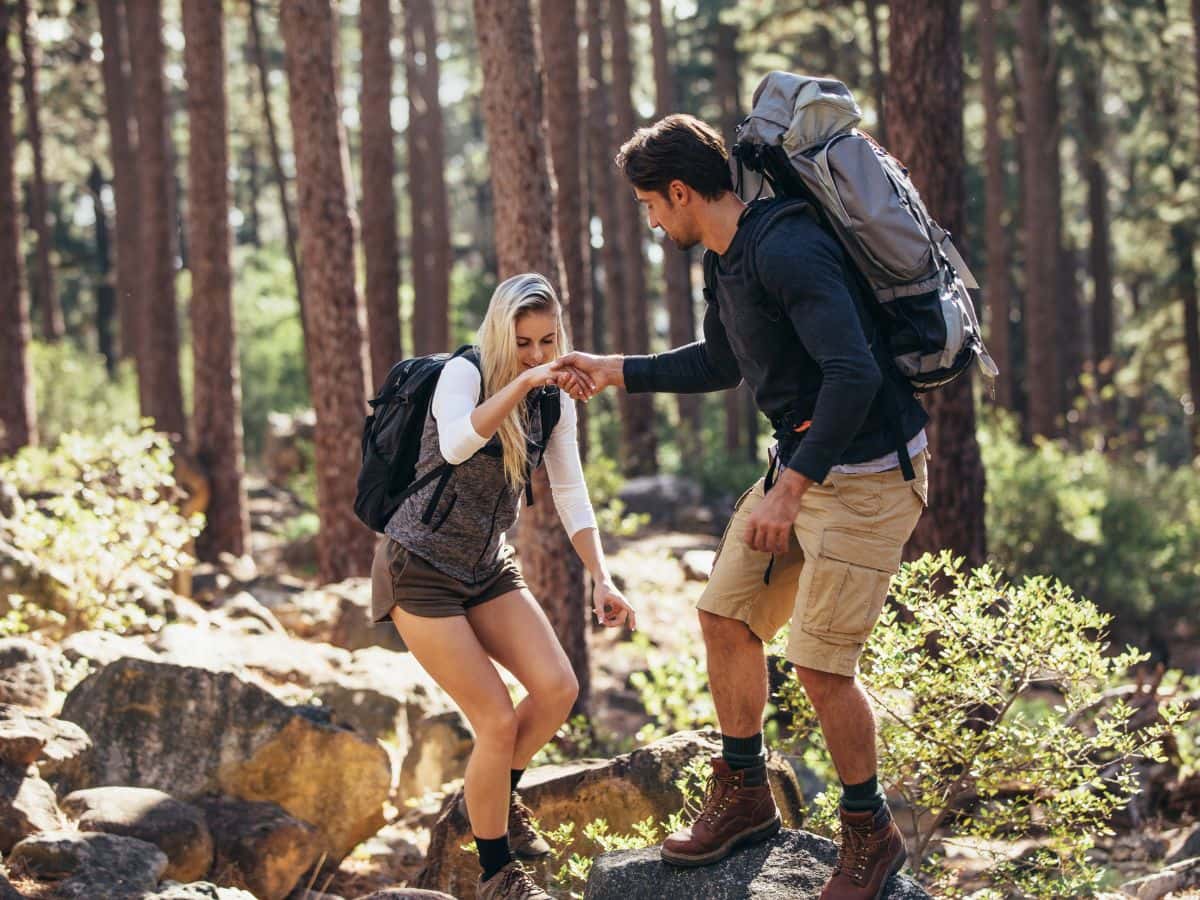
When you hit the trail, your internal systems kick into a high-gear balancing act. Here are the three primary physiological reasons your hands take the brunt of that effort:
1. Gravity & The Passive Arm Swing
Think about your posture when you’re hiking without trekking poles. Your arms are likely dangling loosely at your sides, swinging gently back and forth with every step. While this feels natural, it creates a literal downward slide for your circulatory system. Gravity naturally pulls blood and interstitial fluid downward into your lowest extremities. Because your arms aren’t actively doing heavy muscular work like your legs are, they lack the strong “muscle pump” action required to efficiently push that fluid back up to your heart, causing it to pool in your lowest points – your fingers.
2. Blood Flow Redistribution
When you’re hiking, your legs are the stars of the show. Your glutes, quads, and calves require a massive influx of oxygen and nutrients to keep you moving uphill. Your cardiovascular system adapts by prioritizing these major muscle groups.
To keep your blood pressure stable while flooding your legs with resources, the blood vessels in non-essential areas (like your hands) undergo complex changes. As your heart rate spikes, the blood vessels in your hands dilate (widen) to accommodate shifting pressures and ensure that the blood flow return doesn’t bottleneck.
3. Thermoregulation: Your Internal Radiator
Your body is incredibly efficient at keeping itself from overheating. When your core temperature rises from exertion, your brain triggers a process called vasodilation. It’s the same temperature-control system that leaves some hikers wondering why their feet sweat so much on the trail, even when the rest of them doesn’t feel particularly hot.
- The Cooling Process: Blood vessels near the surface of your skin expand to let more blood flow close to the outside air, allowing heat to radiate away from your body.
- The Hand Effect: Because your fingers have a high density of specialized blood vessels designed for temperature control, they flood with blood to help cool you down. This extra volume leaks slight amounts of fluid into the surrounding soft tissues, resulting in that signature puffy appearance.
Your body isn’t the only factor though, and while these natural biological shifts set the stage for swelling, the gear you carry and the terrain you tackle can act like an accelerant. In fact, a couple of unsuspecting external factors might be turning a minor biological quirk into a major trail annoyance.
The Hidden Trail Culprits
While your biology lays the groundwork for “sausage fingers,” your gear and your environment are often the wildcards that turn a mild puffiness into a stiff, uncomfortable squeeze.
You might have perfect circulation on a flat city walk, but the moment you throw on a weekend pack or head up a mountain pass, the game changes.
The Backpack Trap
A poorly adjusted or overly heavy backpack is one of the most common hidden triggers for hand swelling on the trail. It’s surprisingly easy to overload a bag with things you’ll never touch, which is why it pays to think carefully about what you actually need to pack for a day hike before you leave home. If your pack’s shoulder straps are digging deeply into your shoulders, they act less like support and more like a pair of soft tourniquets.
These heavy straps compress the axillary nerves and crucial blood vessels running through your armpits and upper chest. While this restriction doesn’t necessarily stop your heart from pumping blood into your arms, it drastically slows down the return traffic – the venous and lymphatic flow traveling back out of your limbs. As a result, fluid gets backed up with nowhere to go but down into your fingers.
Altitude Adjustments
If your hike takes you high into the mountains, altitude sickness isn’t the only environmental shift to watch out for. As elevation increases, barometric pressure drops.
This sudden shift in environmental pressure, combined with lower oxygen levels, alters how your body regulates fluids and signals your kidneys to retain salt and water. For many hikers, a sudden gain in altitude manifests first as stiff, swollen fingers before any of the more familiar signs of elevation changes even appear.
The Salt Trap: Dehydration vs. Hyponatremia
When your hands start to swell, your first instinct might be to reach for your water bladder and start chugging. It makes sense on the surface: you’re working hard, you’re sweating, and swollen tissues often feel like a cry for hydration. However, blindly flooding your system with pure water can sometimes make the swelling significantly worse.
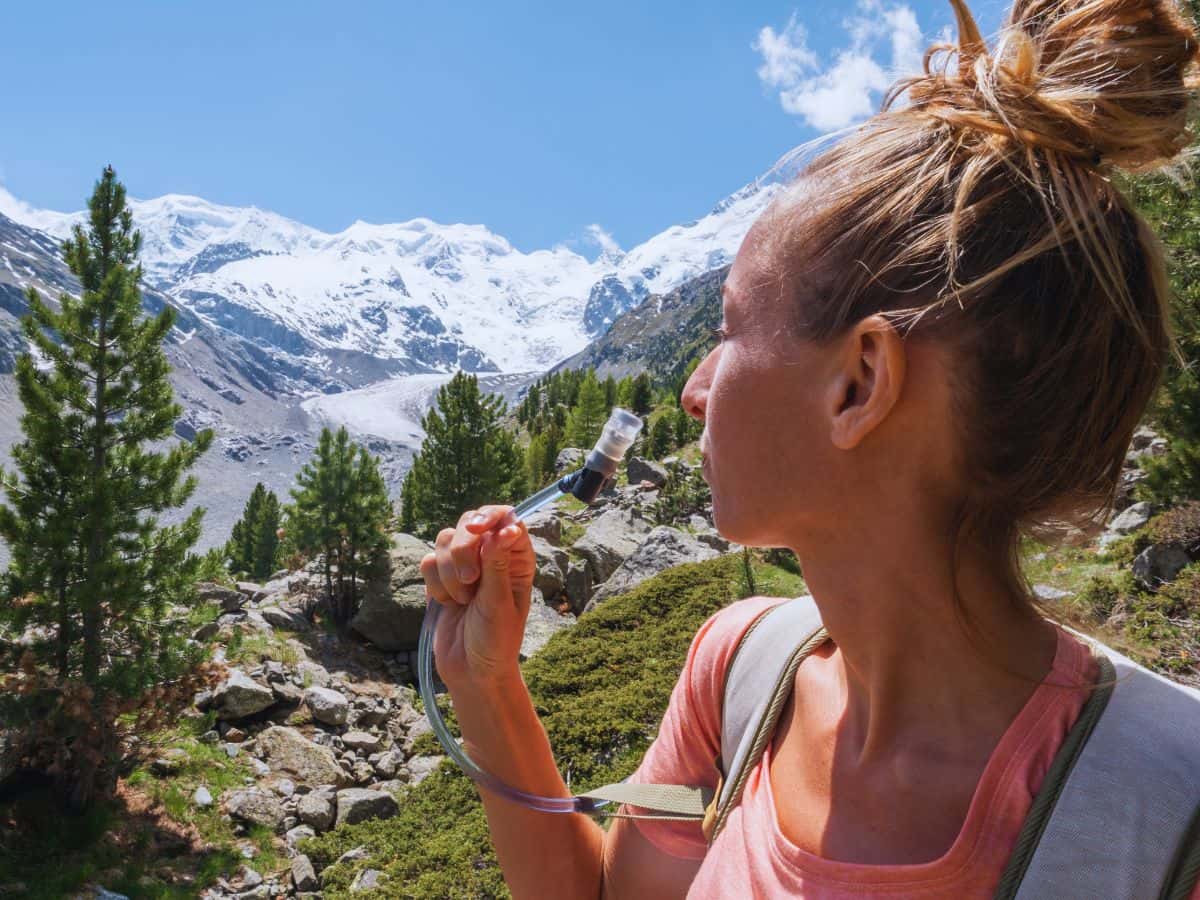
This introduces a delicate trail balancing act between two common conditions:
- Dehydration: When you don’t drink enough fluids, your body panics and goes into conservation mode. It releases hormones that signal your kidneys to hold onto every drop of water and salt it can find, which can cause fluid retention and puffiness in your extremities.
- Hyponatremia (The Over-Hydration Hazard): This is the more deceptive culprit. If you’re sweating heavily and drinking massive amounts of plain water without replacing your lost minerals, you end up diluting the concentration of sodium in your blood.
When blood sodium drops too low, your body attempts to balance things out by forcing excess water out of your blood vessels and into your body’s cells, causing them to swell. Your fingers and hands are often the very first place this cellular swelling becomes visible.
5 Simple Ways to Prevent and Fix Swollen Hands
The good news is that you don’t have to just accept “sausage fingers” as the price of admission for a good hike.
A few small adjustments to your gear, your posture, and your snacking habits can keep the swelling at bay.
1. Grab a Pair of Trekking Poles
Using trekking poles is arguably the single most effective way to prevent hand swelling while hiking. By gripping and pushing off with poles, you keep your hands elevated closer to your heart rather than dangling passively at your sides. More importantly, the continuous gripping and releasing motion acts as a natural “muscle pump,” forcing blood and fluid to travel back up your arms instead of pooling in your fingertips.
2. Keep Your Hands in Motion
If you prefer hiking without poles, you need to manually simulate that muscle pump. Every fifteen minutes or so, make a conscious effort to change your hand positions:
- Make a tight fist and release it 10 to 15 times in a row.
- Raise your hands above your head or rest them on your backpack’s shoulder straps for a few minutes to let gravity work for you instead of against you.
- Twirl your wrists and wiggle your fingers to keep the circulation moving freely.
3. Shift Your Backpack Weight to Your Hips
If your shoulder straps are digging in and cutting off return circulation, your pack isn’t fitted correctly. A proper hiking backpack should carry roughly 70% to 80% of its weight on your hips, not your shoulders. Loosen your shoulder straps slightly and tighten the padded hip belt directly over your pelvic bones. If your fingers still feel puffy, try loosening the pack’s sternum (chest) strap to relieve pressure on the veins running through your armpits.
Overpacking and letting a rucksack hang entirely from the shoulders are two of those common camping mistakes that seem minor at home and become much harder to ignore once you’re several miles from the car. If you’re constantly fighting with an overstuffed bag, it may also be worth taking another look at what counts as essential camping gear and what’s only coming along because you might possibly need it.
4. Strip Off Rings and Loosen Watches Early
Once your fingers balloon, rings can become painfully trapped, occasionally cutting off circulation entirely. Make it a habit to remove tight rings, metal bands, and restrictive fitness trackers before you start hiking. If you prefer to wear a watch, loosen the strap by one or two notches to give your wrist’s blood vessels room to expand.
5. Rethink Your Fuel: Match Water with Electrolytes
Preventing the “salt trap” means striking a balance between water and sodium. On hot days or strenuous climbs, avoid drinking massive quantities of plain water on an empty stomach. Pair your hydration with salty trail snacks, like pretzels, salted nuts, or jerky, or drop an electrolyte tablet into your water bottle to keep your blood sodium levels stable.
When to Worry: Normal Edema vs. Medical Warning Signs
For the vast majority of hikers, swollen hands are just a harmless quirk of exertion that fades within an hour of sitting down and resting. However, fluid retention can occasionally be a warning sign of something more serious, like severe hyponatremia or acute altitude sickness.
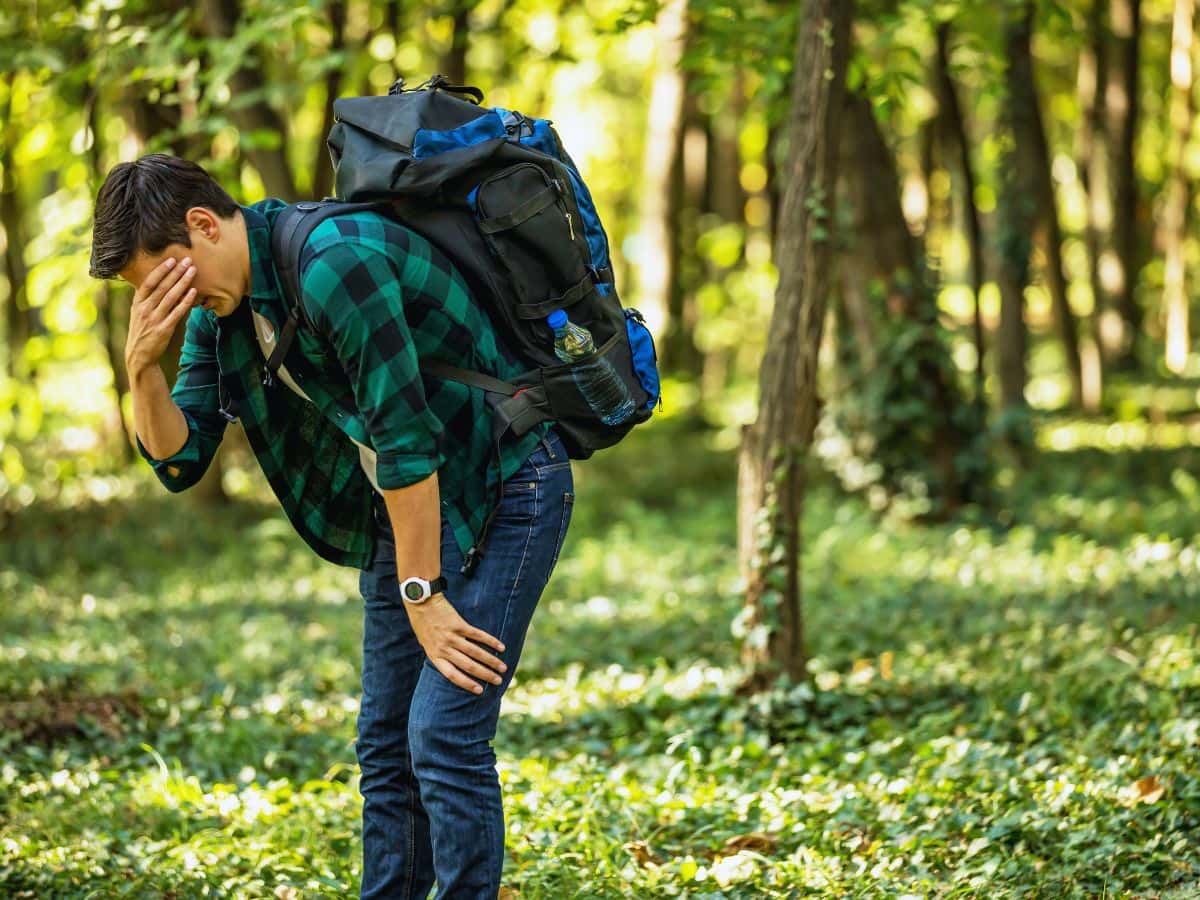
You should stop hiking and seek medical attention if your hand swelling is accompanied by any of the following symptoms:
- A severe, throbbing headache or dizziness.
- Nausea, vomiting, or sudden confusion.
- Slurred speech or an inability to walk in a straight line.
- Swelling that does not go away after 24 hours of rest and proper hydration.
While it’s essential to know these red flags, remember that they are the exception, not the rule. For nearly every hiker on the trail, puffy fingers are simply an annoying but harmless reminder of a body working hard in nature. As long as you feel clear-headed and energised, you can treat “sausage fingers” less as a medical emergency and more as a gentle prompt from your body to check your gear, adjust your pace, and tweak your hydration strategy.
Frequently Asked Questions
Does hand swelling while hiking happen in cold weather too?
Yes, it can. While heat-induced vasodilation is the primary trigger for “sausage fingers” in the summer, gravity and backpack strap pressure affect your body regardless of the temperature. If your heavy pack is pinching the nerves and blood vessels near your armpits, or if you keep your hands hanging down for hours without moving them, blood will still pool in your extremities even on a freezing winter hike.
How long does it take for hiking hand swelling to go away?
For most hikers, the swelling subsides within 1 to 3 hours after you stop hiking, remove your backpack, and rest. Once your hands are no longer hanging downward and your shoulders are relieved of the pack’s weight, your circulatory system quickly redistributes the pooled fluid. Drinking a glass of fresh water and elevating your hands above your heart can speed up the process.
Can compression gloves help with hiking hand swelling?
Absolutely. Lightweight, breathable compression gloves are an excellent tool if you are prone to severe fluid retention or poor circulation on the trail. By applying gentle, continuous pressure to the tissues in your fingers and palms, they physically prevent interstitial fluid from pooling in your hands while you walk.
Is swelling in the hands a sign of dehydration or overhydration?
It can actually be a sign of both, which is why paying attention to your body is so important.
- Dehydration: When you don’t drink enough water, your body holds onto whatever fluids it has left, causing localised swelling.
- Overhydration (Hyponatremia): Drinking too much plain water without replacing lost electrolytes dilutes the sodium levels in your blood. This imbalance forces water out of your bloodstream and into your body’s tissues, resulting in noticeable swelling. Always balance your water intake with an electrolyte replacement on long treks.
Should I be worried if only one hand swells while hiking?
If only one hand is swelling, it is usually less about your body’s overall temperature or hydration and more about a localised physical restriction. Check your gear: you might be leaning more heavily on one trekking pole, carrying a camera strap over one shoulder, or your backpack strap might be adjusted unevenly, pinching the circulation on just one side. Adjust your pack, stretch both arms, and see if the balance returns.
Final Thoughts
Dealing with swollen hands on the trail is incredibly common, but it doesn’t have to ruin your trek. In most cases, “sausage fingers” are simply your body’s natural, temporary response to gravity, heat, and the physical demands of carrying a pack.
By making a few quick adjustments, like dialing in your backpack fit, using trekking poles, and staying smart with your electrolyte balance, you can prevent fluid retention and stay entirely focused on the view ahead.
Listen to your body, give your hands a break when they need it, and keep moving forward.
Over to You!
Do your hands tend to swell up more on hot summer hikes or gruelling uphill climbs? What’s your go-to trick for keeping the circulation flowing on the trail? Let me know in the comments below!
