
Planning your first family camping trip can feel more daunting than it needs to be. Even people who are comfortable camping on their own often hesitate once kids are involved, worrying about sleep, safety, weather, food, and whether the whole thing will end in tears rather than happy memories.
The short answer is that camping with kids can be a genuinely great experience, as long as you plan for comfort, keep things simple, and stay flexible when things don’t go exactly as expected. You don’t need specialist gear, elaborate activities, or perfect conditions. What matters far more is choosing the right setup and setting realistic expectations from the start.
This guide is designed for parents planning their first trip, not seasoned outdoor families or people chasing a picture-perfect version of family camping. We’ll focus on the decisions that actually make a difference, from campsite choice and sleep to food and safety, so your first experience feels manageable rather than overwhelming.
Contents
- Is Camping with Kids Actually a Good Idea?
- Choosing the Right Campsite (This Matters More Than Gear)
- What to Pack (Without Overpacking)
- Sleeping Comfort: The Make-or-Break Factor
- Food That Keeps Everyone Happy
- Keeping Kids Safe Without Killing the Fun
- Activities That Don’t Require Planning
- Common First-Time Family Camping Mistakes (And How to Avoid Them)
- Frequently Asked Questions
- Final Thoughts
Is Camping with Kids Actually a Good Idea?
For most families, camping with kids isn’t really a question of whether it’s a good idea, it’s more about how much you’re trying to cram into that first trip. When things go wrong, it’s usually not because camping itself was a mistake, but because the plan was too ambitious from the start.
Camping tends to work best with kids when it’s kept small and forgiving. A single night, somewhere familiar, with an easy route home if needed, is often a far better introduction than committing to a full week in a place you’ve never been. That first trip is really about seeing how everyone copes with sleeping, eating, and being outside more than usual, not about ticking boxes or “making the most of it”.

Age gets talked about a lot, but it’s not the whole story. Some younger kids love the novelty and sleep surprisingly well, while some older children struggle because routines disappear overnight. It’s usually more helpful to think about temperament than age, how your child handles change, how sensitive they are to noise or cold, and whether disrupted sleep already causes problems at home.
It’s also worth being honest with yourself. Camping with kids is rarely relaxing in the way a hotel break might be, especially the first time. There will be more mess, more interruptions, and moments where you wonder why you didn’t just stay home. That doesn’t mean it’s a bad experience, but it does help to frame it as time together rather than a trip designed for rest.
That’s not to say camping with kids can’t be relaxing, and in fact any form of camping can be great for your mental health, but it’s worth setting expecations before the trip… When those expectations are realistic and the setup is simple, camping with kids can be genuinely rewarding, even if parts of it feel chaotic. The trick is stacking the odds in your favour early on, which starts with choosing the right campsite.
Choosing the Right Campsite (This Matters More Than Gear)
If there’s one decision that makes or breaks a first family camping trip, it’s the campsite. Not the tent, not the stove, and not the sleeping bags. Get the campsite wrong and everything else feels harder than it needs to be, especially with kids.
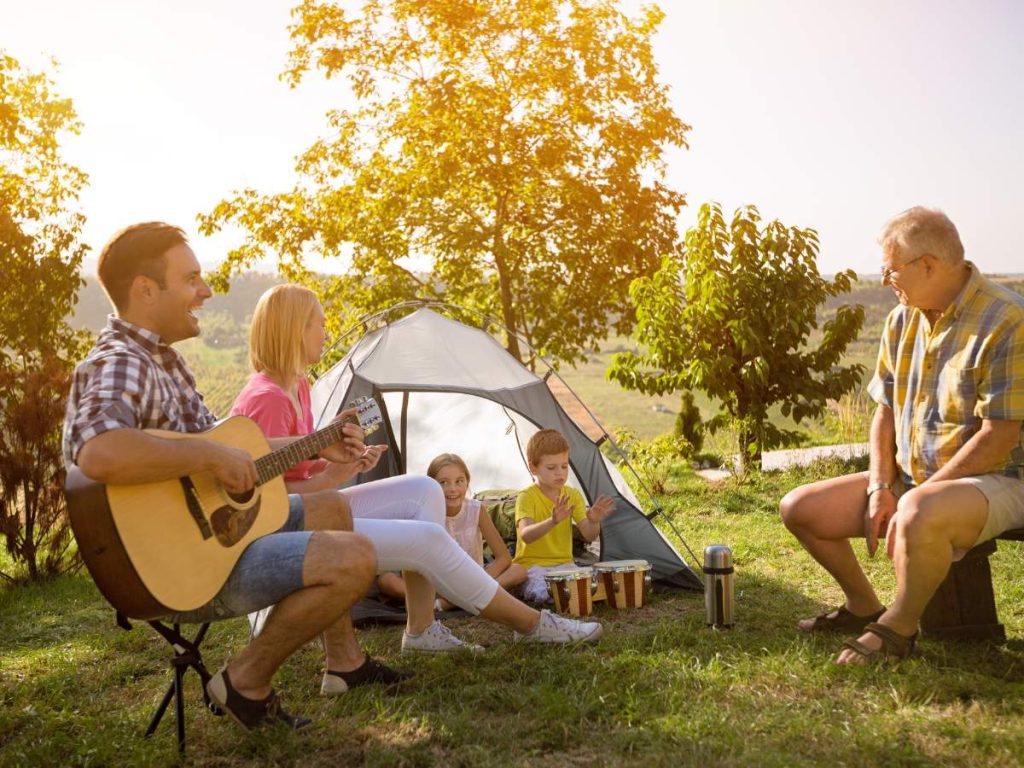
For a first trip, boring is usually good. A site that’s close to home, easy to get to, and has decent facilities will almost always lead to a better experience than somewhere wild, remote, or “adventurous”. Toilets you can reach quickly, flat ground, and a short walk back to the car all matter more than views when you’re dealing with tired children or a sudden change in weather.
Distance is also a big factor when planning a family camping trip. Being able to park close to where you’re sleeping removes a lot of stress, particularly if you realise you’ve forgotten something or need to retreat indoors for a bit. This is especially relevant if you’re camping without a car, where access, transport links, and how far you’re carrying gear suddenly become much bigger considerations.
Noise and layout are easy to overlook too. Some campsites are lively and social, which can be great with older kids but exhausting with younger ones who need an early night. Others are quieter but spread out, which is often the more sensible choice overall. Looking at site maps, pitch spacing, and reviews can give you a much better idea of what you’re actually arriving at than photos alone.
Showers, washing-up areas, and even a small shop on site can also be a real help on a first trip. They give you backup options if plans change, food runs out, or someone just isn’t coping very well. You can always strip things back on future trips once everyone’s more confident.
If you want to go deeper into what to look for, including pitch choice, ground conditions, and practical details people often miss, our guide on how to choose a campsite breaks this down in more detail. For now, the simple rule is this: choose somewhere forgiving, not impressive.
Once you’ve settled on the right campsite, everything else becomes easier, from packing your kit, to sleeping arrangements, and even camp cooking. And that brings us neatly to what to take, and just as importantly, what to leave at home.
What to Pack (Without Overpacking)
Overpacking is one of the easiest ways to make a first family camping trip more stressful than it needs to be. It usually comes from good intentions (wanting to be prepared for every possible scenario) but it often leads to clutter, panic, and a constant feeling of digging through bags instead of enjoying where you are.
A more useful way to think about packing is to focus on problems you’re likely to need to solve, rather than trying to anticipate every activity or mood. Warmth, dryness, sleep, food, and a bit of comfort tend to cover most situations. Once those basics are handled, everything else is optional.

Clothing is a good example. Kids don’t need outfits for every occasion, they need layers that can cope with changing weather and a spare set in case something gets wet or muddy. Comfortable, warm clothes for the evening usually matter more than daytime extras, because once children are cold or tired, things unravel quickly.
Comfort items are worth making space for too. A favourite jumper, a soft toy, or a familiar blanket can make sleeping somewhere new feel far less unsettling, especially for younger children. These things don’t weigh much, but they can make a big difference to how settled everyone feels at night.
When it comes to gear, simplicity wins. You don’t need specialised equipment for every task, just reliable basics that do their job without fuss. If you’re unsure what’s genuinely useful and what tends to sit unused, our guide to essential camping gear breaks down the core items most families actually rely on.
It also helps to leave some space. Empty room in the car or bags makes packing up easier and gives you flexibility if plans change or you pick something up locally. A slightly lighter load usually leads to a calmer trip overall.
Once packing is under control, the next thing to think about is sleep, because how well everyone sleeps has a knock-on effect on everything else you do.
Sleeping Comfort: The Make-or-Break Factor
If there’s one thing that can derail a family camping trip, it’s lack of sleep. Kids who haven’t slept well are harder to reason with, parents get frazzled faster, and even small problems start to feel bigger than they are. You can usually muddle through mediocre food or a bit of rain, but bad sleep tends to ripple through the whole day.
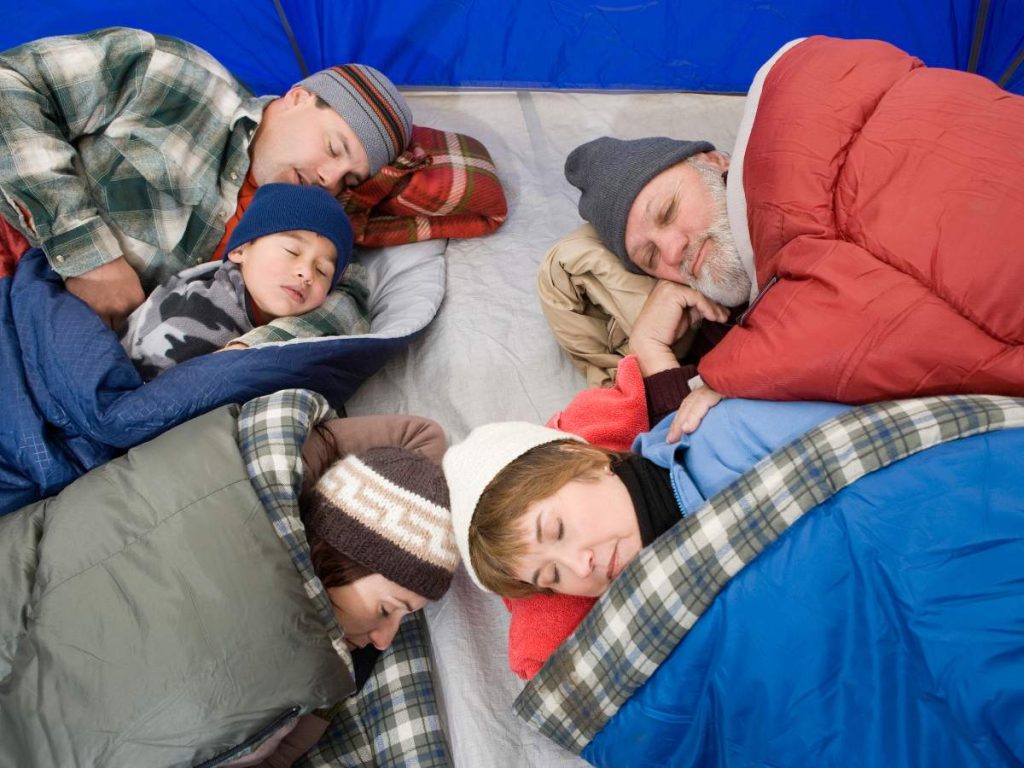
The good news is that your sleep set-up doesn’t need to be perfect to be good enough. What matters most is warmth, familiarity, and managing expectations. Nights outdoors are often colder than people expect, even in summer, and kids tend to feel that more than adults. A sleeping bag that’s properly rated for the conditions makes a noticeable difference, especially once temperatures drop in the early hours. If you’re not sure what to look for, our guide on how to choose a sleeping bag explains the basics without getting technical.
Comfort under you matters just as much as what’s on top. Thin mats or improvised setups might be tolerable for a night or two as an adult, but they’re far less forgiving for children, and for parents who already know their backs don’t love the ground. A decent sleeping mat or airbed can be the difference between a slightly restless night and a miserable one. If comfort is a concern, particularly for adults, our piece on camping mattresses for bad backs goes into more detail on supportive options.
Bringing the same pyjamas your child wears at home, or sticking to a similar bedtime routine, can also make sleeping somewhere new feel less unsettling. It doesn’t need to be elaborate, just consistent enough to signal that it’s time to wind down.
It’s also worth lowering the bar a little. Kids often wake earlier when camping, and that’s normal. Planning quieter mornings, rather than packed schedules, takes the pressure off everyone and makes the day feel less rushed.
Once sleep is sorted, or at least not working against you, everything else becomes easier. Food is usually the next big factor, because hungry kids and tired kids are rarely a good combination.
Food That Keeps Everyone Happy
Food on a family camping trip doesn’t need to be exciting, it just needs to work. When kids are hungry, tired, or a bit overstimulated from being outdoors all day, complicated meals tend to cause more stress than they’re worth. Simple, predictable food usually leads to a much calmer experience for everyone involved.

The easiest approach is to plan meals around familiarity. Foods your kids already like at home are far more reliable than trying to turn every meal into part of the adventure. Camping is new enough on its own, and meals are often better used as a grounding point in the day rather than another novelty to navigate.
Snacks are also important, and having something quick to hand can prevent small dips in energy turning into full-blown meltdowns, especially between meals or after a long walk. It’s often worth packing more snacks than you think you’ll need, because they double up as easy wins when patience starts running low.
When it comes to cooking, less really is more. One-pot meals, wraps, and things that don’t require precise timing are much easier to manage outdoors, particularly in the evening when light fades and energy drops. If you’re looking for ideas that hold up well in real conditions, our guide to easy camping meals focuses on food that works with basic equipment and minimal effort.
Just make sure you’ve got the right camping stove for the type of meals you plan on cooking. Without it, cooking anything can quickly become a headache!
It also helps to be flexible. Shops run out, weather changes plans, and appetites vary from day to day. Having a couple of fallback meals that don’t require much thought can take a lot of pressure off, especially on a first trip.
Once food is sorted, safety is usually the next concern for parents. The aim isn’t to remove all risk, but to put a few sensible boundaries in place so everyone can relax a bit more.
Keeping Kids Safe Without Killing the Fun
Safety is often the thing that sits quietly in the back of a parent’s mind throughout a family camping trip. You want your kids to have freedom, but you also don’t want to spend the whole time on edge, watching every step they take. The balance is usually easier to find than it feels beforehand.
Clear, simple boundaries tend to work better than lots of rules. Letting kids know where they can and can’t go, what’s off-limits, and what needs an adult nearby gives them a framework to move within, rather than constantly being corrected. Campsites are generally set up with families in mind, so a bit of structure early on often leads to a more relaxed trip overall.

Fire safety is one area where it’s worth being calm but firm. Campfires, stoves, and hot pans are exciting for kids, which makes them risky if expectations aren’t set. Explaining what’s hot, where not to stand, and when it’s okay to help, rather than simply saying no, usually leads to better behaviour and fewer accidents.
Weather is another factor that’s easy to underestimate. Conditions can change quickly, and children feel cold and wet sooner than adults. Having a basic plan for rain or storms makes a big difference to how stressful those moments feel. Knowing when to retreat to the tent, the car, or an indoor space takes the pressure off. If you want to go deeper on this, our guides to camping in the rain and camping safety and thunderstorms cover practical steps without turning things into a worst-case scenario.
It also helps to remember that part of family camping is learning. Small scrapes, muddy clothes, and the occasional wobble are usually part of the experience. As long as the environment is sensible and supervision is appropriate, a bit of freedom is often what makes camping memorable for kids.
Once safety feels under control, you can relax a little and let the days unfold more naturally. Activities don’t need to be planned minute by minute, and in many cases, the less you organise, the better it works.
Activities That Don’t Require Planning
One of the quiet advantages of camping with kids is that you don’t actually need to plan very much at all. Away from screens, schedules, and familiar distractions, children often find their own rhythm surprisingly quickly, as long as you give them the space to do it.

Simple things tend to work best. Walking, poking around, collecting sticks or stones, watching insects, or helping with small camp jobs often holds attention far longer than any organised activity. These moments don’t look impressive on paper, but they’re usually what kids remember most.
It also helps to allow for downtime. Not every moment needs to be filled, and a bit of boredom isn’t something to rush to fix. Sitting around the tent, lying on a blanket, or just watching what’s going on around the campsite can be enough, especially after a busy morning.
If you do bring activities, keep them light and flexible. A ball, a pack of cards, colouring supplies, or a simple book can provide options without taking over the trip. Anything that works without strict rules or setup tends to be more useful than things that rely on perfect conditions.
Parents often put pressure on themselves to “make the most of it”, but camping with kids usually works better when you let the day unfold. When there’s less to manage, there’s more room for everyone to relax into the experience.
Common First-Time Family Camping Mistakes (And How to Avoid Them)
Most first family camping trips don’t go wrong because of one big mistake, they unravel through a handful of small ones that build up over a day or two. The good news is that most of these are easy to avoid once you know what to look out for.
One common issue is treating the first trip as a test rather than an experiment. When everything feels like it has to work, small hiccups carry more weight. Framing the trip as a low-stakes trial, something you’re simply trying out, takes a lot of pressure off both parents and kids.

Another mistake is sticking too rigidly to the plan. Camping with kids works best when there’s room to adapt, whether that means eating earlier than expected, skipping an activity, or changing plans entirely because everyone’s tired. Flexibility usually leads to a better trip, rather than trying to force things back on track.
Parents also often underestimate how much children pick up on their mood. If you’re stressed about keeping things tidy, sticking to timings, or “doing it right”, kids tend to absorb that tension. Letting some mess, noise, or disorder slide often improves the atmosphere far more than tightening control.
Finally, it’s easy to forget that one trip doesn’t define the whole experience. A slightly awkward first night, a wet afternoon, or an early departure doesn’t mean camping isn’t for your family. It just means you’ve learned something useful for next time.
Family Camping: Frequently Asked Questions
What age is best for a first family camping trip?
There isn’t a single right age, and it’s often less important than people expect. Some families camp happily with toddlers, while others wait until children are older and more independent. What tends to matter more is how well your child copes with changes to routine, unfamiliar sleeping environments, and being outdoors for longer stretches of time.
If you’re unsure, starting with a very short trip, even just one night, can be a good way to test the waters without committing too much time or energy.
Is camping safe for young children?
In most cases, yes, as long as the environment is appropriate and expectations are realistic. Established campsites are generally designed with families in mind, and risks are usually somewhat predictable.
The key is choosing a sensible location, setting clear boundaries, and being prepared for common situations like bad weather or tiredness. If you want a broader overview of staying safe outdoors with children, Road ID provides practical guidance on outdoor safety for families, including managing weather, injuries, and supervision.
How long should a first family camping trip be?
For most families, one or two nights is ideal for a first trip. It’s long enough to experience camping properly, but short enough that fatigue or small problems don’t spiral.
Short trips also make packing and planning feel more manageable, and they take the pressure off needing everything to go perfectly. Once you know what works for your family, extending future trips becomes much easier.
What if the weather turns bad?
Bad weather doesn’t have to ruin a camping trip, but it does help to plan for it. Having waterproof clothing, somewhere dry to sit, and a few flexible indoor or sheltered options makes a big difference to how those moments feel.
Do we need to bring lots of entertainment for kids?
Usually less than you think. Many children naturally fill their time outdoors once screens and routines drop away. Simple items that allow open-ended play tend to work better than structured activities.
If you’re worried about boredom, focusing on comfort and rest often helps more than adding more entertainment. A well-rested child with regular snacks is far easier to occupy than one who’s cold or tired.
Is camping with kids expensive?
It doesn’t have to be. Costs are often driven by gear choices rather than necessity, especially on a first trip. Borrowing equipment, hiring items, or choosing campsites close to home can keep expenses down.
If budget is a concern, our guide to camping on a budget breaks down where you can save money without making the experience harder.
Is it normal if the first camping trip doesn’t go perfectly?
Very much so. Almost everyone’s first family camping trip includes at least one moment where they question the decision. That doesn’t mean camping isn’t for you, it just means you’re learning what works for your family.
Each trip tends to get easier, not because conditions improve, but because confidence does.
Final Thoughts
Camping with kids rarely looks like the version people imagine before they go. It’s usually messier, louder, and more unpredictable than expected, especially the first time. But it’s also often simpler and more forgiving than it seems once you’re actually there.
A good first family camping trip isn’t about getting everything right. It’s about choosing a setup that gives you breathing room, keeping plans loose, and accepting that small hiccups are part of the experience rather than a sign that camping isn’t for you. Comfort, simplicity, and flexibility tend to matter far more than ambition.
If the trip is short, the campsite is forgiving, and everyone gets some sleep and regular food, you’re already most of the way there. Everything else is something you can adjust next time, and there almost always is a next time once that first hurdle is out of the way.
Seen like that, family camping doesn’t have to be daunting. It’s just something you ease into, learn from, and gradually make your own.
