
Knowing how to break in hiking boots properly can save you a very uncomfortable first hike.
I’ve made the mistake before – buying a new pair, wearing them around the house for ten minutes, deciding they felt fine, and then taking them straight out for a proper hike. They weren’t dreadful at first. Just a bit stiff around the ankle, a bit firm through the sole, and slightly less comfortable than I’d hoped after spending good money on them.
An hour later, though, the back of one heel had started rubbing, my toes felt more cramped than they had in the shop, and I was beginning to wonder whether the boots needed breaking in or whether I’d simply bought the wrong pair.
That’s the difficult part with new hiking boots. Some stiffness is perfectly normal, especially with heavier leather boots or footwear designed for rough ground and longer trips. The materials need time to loosen, the sole needs to flex more naturally, and your feet need a chance to get used to how the boots feel. But proper pain is different. Sharp pressure, crushed toes, numbness, heavy heel movement, or the same sore spot getting worse every time you wear them usually points to a sizing problem rather than something you should suffer through.
The best way to break in hiking boots is to start indoors with the socks and insoles you’ll actually use, then move on to short hikes close to home before gradually adding distance, hills, uneven ground, and your normal pack weight. Only move on when the boots feel comfortable at the stage you’re already at. Breaking in can help a correctly fitting boot soften and move better, but it won’t fix the wrong size or a shape that doesn’t suit your foot.
Some boots barely need breaking in at all. Lightweight synthetic pairs may feel comfortable after a couple of outings, while thick leather or backpacking boots can take several hikes before they feel properly worn in. There isn’t one exact mileage that works for everyone, because the boot, the materials, the shape of your foot, and the kind of walking you’re doing all make a difference.
The important thing is not to rush it. A small pressure point noticed on a short walk near home is easy enough to deal with. The same pressure point discovered several miles into a long route can quickly become the only thing you’re thinking about.
So before we get into the details, the first job is to make sure the boots actually fit. If the length, width, heel hold, or overall shape is wrong from the start, no amount of breaking in is going to turn them into the comfortable pair you hoped you’d bought.
Contents
- Make Sure the Boots Actually Fit
- Wear Them Around the House First
- Take Them on Short Walks Close to Home
- Add Hills, Rough Ground and Your Normal Pack
- Give Them One Proper Test Before the Big Hike
- Frequently Asked Questions
- Final Thought
Make Sure the Boots Actually Fit
This sounds obvious, but it’s surprisingly easy to talk yourself into a bad pair because they look good, cost a lot of money, or happen to be the only ones available in your size. You stand there in the shop taking a few careful steps across the carpet, convince yourself the slight pressure across one toe is probably nothing, and leave with a box under your arm feeling reasonably pleased with yourself.
Then you wear them properly and discover that “probably nothing” has developed into a very definite something.
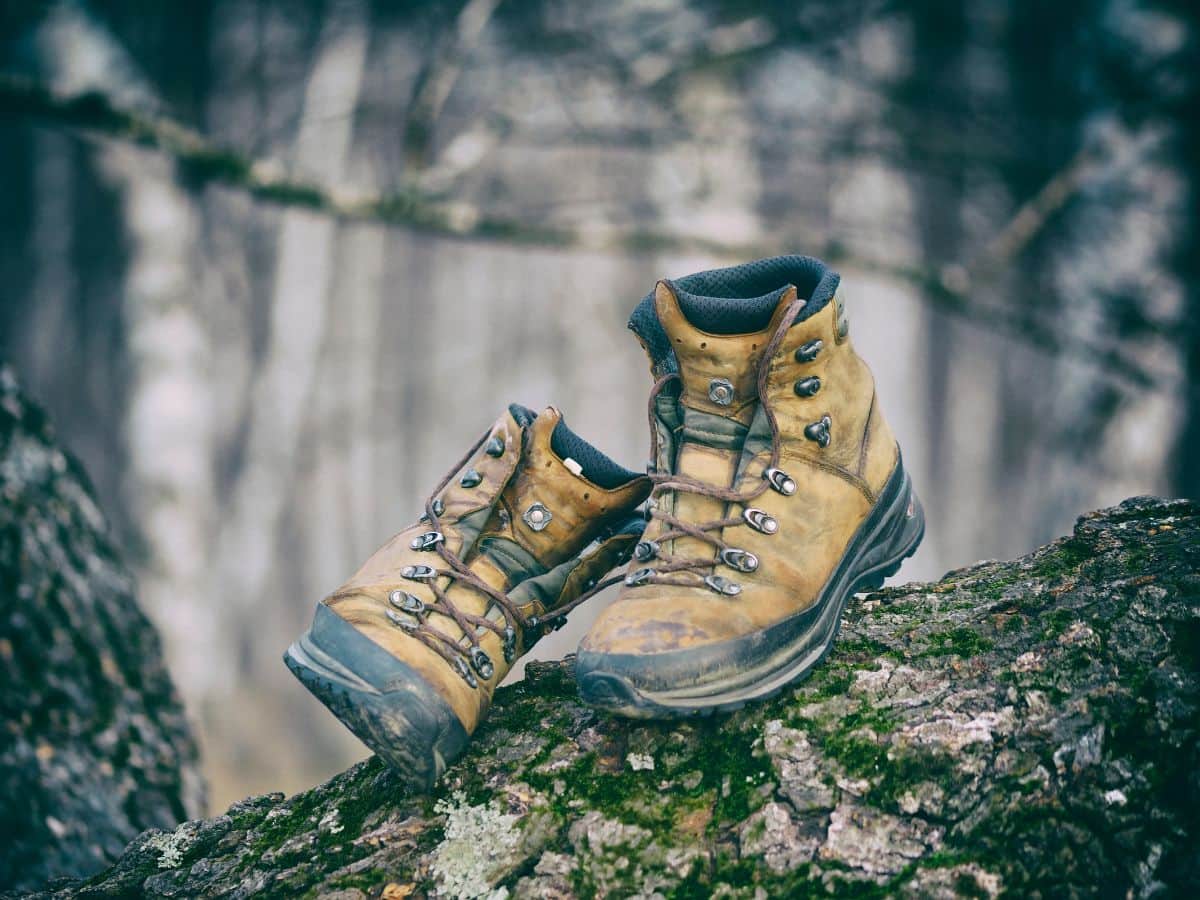
First of all, start with the toes. You should be able to move them without the front of the boot feeling loose, and they shouldn’t touch the end when you walk downhill or downstairs. Your feet will usually swell a bit over the course of a longer hike, so a boot that already feels cramped indoors is unlikely to improve once you’ve been wearing it for three hours straight.
Your heel should stay reasonably secure too. A small amount of movement isn’t always a problem, but it shouldn’t be lifting with every step. If it is, the boot may be too large, too roomy around the heel, or simply the wrong shape for your foot. Our guide on what to do if your hiking boots are too big covers the adjustments that may help, along with the point where it’s better to admit the size is wrong.
Width matters just as much. The boot should hold your foot without squeezing across the ball of the foot or pushing your toes together. Leather may soften slightly over time, but it won’t perform a miracle and turn a narrow boot into a wide one.
It’s also important to try them on with the socks and insoles you’ll actually use. Thick socks take up more room than people realise, and changing the insole can alter the whole fit. There’s not much value in testing the boots in thin everyday socks if you plan to hike in a much heavier pair.
I’d also wear them indoors for at least half an hour before making a decision. Walk around, use the stairs, stand still for a while, and see whether any pressure begins to build once your feet warm up. A quick lap of the shop tells you very little beyond whether the boots are obviously the wrong size.
If the problem is mainly at the back of the foot, our guide on why your heels hurt in hiking boots goes into heel slip, rubbing, lacing and boot shape in more detail.
And before you take them outside, check the retailer’s returns policy. Once the soles are dirty, you might be stuck with them, which is a poor time to realise the size was wrong from the beginning.
If the toes have room, the heel stays put, and nothing feels pinched or cramped after half an hour indoors, you’re ready to start wearing them in properly.
Wear Them Around the House First
Once you’re happy with the size and fit, wear the boots around the house for a few hours before taking them anywhere serious.
You don’t need to pace up and down like you’re training for an indoor expedition. Just wear them while you’re cooking, tidying up, going up and down the stairs, or doing whatever you’d normally be doing at home. Half an hour is enough to begin with, then an hour, and so on if nothing starts bothering you.
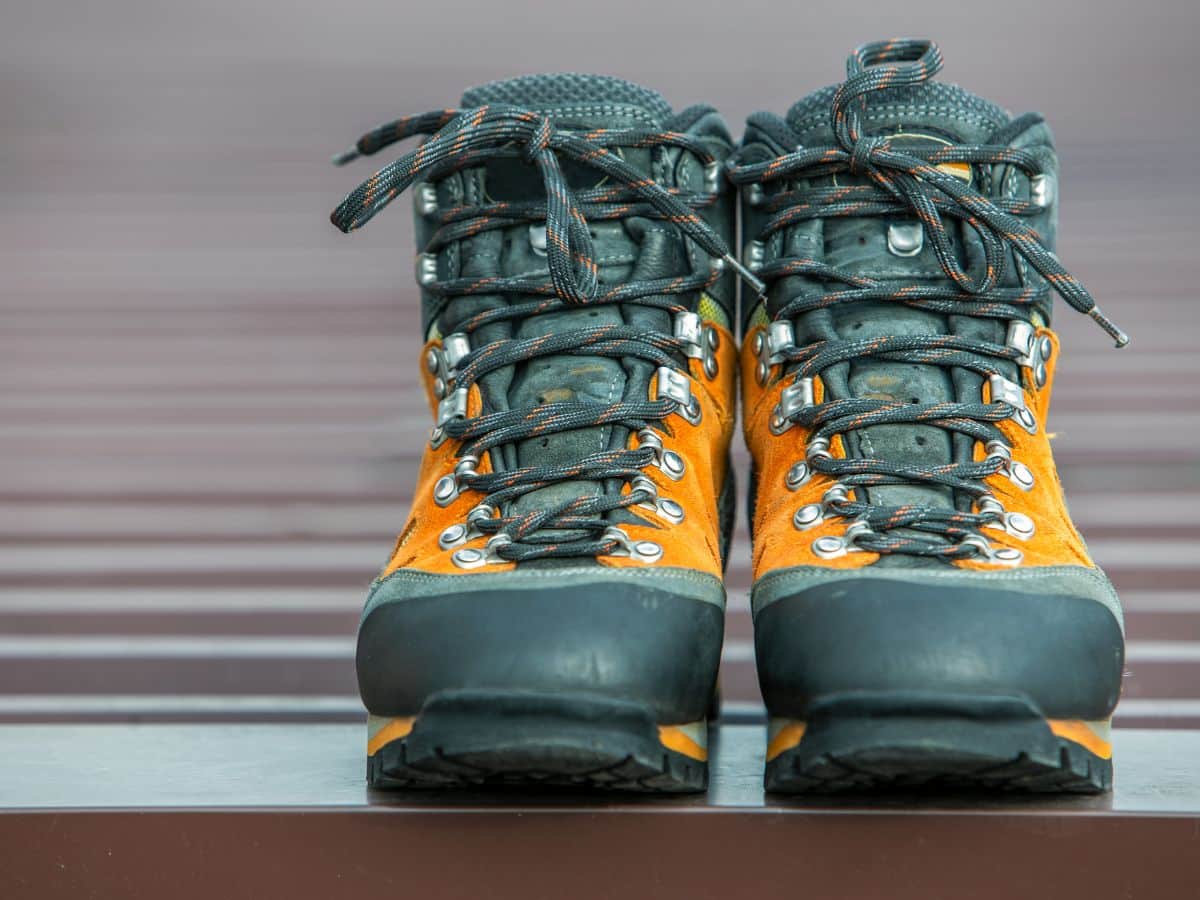
This gives the materials a chance to loosen slightly, but more importantly, it gives you time to notice the small things that are easy to miss in a shop. The tongue might keep shifting to one side, a lace hook might press against the ankle, or one part of the cuff might catch when you bend your foot. None of which are necessarily major problems, but they’re worth sorting before you’re miles from home.
It’s also worth mentioning again – keep the setup the same each time. Wear the socks and insoles you plan to hike in, and lace the boots properly rather than leaving them loose because you’re only indoors. You’re trying to learn how the whole thing feels together, not just whether the boots are bearable on carpet.
Stairs are particularly useful because they make the boots flex more than ordinary walking. Going up can reveal rubbing around the heel or ankle, while coming down shows whether your foot is moving forward too much. If everything still feels fine after an hour or so of normal movement, that’s a good sign.
What you’re looking for here is consistency. The boots might still feel firm, but they shouldn’t become more uncomfortable the longer you wear them. If one area starts to ache or rub every single time, don’t assume another evening in the kitchen will somehow solve it. Adjust the lacing, check the sock, and work out what’s causing it before moving on.
Once you can wear them indoors for a decent stretch without thinking about your feet every few minutes, take them outside for a short walk somewhere close to home.
Take Them on Short Walks Close to Home
A local park, a pavement route, a woodland path, or even the usual dog walk is ideal. You don’t need hills, mud, loose stones, or anything remotely ambitious yet. The first outdoor walk is simply about seeing how the boots feel once you settle into a normal stride and keep moving for longer than you would around the house.
Twenty or thirty minutes is plenty to begin with…
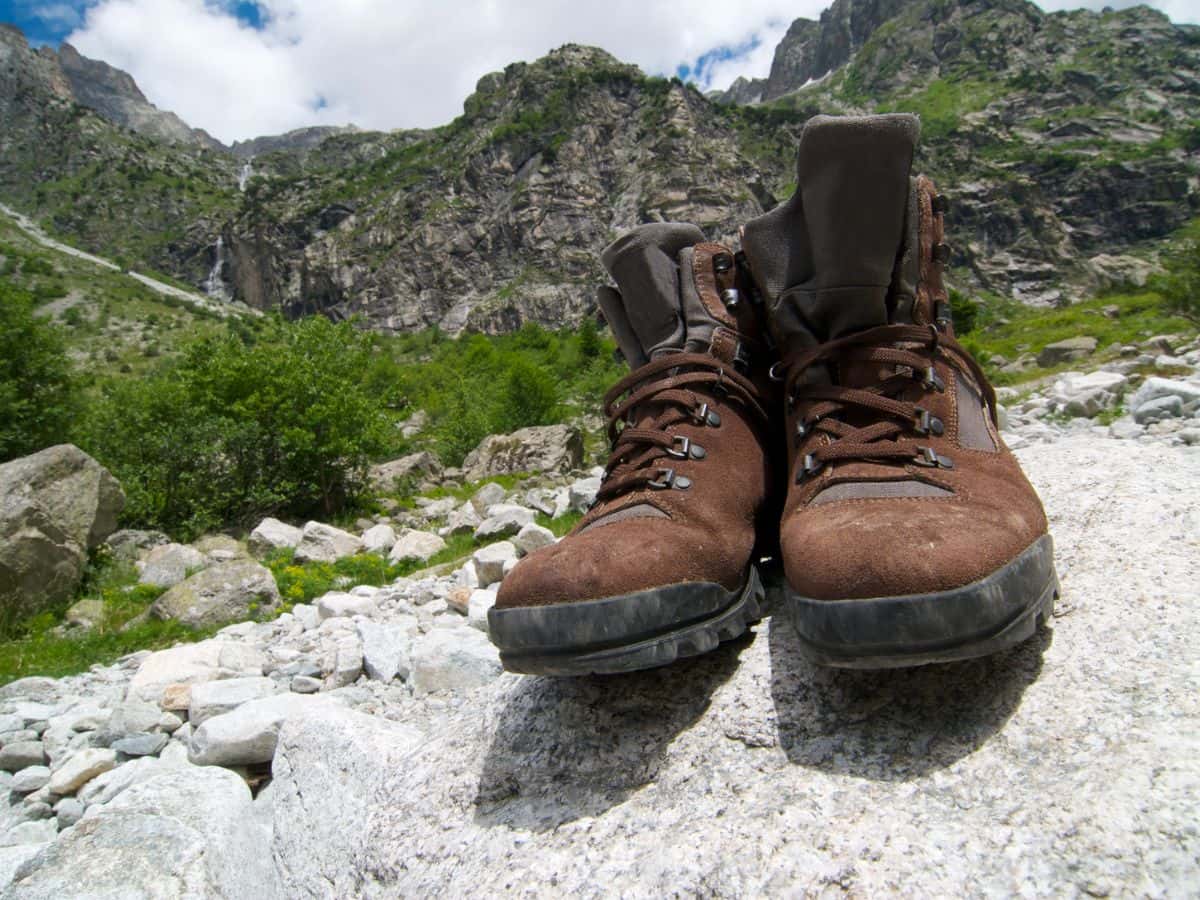
This is usually where you notice things that didn’t show up indoors. The sole may feel firmer on hard ground, the heel may start moving slightly once your stride lengthens, or the ankle cuff may press differently as the boot flexes again and again. And none of that automatically means there’s a problem, but it gives you much better information than another hour pacing around the kitchen.
I’d keep the route close enough to home that turning back is easy. There’s no benefit in proving you can finish the walk if something starts rubbing after ten minutes. The whole point is to find that out early, while the fix is still as simple as going home, adjusting the laces, or trying a different pair of socks.
When you finish, think about how the boots felt towards the end rather than how they felt when you first set off. New footwear often feels fine for the first few minutes, but what matters is whether any pressure or rubbing suddenly appeared once you’d been wearing the boots for a while.
If everything felt comfortable, repeat the same route or make the next walk slightly longer. There’s no need to double the distance every time either – an extra fifteen or twenty minutes is enough.
If something did start bothering you, change one thing at a time. Adjust the lacing, smooth the tongue, try a different sock thickness, or check whether the insole has shifted. If you alter everything at once, you might solve the problem, but you won’t know what actually made the difference.
This is also the stage where it pays to take hotspots seriously. A slight warm patch on the heel or toe is easy to ignore, but it can quickly turn into a blister if you keep walking on it. If that’s something you’re prone to, our guide on how to stop blisters when hiking explains what to do as soon as you feel the first signs of rubbing.
Add Hills, Rough Ground and Your Normal Pack
Once the boots feel comfortable on easy local walks, it’s time to see how they behave on the kind of ground you actually bought them for.
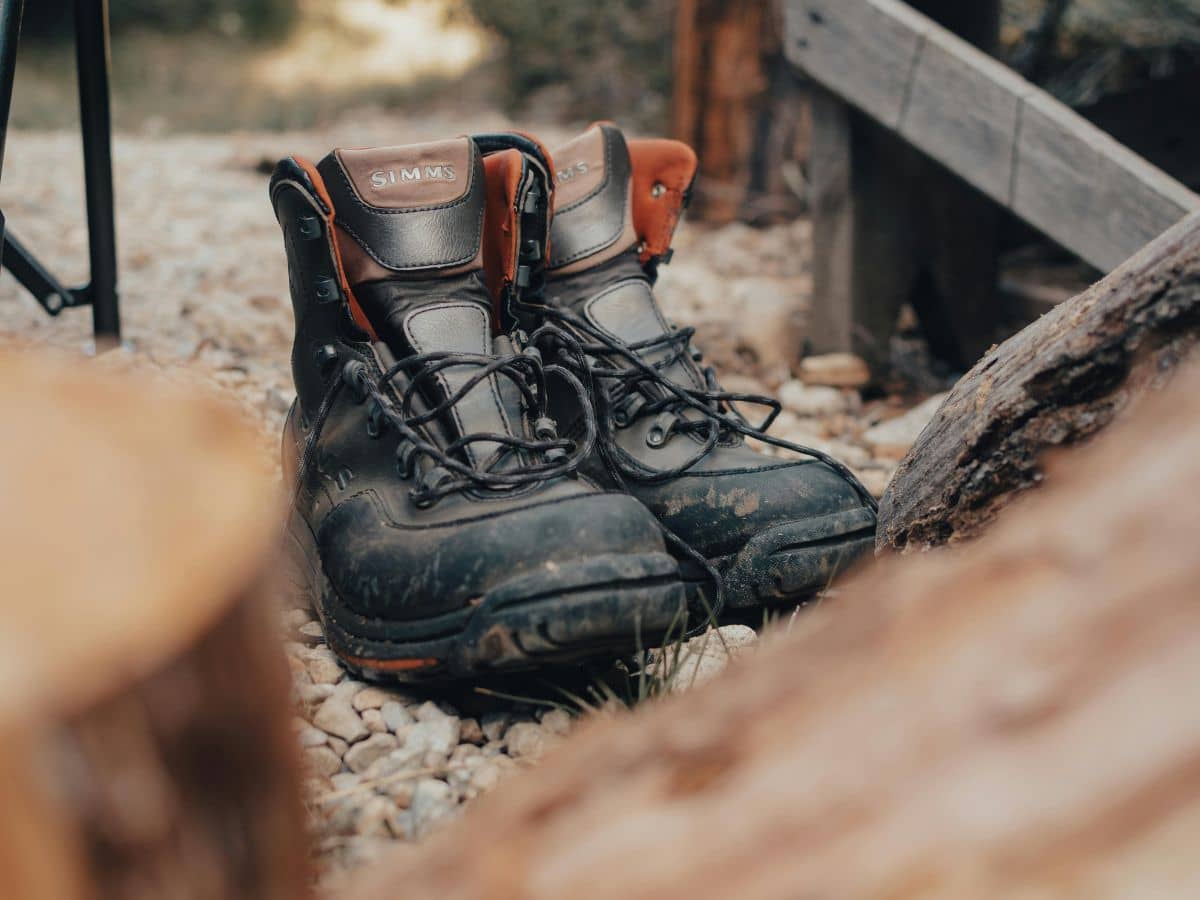
Start with a route that has a few gentle climbs and descents. Nothing too ambitious, and preferably somewhere you already know, because the aim is to test the boots rather than spend half the walk wondering where the path has gone.
Hills tend to reveal problems that flat ground doesn’t. On the way up, you’ll notice whether the heel starts lifting or the ankle cuff catches as your foot bends. On the way down, your foot may slide forwards slightly, which is when cramped toes and pressure at the front of the boot usually make themselves known.
Take the descents slowly at first and notice what happens inside the boot. Your toes shouldn’t be hitting the front, and your heel shouldn’t feel as though it’s moving independently from the rest of you. If either happens, stop and adjust the lacing before carrying on. A small change around the ankle or midfoot can sometimes make a surprising difference.
Once hills feel comfortable, introduce rougher ground. Woodland paths, loose stones, roots, muddy tracks and uneven fields all make the boot move differently. The sole has to flex and twist more, while the upper starts taking some of the knocks and awkward angles it was designed for.
This is where you get a much better sense of whether the boots feel natural underfoot. They may still feel firm, especially if they’re a heavier pair, but you shouldn’t be fighting them or feeling as though every step requires negotiation.
Keep the first walk fairly short. There’s no reason to head straight for the longest or steepest route nearby just because the boots survived the park. A familiar trail with a mixture of surfaces is enough.
If the boots still feel good, add the rucksack you normally carry.
This is worth doing because pack weight changes the way you walk. Your feet land more firmly, your legs work harder, and the extra load can make pressure points show up sooner than they did on an easier hike. A pair of boots that feels perfectly comfortable with nothing more than a bottle of water may feel quite different once you’ve added food, waterproofs and camping gear.
Don’t load the pack with everything you own on the first attempt. Start with a modest amount of weight and use a route the boots have already handled well. If that feels comfortable, bring the load closer to what you expect to carry on the real hike.
For an overnight trip, this is also a useful moment to look at the rest of your kit. There’s not much point carefully breaking in your boots and then making the first proper walk harder by carrying half the contents of the house. Our guide to lightweight camping looks at how to keep the load sensible without leaving behind the things you’ll actually need.
By now, the boots should have been tested on flat ground, slopes, uneven trails and under a realistic amount of weight. If they’ve stayed comfortable through all of that, they’re probably ready for one final rehearsal hike before you trust them on the longer route you had in mind.
Give Them One Proper Test Before the Big Hike
If the main walk has hills, include hills. If you’ll be carrying camping gear, take the pack. If the ground is likely to be muddy, rocky or uneven, choose somewhere that gives the boots a fair test without turning the day into a full commitment.
The point is not to recreate the whole trip. You just want one walk long enough to see how the boots feel after a few hours, once your feet have warmed up and the novelty of wearing them has worn off.
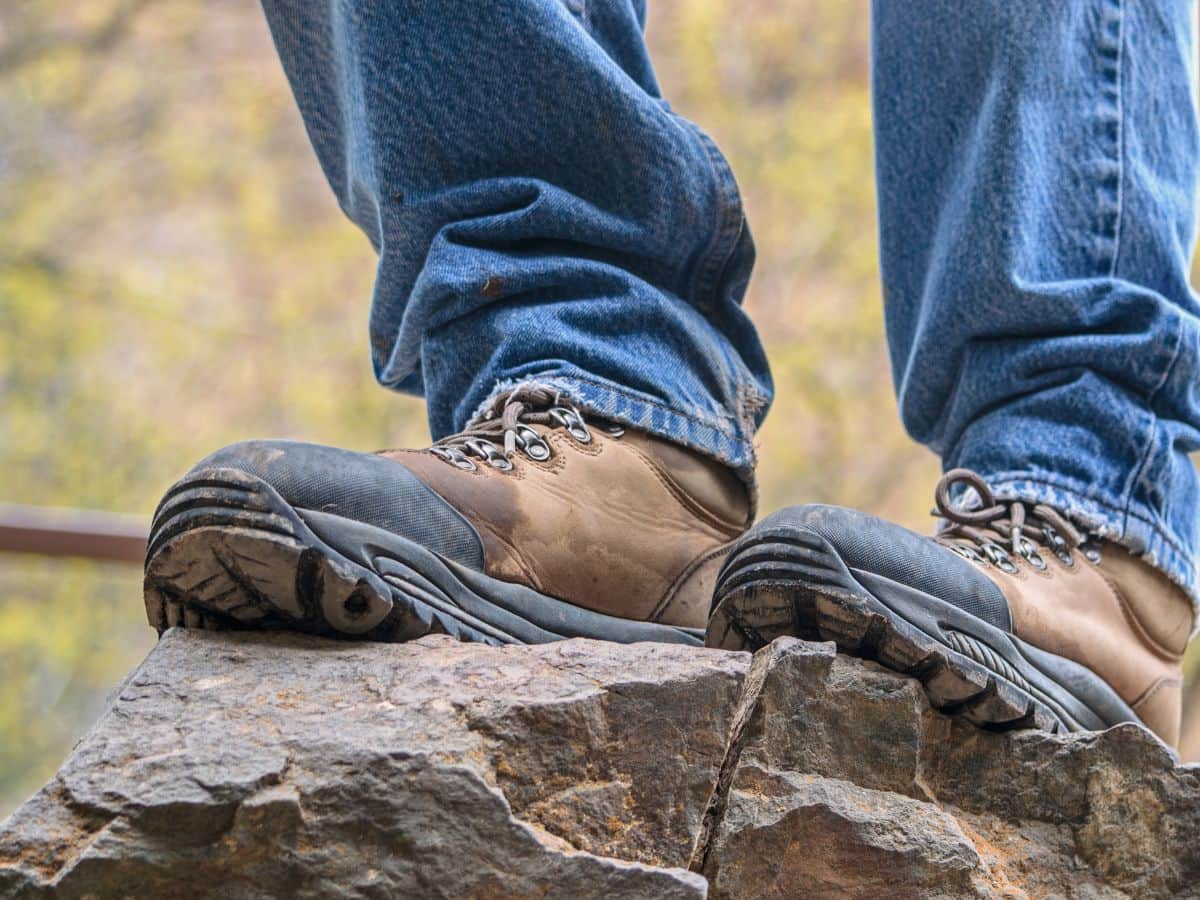
By this stage, you shouldn’t be waiting for the boots to transform into slippers. They may still feel firm, particularly if they’re built for rougher ground, but they should feel predictable. You should know how tightly to lace them, how they behave walking downhill, and whether the fit remains comfortable once you’ve been moving for a while.
This is also a good time to notice anything that only appears late in the walk. Some boots feel completely fine for the first hour, then begin rubbing once the feet swell or the socks become damp. If sweaty feet are part of the problem, our guide on why your feet sweat when hiking looks at the role of socks, warmth and breathability in more detail.
If the boots get through the rehearsal hike without any growing pain, rubbing or pressure, there’s not much more to prove. Clean them up, let them dry properly, and use the same socks, insoles and lacing setup on the main walk.
If they still cause trouble, don’t assume the answer is simply another ten miles. By now, you’ve given them a fair chance. The next step is to work out whether the issue can be fixed with a small adjustment, or whether the boots are simply the wrong pair for your feet.
Frequently Asked Questions
Should I waterproof new hiking boots before wearing them?
Usually not. Most waterproof hiking boots arrive with a factory-applied treatment, so adding another product immediately may be unnecessary. Check the manufacturer’s care instructions first, because leather, suede and synthetic boots don’t all need the same treatment.
You’ll normally know the outer treatment needs renewing when water stops beading on the surface and begins soaking into the material instead. REI’s guide to caring for hiking boots recommends cleaning them first and only restoring the waterproofing when it’s actually needed.
If you’re preparing the boots for particularly wet conditions, our guide to camping in the rain also covers the wider problem of keeping yourself and your kit comfortable when everything outside is damp.
Can leather conditioner help break boots in faster?
A suitable conditioner can make some leather feel more supple, but it shouldn’t be used as a shortcut without checking what the boot manufacturer recommends. The wrong product can alter the appearance, affect breathability or soften parts of the boot that were designed to stay supportive.
Condition leather because it needs caring for, not because you’re hoping to avoid the walking part of breaking it in. Apply any approved treatment sparingly and test it somewhere inconspicuous first.
Can I break hiking boots in on a treadmill?
You can use a treadmill to spend more time walking in the boots, particularly if the weather is awful or you don’t have an easy route nearby. Incline settings can also give you a basic sense of how they feel when climbing.
What a treadmill can’t reproduce is uneven ground, loose surfaces, sideways movement or proper descents. It can be useful as an extra step, but it shouldn’t replace at least one outdoor test on the sort of terrain you plan to hike.
Can somebody else break my hiking boots in for me?
Not really. Another person may soften the materials slightly, but they’ll be walking with a different foot shape, stride and pressure pattern. The whole point is finding out how the boots work with your feet.
There’s also a fair chance they’ll create creases and wear patterns in places that don’t match the way you move, so this is one job that’s best not delegated, however willing your family members may suddenly claim to be.
Do hiking boots need breaking in again after being stored?
They may need a short reintroduction if they’ve been sitting unused for months, especially if they’re leather or were stored somewhere cold. The boots haven’t returned to factory condition, but the materials may feel firmer and your feet may no longer be used to them.
Wear them around briefly and take them on a shorter walk before relying on them for a full day. It’s also worth checking for cracking, loose soles, worn tread or damage that might have developed while they were stored.
How should I dry hiking boots?
Remove the insoles and loosen the laces, then let the boots dry naturally somewhere with good airflow. Stuffing them loosely with newspaper can help absorb moisture, although the paper may need changing once it becomes damp.
Avoid placing them directly against a radiator, heater or open fire, because too much heat can damage adhesives and dry leather out. Drying them properly also helps prevent the inside becoming unpleasant, and our guide on how to make hiking boots smell better covers what to do if the interior has already started developing a personality of its own.
Can I break new hiking boots in during winter?
You can, but the conditions need a bit more thought. Snow, ice, deep mud and cold weather leave less room for discovering that the boots aren’t comfortable or warm enough, especially if the route takes you far from an easy way back.
Start with short, low-risk walks and make sure the boots are actually suitable for winter use. Our guide on whether hiking boots are good for snow explains what ordinary walking boots can handle and when you may need something more substantial.
Should I choose high boots because they offer more ankle support?
Not automatically. A higher cuff can feel more secure and gives your ankle more protection from mud, stones and rough ground, but height alone doesn’t guarantee that a boot will prevent an ankle injury.
Fit, sole stability, grip and how comfortably you move in the boots all matter too. If ankle support is influencing which pair you buy, our guide on whether hiking boots should have ankle support takes a closer look at what the cuff can and can’t realistically do.
Should I pack hiking boots or wear them when flying?
If the boots are bulky or heavy, wearing them during the journey can free up a useful amount of luggage space. The downside is spending several hours in them at the airport and on the plane, which may not be especially appealing if they’re warm or stiff.
If you pack them, clean the soles first and use the space inside them for socks or other small items. For trips involving tents, stoves or other awkward outdoor equipment, our guide to flying with camping gear explains what can go in your luggage and what may cause trouble at security.
Final Thought
Breaking in hiking boots isn’t really about forcing them to become comfortable. It’s about giving yourself enough time to find out whether they already have the potential to be comfortable in the first place.
A good pair should become less stiff, less noticeable and easier to trust with every hike. You should stop thinking about the ankle cuff, stop wondering whether your heel is moving, and stop paying attention to every step. That’s usually the clearest sign that they’re ready.
If the same problem keeps coming back, though, it’s worth taking seriously. Boots can soften, but they can’t become a different size or shape, and there’s no great virtue in spending weeks trying to prove otherwise.
So take them out gradually, use the same setup you plan to hike in, and give them one proper test before the longer route. If they feel good by then, you can stop worrying about the boots and get back to thinking about the hike itself, which is where your attention should have been all along.
