There’s something uniquely irritating about having sweaty feet on a hike, because it’s not always obvious what’s actually going on. You set off feeling fine, your boots or shoes seem comfortable enough, and then somewhere along the way your feet start feeling hot, damp, and unpleasant in a way that becomes harder and harder to ignore. It’s not exactly the sort of problem you share with other people, but once your socks feel wet and your feet start sliding around inside your footwear, it can quickly take over the whole hike.
The annoying thing is that sweaty feet can make you question everything… Are your boots too warm? Are your socks wrong? Are waterproof boots making things worse? Is it just the weather? Or are your feet somehow just more… well… sweaty than everyone else’s?
But if you’ve ever asked yourself “why do my feet sweat when hiking”, the good news is there’s a fairly normal explanation, and it really just boils down to heat getting trapped inside your footwear.
Your feet sweat when hiking because walking creates heat, and that heat gets trapped inside socks, boots, or shoes. Waterproof footwear, thick socks, warm weather, long climbs, poor breathability, and naturally sweaty feet can all make the problem worse.
The best way to manage sweaty feet on a hike is to wear moisture-wicking socks, choose footwear that suits the conditions, carry spare socks on longer walks, and deal with dampness early before it leads to rubbing, smelly feet, or blisters.
That last part is important, because sweaty feet aren’t just uncomfortable. Once your socks are damp and your skin softens, you’re more likely to notice rubbing, hotspots, sore patches, and that horrible clammy feeling where every step starts to feel slightly less pleasant than the one before. It’s not dangerous, but it can make a good hike feel much harder work than it needs to be.
The good news is that this is normally manageable with a few simple tweaks. You don’t need some complicated foot-care routine, and you probably don’t need to start diagnosing yourself with rare conditions after one warm walk in thick socks. In most cases, it’s about understanding what’s making your feet overheat, then making a few sensible changes to your socks, footwear, and habits on the trail.
So in this guide, we’ll look at why your feet sweat so much when hiking, what makes the problem worse, whether waterproof boots are helping or trapping sweat, which socks make the biggest difference, and how to keep your feet more comfortable before damp socks turn into the main event.
Contents
- Why Your Feet Sweat More When Hiking
- The Main Things That Make Sweaty Feet Worse
- How to Choose the Right Socks
- How to Choose the Right Footwear
- How to Keep Your Feet Comfortable During the Hike
- Frequently Asked Questions
- Final Thought
Why Your Feet Sweat More When Hiking
As we’ve touched on already, your feet sweat more when hiking for the same basic reason the rest of you does: you’re working harder than usual, and your body is trying to manage heat.
That sounds obvious, but it’s easy to forget when you have a river of sweat inside your boots. If your forehead gets sweaty on a climb, you don’t usually think much of it. You know you’re walking uphill, carrying a bag, breathing a bit harder, and generally asking your body to do more than it was doing while sitting in the car. But when the same thing happens to your feet, it can feel oddly specific, as if your socks have decided to become a problem all on their own.
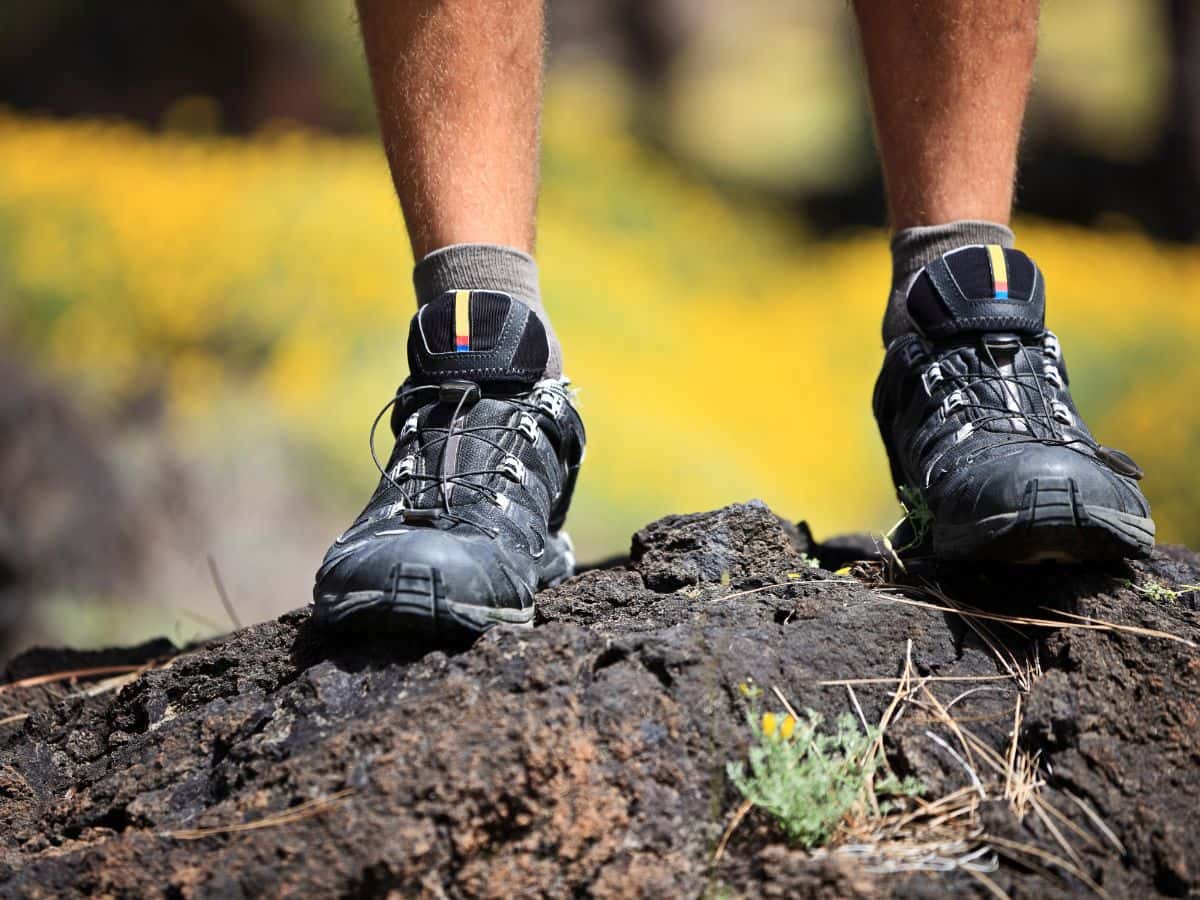
The difference is that your feet are trapped in a much warmer, more enclosed space. They’re inside socks, inside footwear, often under pressure from laces, insoles, and several miles of repeated movement. The heat your feet produce doesn’t escape as easily as it does from your arms, face, or neck, so sweat builds up faster and has fewer places to go.
That’s why hiking can make your feet feel much sweatier than normal walking. You’re not just strolling across a flat pavement for ten minutes. You might be climbing, descending, stepping over uneven ground, carrying a rucksack, walking faster than you realise, or dealing with warm weather. All of which creates more heat, and once that heat is inside your boots or shoes, your feet have to work in a slightly ridiculous little climate of their own.
This doesn’t automatically mean anything is wrong. Some sweating is completely normal on a hike, especially if you’re wearing enclosed footwear or walking in mild to warm conditions. In fact, it would be stranger if your feet stayed perfectly dry while the rest of your body was working hard. Feet sweat because they’re full of sweat glands, and hiking gives those sweat glands plenty to do.
The problem starts when that sweat can’t move away from the skin properly. If your socks hold moisture, your footwear doesn’t breathe well, or your feet stay warm for hours, the inside of your boot or shoe starts to feel damp and clammy rather than simply warm. That’s usually when people notice the discomfort, because it stops being just “my feet are a bit warm” and becomes “why do my socks feel like they’ve just come out of the washing machine?”
It’s also worth saying that some people simply have sweatier feet than others. That doesn’t mean they’re abnormal, and it doesn’t mean hiking isn’t for them. It just means they may need to be a bit more thoughtful about socks, footwear, breaks, and how quickly they deal with that horrible damp feeling once it starts.
So before blaming your feet, it’s worth looking at the conditions you’re putting them in. Hiking creates heat, socks and footwear trap that heat, and sweat builds up when it can’t escape easily. That’s the core of it.
The next step is working out what’s making that worse for you personally, because the cause is not always the same from one hiker to the next.
The Main Things That Make Sweaty Feet Worse
Once you understand the basic problem (heat building up inside your footwear) the next question is what’s making it worse.
Because this is where it gets a bit more personal. Two people can walk the same route in the same weather and have completely different feet by the end of it. One person takes their boots off and everything is mildly warm but basically fine. The other removes a sock that feels like it’s been soaked in smelly bath water. Annoying, yes, but not mysterious. Usually, there’s something in the setup that’s tipping things in the wrong direction.
Waterproof boots are one of the biggest culprits. They’re brilliant when the main problem is wet grass, mud, puddles, cold rain, or winter ground, but they can also trap more heat than a lighter, more breathable shoe. That doesn’t make them bad. It just means they’re not always the best choice if your main problem is sweat rather than outside water. If you’re wearing waterproof boots on a mild day, especially with thicker socks, your feet may be getting hot simply because there isn’t enough airflow for the heat and moisture to escape properly.
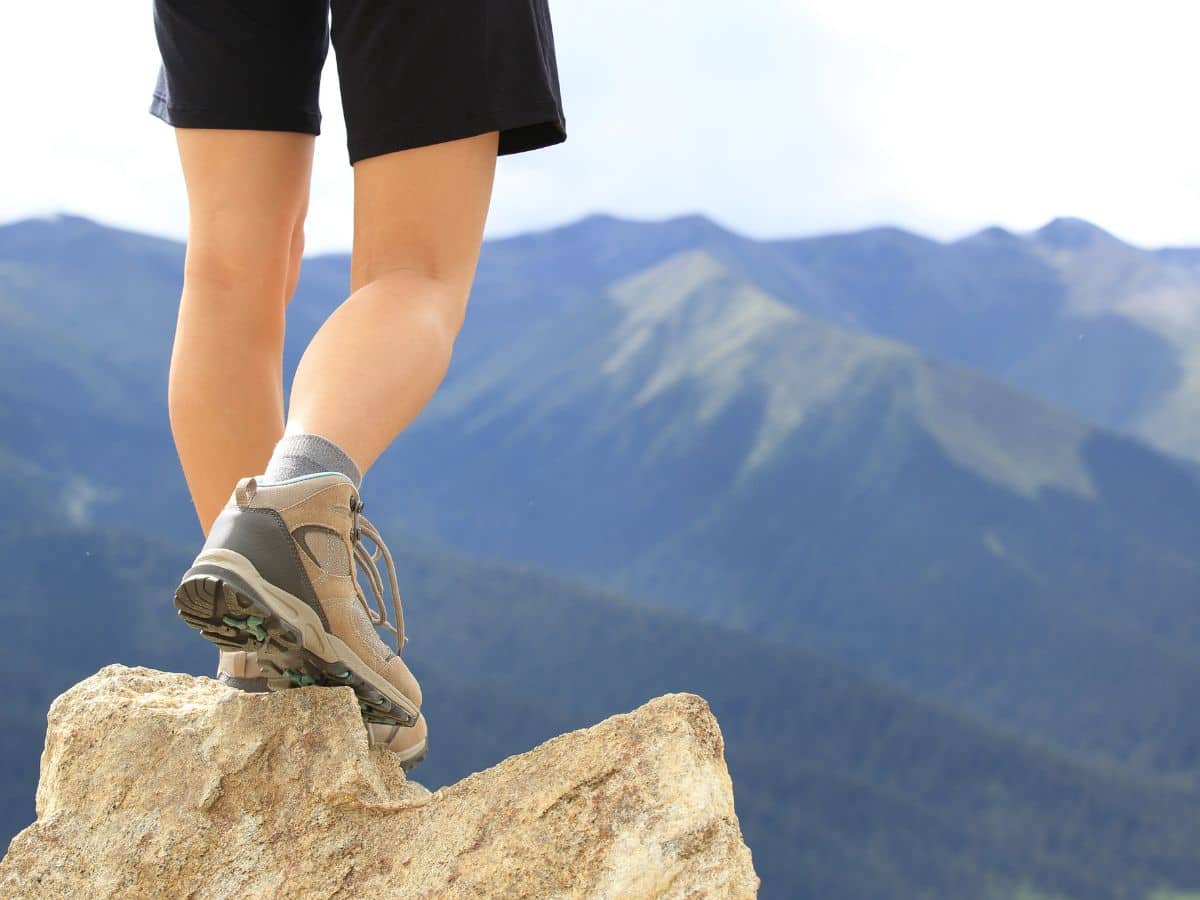
Sock thickness can do the same thing. A thick hiking sock can be perfect in cold weather, especially if you’re standing around at camp or walking in winter, but it’s overkill on a hike in the middle of summer. Sometimes people wear heavy socks because they think “proper hiking” requires them, then wonder why their feet feel like they’re being slow-cooked. If your feet run hot, a lighter hiking sock will be far more comfortable than a thick one, provided it still fits well and gives you enough cushioning.
Cotton socks are another common problem. They’re comfortable enough around the house, but they’re not great once your feet start sweating. Cotton tends to hold moisture rather than moving it away from the skin, so once it gets damp, it stays damp. That can leave your feet feeling clammy for the rest of the hike, especially inside boots that are already warm. This is one of those small gear choices that often make a huge difference.
The size and fit of your footwear can make sweaty feet worse too, although not always in the way people expect. If your boots or shoes are too tight, there’s less space for air to move and your feet will heat up fast. If they’re too loose, your feet may move around more, which adds rubbing to the dampness – and for obvious reasons, neither scenario is ideal. You want footwear that holds your foot securely without squeezing the life out of your feet in the process.
The route itself matters as well. Long climbs, fast walking, uneven ground, and carrying a heavier pack all make your body work harder, and that usually means more heat. You might not notice it immediately, especially if the weather is cool, but your feet are still doing a lot. Every step creates pressure, movement, and warmth inside the shoe. Add a rucksack, a steep climb, or a route that keeps making you work harder than expected, and your feet are going to sweat more than they would on an easy, flat path.
Warm weather is another obvious factor, but it doesn’t have to be hot for your feet to sweat. A mild spring walk in waterproof boots can be more than enough to get the sweat glands pumping. So can a cool day with a heavy pack, a long hill, or socks that are just too warm for the conditions. That’s why it’s worth thinking about the whole combination rather than blaming one thing straight away. Footwear, socks, weather, effort, and route all work together.
Not to drive the point home, but the useful way to think about it is this: your sweaty feet are usually not caused by one single thing. It’s more often a combination. Waterproof boots on a mild day, thick socks on a long climb, cotton socks inside warm footwear, shoes that don’t fit quite right – the list just goes on and on. But once you spot which part of that combination is causing the most trouble, the fix becomes much easier.
For a deeper look at the footwear side of that decision, especially if you’re wondering whether boots are actually the right choice for your usual walks, our guide to hiking boots vs trail runners goes into that trade-off properly. Here, though, the main thing is to notice what’s making your feet overheat, then change that part of the setup first.
How to Choose the Right Socks
If we assume for a second that you’ve narrowed the cause of your sweaty feet down to socks, the question is not really “what are the best hiking socks?” in some universal sense. It’s more practical than that: what socks are going to help your feet stay comfortable in the conditions you’re actually walking in?
That matters because socks are not just padding. They’re the layer sitting directly against your skin, so they have a lot of influence over how sweat feels once it appears. A good hiking sock won’t stop your feet sweating completely, but it can help move moisture away from the skin, reduce that clammy feeling, and stop dampness from turning into rubbing quite so quickly.
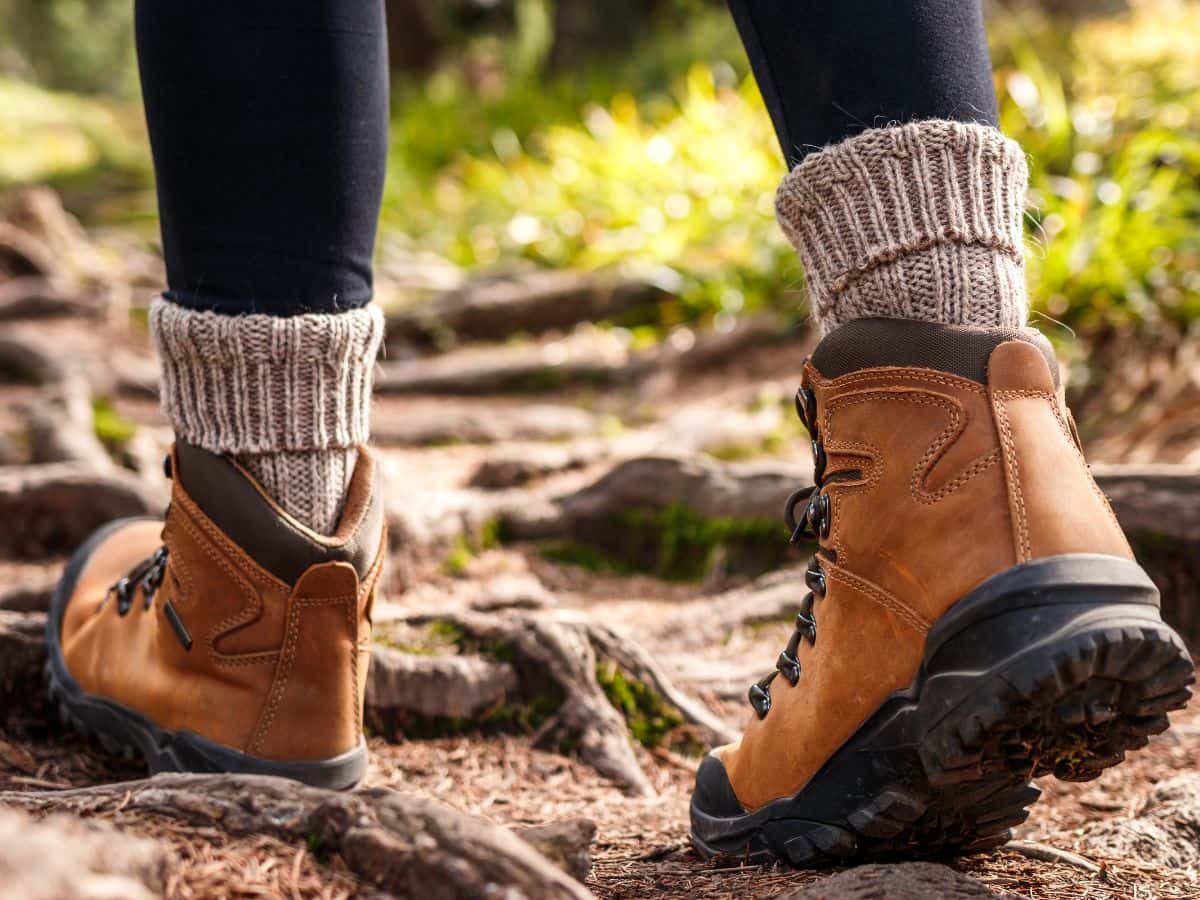
As we’ve already covered, cotton is usually the one to avoid for proper hikes. The better options are usually merino wool, synthetic hiking socks, or a blend of the two. Merino is popular because it handles moisture well, stays comfortable across a decent range of temperatures, and tends not to smell quite as quickly as some materials. Synthetic socks can also be excellent, especially if you want something that dries quickly and feels lighter on warmer walks.
The main thing is to choose a sock that matches the day. If it’s cold, wet, or you’ll be moving slowly, a thicker sock might make sense. If it’s mild, warm, or you know your feet run hot, a lighter hiking sock is usually the better place to start. This is where a lot of people get caught out, because they buy one “proper” pair of thick hiking socks and wear them for everything, then wonder why their feet feel awful in July.
And again, fit matters just as much as the material. A sock can be made from all the right fibres and still be annoying if it slips, wrinkles, bunches under your toes, or leaves a seam pressing into the wrong place. Once your feet are warm and damp, even a small fold in the fabric can start to feel much bigger than it looked when you put the sock on. That doesn’t mean you need to become obsessive about sock engineering, but it is worth making sure they sit smoothly before you set off.
It’s also worth thinking about cushioning, and believe it or not, more cushioning isn’t automatically better. A padded sock can make stiff boots more comfortable, but too much bulk can make footwear feel tight, especially across the toes or top of the foot. If your boots or shoes already fit snugly, a thick sock may reduce space and make your feet feel even hotter. On the flipside, if your footwear has a bit more room, a slightly cushioned sock may feel better. Again it comes back to the whole setup rather than the sock on its own.
For longer walks, spare socks are one of the simplest fixes. Not exciting, admittedly, but very effective. If your socks are damp halfway through the hike, changing into a dry pair can make your feet feel normal again. It also gives your skin a break before dampness turns into rubbing. If you’re trying to keep your pack light, this is one of those tiny bits of kit that actually earns its place, which is the same sort of thinking we talk about in our guide to lightweight camping.
Liner socks are optional. Some hikers like them because they add a thin extra layer between the foot and the outer sock, which can potentially reduce rubbing for certain people. Others find them too warm, too fiddly, or just unnecessary. I’d treat them as something to test, not something you need to buy immediately because a forum told you to. Try them on a shorter walk first and see whether your feet actually prefer them.
If you want to go deeper into sock choice, our guide on whether hiking socks make a difference covers the general question properly. For this post, though, the practical takeaway is simple: choose socks for the weather, the footwear, and your own feet. If your socks are holding sweat, adding too much warmth, bunching up, or making your footwear feel tight, they’re not helping. A better pair won’t make your feet magically dry, but it can make the sweat much easier to manage.
How to Choose the Right Footwear
Once you’ve looked at socks, the next thing to think about is the footwear itself.
Not in a “you must buy new boots immediately” kind of way, because that’s usually how people end up with a cupboard full of outdoor gear and no clear idea what actually helped. It’s more about asking whether your boots or shoes make sense for the kind of hiking you’re doing most often.
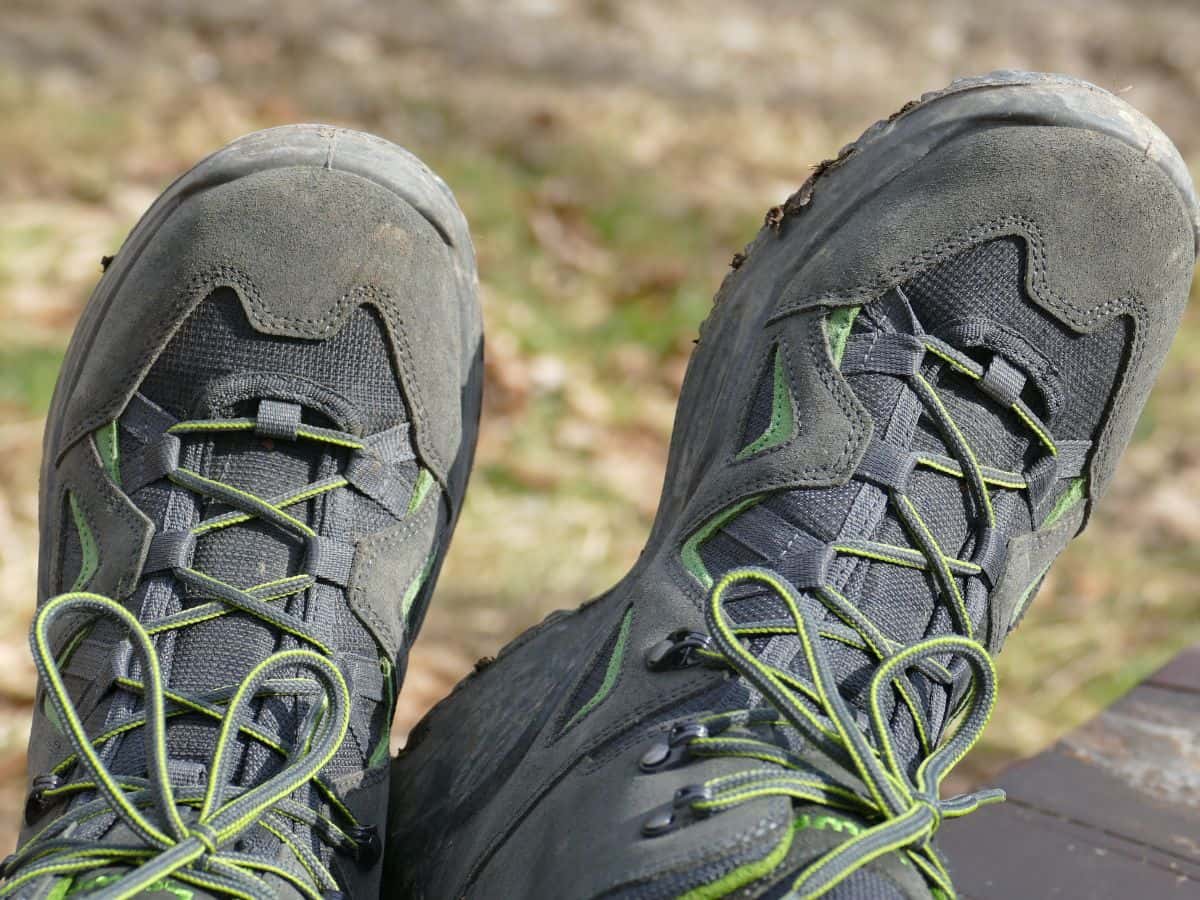
As we hinted at earlier – a warm, waterproof boot can be exactly right on a cold, wet day. If you’re walking through muddy fields, long wet grass, shallow puddles, winter paths, or routes where your feet would otherwise get soaked from the outside, that extra protection can make the whole hike more comfortable. The trouble starts when the same boot gets used for every walk, including mild spring routes, warm summer paths, or dry trails where the main thing your feet need is a bit more air.
That’s where breathable footwear can make a noticeable difference. A lighter hiking shoe or trail runner won’t suit every route, but it can be much more comfortable when the ground is dry, the weather is mild, and you’re not carrying much weight. Your feet still sweat, of course, but the whole setup tends to feel less sealed-in.
This doesn’t mean waterproof boots are bad – they just need to earn their place. If the route is cold, wet, muddy, or likely to soak your feet from the outside, they’re doing a useful job. If the route is dry, warm, and fairly straightforward, they may be solving a problem you don’t actually have that day, while creating another one inside the boot.
It’s also worth thinking about how much shoe you actually need. For a short local walk on good paths, heavy boots may be overkill. For a long hike over wet, rough or uneven ground, light mesh shoes may not give you enough protection. For a lot of everyday walking, hiking shoes sit in the middle and are often the ideal compromise, especially if you want something less hot and heavy than boots but sturdier than trail runners.
The season matters as well. In winter, warmth and weather protection are usually more important. Whereas, in summer, breathability and comfort tend to matter more. During those in-between months, which is basically half the British calendar, you may need to make the call based on the route rather than the forecast alone. A dry woodland path and a boggy hill route can feel completely different underfoot even on the same day.
If your feet sweat heavily, the main question is not “are these good hiking boots?” It’s “are these the right boots or shoes for this walk?” Good footwear in the wrong conditions can still feel awful.
So before your next hike, match the footwear to the route. If you need warmth, weather protection, and structure, wear the boots. If you need breathability, easier movement, and less heat, consider lighter shoes or trail runners. And if you’re not sure, start by looking at the walks you actually do most often, because that usually tells you more than any label on the box.
How to Keep Your Feet Comfortable During the Hike
Once you’re actually out walking, the aim isn’t to keep your feet perfectly dry at all times, because that’s not always realistic. Sometimes it’s warm, sometimes the route is harder than expected, and sometimes the path is wet, your socks are already damp, and your feet have clearly decided they’re getting involved whether you like it or not.
The more useful aim is to stop damp feet becoming a bigger problem.
That starts before you even leave the car or campsite. Make sure your socks are dry when you set off, and if your boots or shoes are still damp from the last walk, deal with that before you put them back on. Starting a hike with damp footwear is a recipe for disaster – your feet are already warm once you start walking, so giving them a soggy little head start is rarely helpful.
During the hike, pay attention to how your feet feel before they become properly uncomfortable. If they’re getting hot early on, or you can feel your socks starting to become damp, use your next stop properly. Loosen your laces for a few minutes if you’re able to do so, let a bit of heat escape, and give your feet a chance to settle. You don’t need to turn every rest break into a full foot inspection, but it’s worth taking a second every now and then to prevent a full-on sweaty nightmare at the end of the hike.
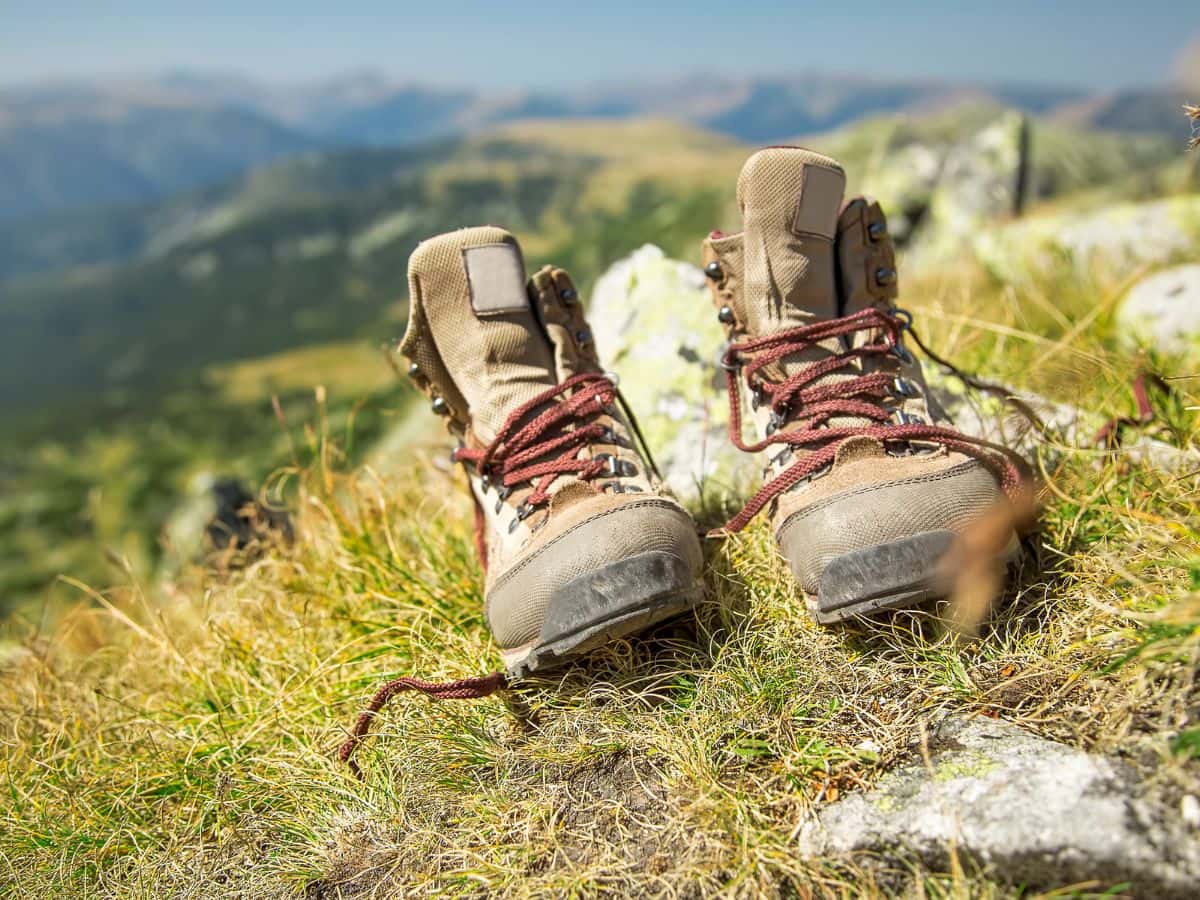
And again, on longer walks, don’t be afraid to change into a spare pair of socks. It’s not glamorous, but neither is squelching along in damp socks for another three miles while pretending everything is fine. If you’ve brought a spare pair, change before your feet are soaked rather than waiting until they’re already uncomfortable. That gives your skin a break and makes the second half of the walk feel much less grim.
If the weather allows, you can also let damp socks air on the outside of your pack. They may not dry completely, especially in Britain where the air often feels like it’s been stored damp tupperware dish, but even partly drying them is better than stuffing them straight back into a bag. If you’re camping or walking over several days, this matters even more. Damp socks and damp footwear have a way of making the next morning feel awful before you’ve even had breakfast.
Foot powder can also help some people, but I’d treat it as an extra rather than the main solution. If your socks are wrong, your footwear is too warm, or your feet are already sitting in a damp, sealed-up environment, powder is only going to do so much. But if you’ve already got the basics right and you still struggle with sweaty feet, it may help reduce that clammy feeling and make your feet a bit more comfortable over the day.
The one thing I wouldn’t do is ignore damp feet if you know you’re prone to rubbing or blisters. Once your skin has softened, small problems become more annoying much faster. A slight rub from your sock, a bit of heel movement, or a pressure point that was barely noticeable at the start can become the main thing you think about by the end. If this is something you deal with regularly, our guide on how to stop blisters when hiking goes into that side of things properly.
The basic habit is simple: use your breaks, change socks when it makes sense, air things out when you can, and don’t wait until your feet are miserable before doing anything. You’re not trying to create perfect conditions inside your boots. You’re just trying to stop heat and dampness from building to the point where they start ruining the walk.
Frequently Asked Questions
Why do my feet sweat more in hiking boots than normal shoes?
Hiking boots are usually warmer, heavier, and more enclosed than normal everyday shoes, so your feet have less chance to cool down once you start walking. That doesn’t mean your boots are faulty, but it can mean they’re more boot than you need for certain routes.
If your boots also feel loose, tight, or awkward once you’re walking, it’s worth checking whether fit is part of the problem. Boots that move around or squeeze your feet can make sweat, rubbing, and discomfort worse, and our guide on what to do if your hiking boots are too big may help if they feel loose rather than secure.
Can sweaty feet make heel pain worse in hiking boots?
Yes, they can. Sweat softens the skin and makes rubbing feel more noticeable, especially around the heel where boots often move slightly as you walk. If the back of your foot is already lifting or rubbing, damp socks can make that irritation build faster.
If the discomfort is mostly at the back of your foot, it’s worth looking at our guide on why your heels hurt in hiking boots, because heel pain is often about movement, lacing, sock choice, or fit rather than sweat alone.
Do I need different footwear for summer and winter hiking?
Not always, but it can help. Some people manage perfectly well with one pair of boots or shoes all year, especially if their walks are fairly similar. But if your feet are roasting in summer and cold or wet in winter, one pair may be asking too much.
For winter walking, especially if snow is involved, warmth, grip, and protection matter more. For warmer walks, breathability and comfort usually matter more. If you’re planning colder routes, our guide on whether hiking boots are good for snow is worth reading before assuming your normal boots are enough.
Does ankle support matter if my feet get sweaty?
It can, but it’s a separate issue. Ankle support won’t stop your feet sweating, but it may affect the type of footwear you feel comfortable wearing. Some hikers prefer boots because they feel more secure on rough ground, while others prefer lower-cut shoes because they feel cooler and less restrictive.
If you’re choosing boots mainly because you’re worried about ankle support, it’s worth reading our guide on whether hiking boots should have ankle support, because that decision should be about terrain and stability, not just habit.
What should I do if my feet sweat on a multi-day camping trip?
The biggest thing is to stop dampness carrying over from one day to the next. Change socks when you can, dry your footwear properly, air your feet during longer breaks, and avoid packing damp socks away where they can stay wet overnight.
This matters even more if you’re camping somewhere basic, because you may not have easy access to warm drying space. If you’re planning a more self-sufficient trip, our guide to off-grid camping for beginners is useful for thinking through comfort, kit, and practical little problems before they become annoying.
How do I dry sweaty socks or boots if I’m camping without a car?
You’ll need to be more deliberate about it. Air socks whenever you stop, hang them somewhere with airflow at camp, avoid stuffing damp items deep into your bag, and give boots as much ventilation as possible overnight. They may not dry fully, but even partly drying them is better than putting everything back on cold and wet the next morning.
If you’re travelling light or relying on public transport, this becomes part of your wider packing strategy. Our guide to camping without a car is worth reading if you need to think carefully about what to carry and what to leave behind.
Can sweaty feet become a bigger problem if I ignore them?
They can, mainly because damp feet are more likely to become uncomfortable over time. You may notice rubbing, sore patches, smell, irritated skin, or a general feeling that your feet are making the walk harder than it needs to be.
It’s one of those small issues that’s easy to dismiss at first, much like many of the things we cover in our guide to common camping mistakes. Small comfort problems rarely stay small if you keep ignoring them.
Should I pack anything specific for sweaty feet?
For most day hikes, you don’t need much. A spare pair of socks, a small towel or cloth, and possibly foot powder if you already know it helps you. For longer trips, it’s worth thinking about how you’ll keep socks and footwear dry between walks.
If you’re building a basic outdoor kit, this sits alongside the wider comfort items you’d normally think about. Our guide to essential camping gear is a useful place to start if you’re trying to keep your setup practical rather than overloaded.
Can sweaty feet be a medical issue?
Sometimes, yes. Sweaty feet while hiking are usually normal, because you’re active, warm, and wearing enclosed footwear. But if your feet sweat heavily when you’re resting, in cool weather, at night, or in normal daily shoes, it may be worth looking into excessive sweating, also called hyperhidrosis.
The NHS says you should speak to a GP if excessive sweating is affecting daily life, happens at night, lasts a long time, or self-care steps aren’t helping. Their NHS guide to excessive sweating is a sensible external source to link here.
Final Thought
Sweaty feet are one of those hiking problems that sound fairly minor until they start messing with the walk itself.
Most of the time, though, they’re not a sign that anything’s wrong. They’re just what happens when your feet are working hard inside socks and footwear that may not be letting heat and moisture escape very well.
The fix is usually simple, but it’s rarely one single magic thing. Better socks help. Choosing footwear that suits the weather helps. Changing socks on longer walks helps. Drying your boots properly afterwards helps. And paying attention early, before damp feet turn into rubbing, smell, or sore skin, makes a bigger difference than most people realise.
The main thing is not to treat sweaty feet as something you just have to put up with. You probably won’t keep your feet perfectly dry on every hike, and that’s fine. The aim is really just to keep them comfortable enough that you stop thinking about them.
Because that’s where you want to be on a hike. Not obsessing over your socks, or wondering what’s happening inside your boots. Just walking, looking around, and enjoying the fact that your feet have finally stopped making themselves the centre of attention.
