
Finding a camping chair that doesn’t aggravate your back can make the difference between a genuinely relaxing weekend outdoors and spending Sunday evening wondering why you feel like you’ve aged ten years.
That’s especially true if you already struggle with lower back pain, stiffness after sitting, or that familiar ache that creeps in when your hips drop too low. Unfortunately, most standard camping chairs don’t help – they sag in the middle, tilt you backward, and leave your spine doing more work than it should. That’s why so many people start looking for the best camping chairs for bad backs, rather than just another folding seat that looks comfortable for five minutes.
If you’ve ever sat down by the fire and realised, within half an hour, that you’re essentially perched in a canvas hammock with no support whatsoever, you’ll know the feeling.
The good news is that better options exist, and over the past few years, manufacturers have started building chairs with firmer frames, higher seat heights, and actual lumbar support rather than just stretched fabric over metal tubing. Some are noticeably more supportive within minutes, and you settle into them instead of sinking through them. Your hips stay level, and your lower back isn’t constantly compensating.
So, What’s the Best Camping Chair for a Bad Back?
If you want the short version before we dive into the details, here it is…
The best camping chair for a bad back is usually one with a higher seat height, a firm and structured back panel, and enough lumbar support to keep your spine from rounding out as the evening goes on.
That might sound obvious, but most standard camping chairs fail on at least two of those points.
If the seat is too low, your hips drop below your knees and your pelvis tilts backwards. That flattens the natural curve in your lower spine, and once you add soft, sagging fabric and a deep recline angle, you end up half-slouched before you’ve even finished your first cup of tea.
A well-designed chair feels different within the first few minutes. Instead of sinking backwards into stretched fabric, you stay supported, with your hips level and your lower spine holding its natural curve. You’re not constantly shifting your weight or leaning forward to compensate, and when it’s time to stand up, you can do it without that awkward bracing motion that makes you look like you’re about to lift something far heavier than a camping chair.
In practical terms, look for:
A seat height around 40 – 45 cm
A relatively upright sitting angle
Taut, supportive fabric rather than loose sling material
A defined lumbar area, even if it’s subtle
Sturdy armrests you can actually push off from
You don’t need something that looks orthopaedic, but you do need structure.
In this guide, we’re looking at the best camping chairs for bad backs in 2026, focusing on spinal alignment, real-world comfort, and build quality – not just how small they fold or how light they are to carry.
Contents
- Do You Really Need a “Special” Camping Chair for a Bad Back?
- What Makes a Camping Chair Bad for Your Back?
- Choosing the Right Camping Chair for Back Pain
- The Best Camping Chairs for a Bad Back – Our Recommendations
- How to Make Any Camping Chair More Back-Friendly
- FAQ: Camping Chairs, Back Pain & Smart Decisions
- Final Thoughts
Do You Really Need a “Special” Camping Chair for a Bad Back?
Short answer? Not necessarily special, but just better than the usual floppy camping chair most of us throw in the boot without thinking.
If you’ve read our guide on camping with a bad back, you’ll know that flare-ups usually come from a combination of things: poor sleep, uneven ground, too much lifting, and hours spent sitting badly around camp. The chair part is often overlooked, but it matters more than people realise.
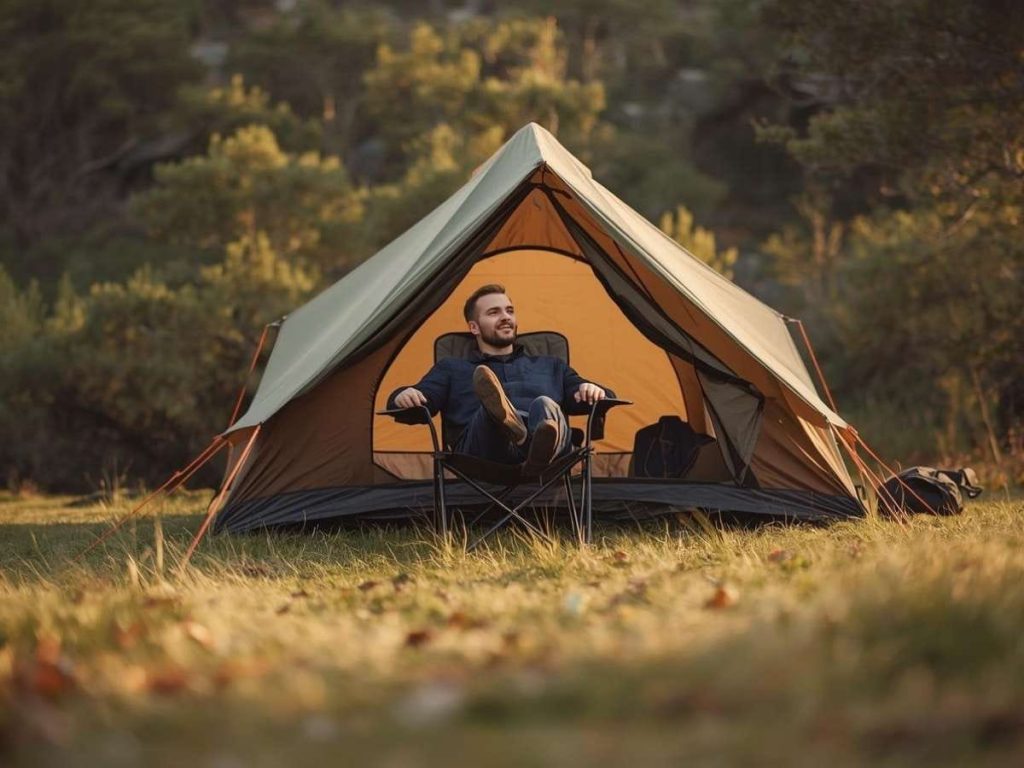
Most standard camping chairs are designed for portability, price and convenience, not for correct spinal alignment.
That low, saggy, hammock-style seat might feel comfortable at first, but after half an hour your hips tilt backwards, your lower spine rounds, and your back muscles quietly start bracing to hold you upright. Stay like that long enough and you’ll feel it when you stand up.
If you already deal with stiffness or recurring back pain, you don’t need a medical-looking throne. You just need a chair that:
- Keeps you at a sensible height
- Doesn’t collapse into itself
- Offers some structure through the lower back
That’s it.
And if we’re being honest, for most people with back pain, your camping mattress is still the bigger priority. If you’re currently sleeping on something thin or unsupportive, start there. A supportive sleep setup will always do more for your back than a premium chair ever will.
But once your sleeping arrangement is sorted, upgrading your chair is often the next easy win.
What Makes a Camping Chair Bad for Your Back?
Most camping chairs don’t feel uncomfortable straight away, and that’s actually part of the problem.
You sit down, it’s comfy enough, and you relax… but then 20 minutes later you realise you’ve slowly folded into yourself like a camping deckchair version of a question mark.
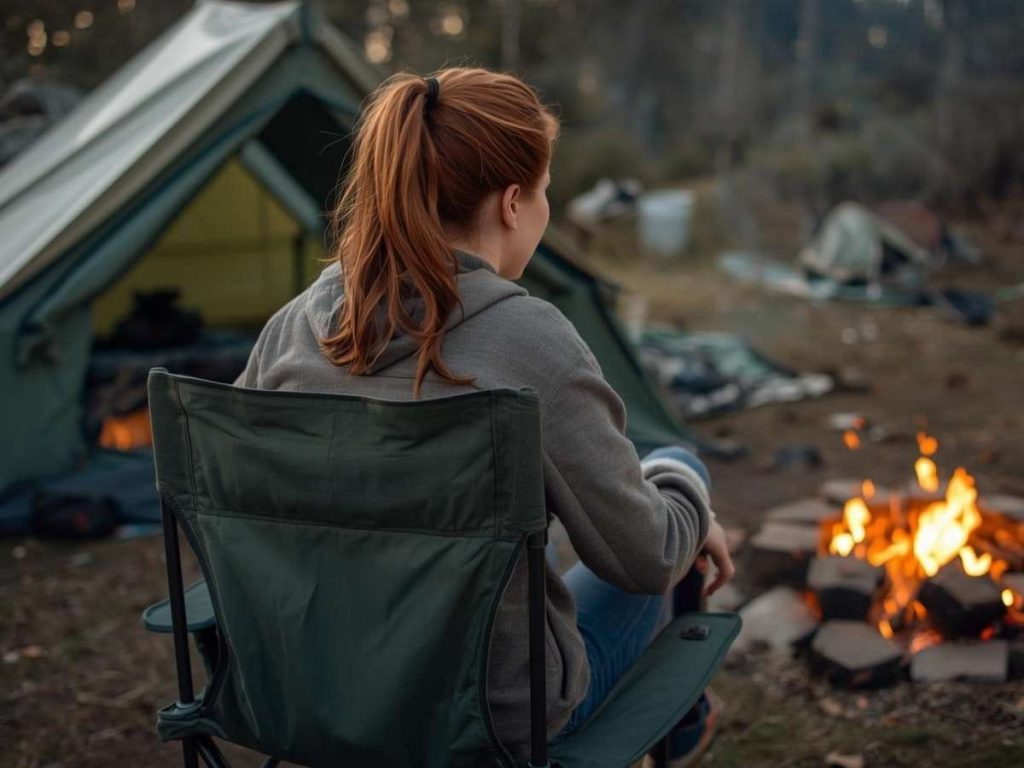
And if you already struggle with back pain while camping, the wrong chair can make things worse long before you crawl into your tent.
Here are the usual culprits.
1. Sitting Too Low to the Ground
Low chairs might look cosy, but they’re brutal if your back is stiff.
When your hips drop lower than your knees, your pelvis tilts backwards and your lower spine rounds, and getting out of that position usually involves a twist, a grunt, or both.
If standing up feels like a small workout, the chair is too low.
This is especially noticeable if you’ve already spent the day walking, carrying gear, or setting up camp. By the evening, your back is tired, and the last thing it needs is extra gymnastics.
And if overloading yourself during the day is part of the problem, it’s worth revisiting your kit list. Which is exactly what we cover in our guide to essential camping gear for beginners and our lightweight camping guide.
2. Hammock-Style Sag
Some chairs are basically fabric suspended between two bits of metal, which is far from ideal if you’re camping with back pain.
They feel comfortable, but they also offer essentially zero support.
The more the seat sags, the more your lower back rounds, and your core muscles work overtime just to keep you upright. You don’t notice it immediately, but you’ll feel it when you go to stand up or when you lie down later.
If you’ve ever carefully straightened yourself up and thought, “that’s going to be stiff tomorrow”, this is usually why.
3. No Lumbar Support at All
A flat back panel isn’t lumbar support; it’s just fabric.
Real support doesn’t have to be complicated, but there needs to be:
- Some contour
- Some firmness
- Some resistance when you lean back
If the chair just caves in behind you, your spine does all the work instead.
This is similar to what happens with poor sleeping setups. A thin, unsupportive surface doesn’t feel terrible at first, but over time it adds up, and the same principle applies to chairs.
4. Sitting for Too Long Without Moving
This isn’t strictly the chair’s fault, but it matters.
Even a decent chair won’t save you if you sit rigidly in the same position for hours and hours at a time. Back pain and stiffness often come from staying still too long.
If you’ve read our guide on camping with a bad back, you’ll know that flare-ups are usually a combination of factors. Long periods of static sitting are one of them.
A good chair helps, but moving occasionally helps more.
5. Chairs That Prioritise “Lightweight” Over Structure
Ultralight chairs have their place, but some of them achieve that low weight by removing exactly the kind of structure your back needs.
Tiny feet, minimal frames, narrow seats, and zero rigidity all equal a bad back.
If you’re wild camping and carrying everything on your back, compromises are unavoidable. But if you’re car camping or staying on a campsite, there’s rarely a reason to choose discomfort just to save 400 grams.
Sometimes comfort is the more sensible decision…
Choosing the Right Camping Chair for Back Pain
Right, enough about what’s wrong. Let’s talk about what actually makes a difference.
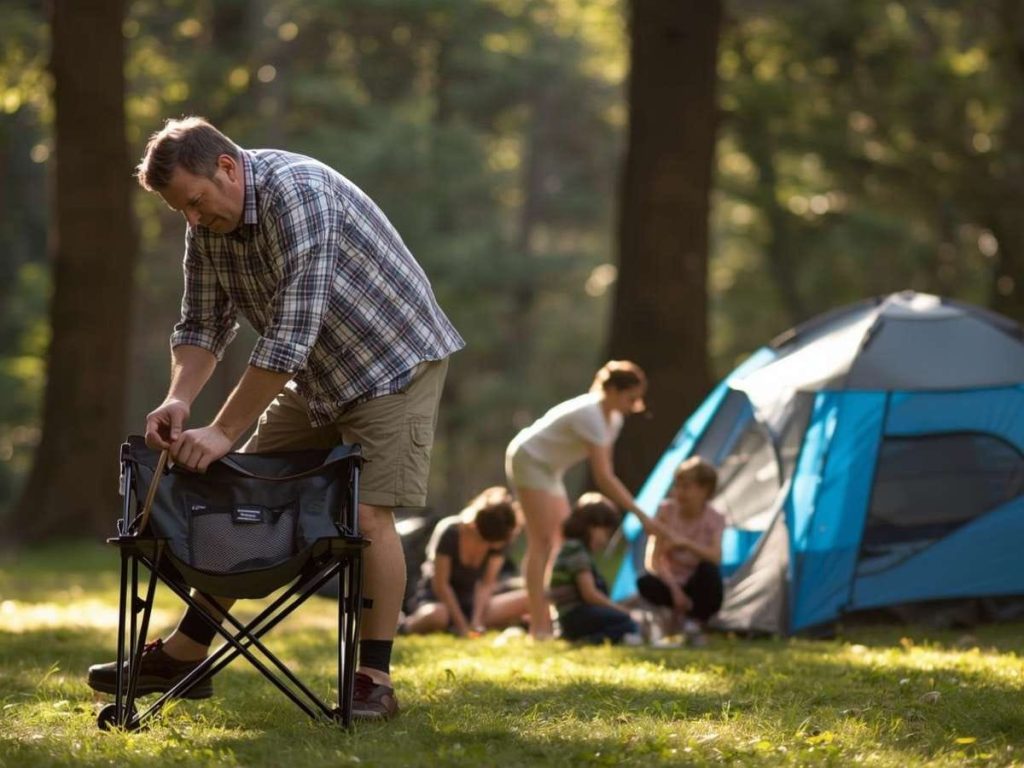
You don’t need something that looks like it belongs in a physiotherapy clinic, but you do need a chair that doesn’t fight your spine, and here’s what to look for.
1. A Slightly Higher Seat
This is the big one.
If your hips are level with (or slightly above) your knees, your lower back is under far less strain. It also means standing up doesn’t require momentum, twisting, or that awkward “rock forward and hope” manoeuvre.
If you’ve ever stood up from a low chair and immediately felt your lower back tighten, you’ll know what I mean.
Higher isn’t always better, but low and saggy rarely helps.
2. Firmness Over Floppiness
Soft doesn’t equal supportive.
You want a chair that holds its shape when you sit down (a bit of give is fine, but total collapse isn’t) and if you can feel yourself sinking backwards into a rounded posture, that’s your cue. A firmer seat keeps your pelvis more neutral and stops your spine doing all the stabilising work.
It’s the same logic as sleeping positions. When your spine stays neutral, everything else has to work less. And if you’re not sure what “neutral” really means in practice, it’s worth checking out our guide on the best sleeping positions for camping with lower back pain, because the principles are surprisingly similar.
3. Real Back Support, Not Just Fabric
A decent camping chair for a bad back usually has:
- A shaped back panel
- Reinforced tension through the lower section
- Or at least a bit of structure rather than loose canvas
You don’t need exaggerated “lumbar pods” or inflatable gimmicks. Often, a simple design done well beats complicated features done badly.
If the chair feels supportive when you lean back without you having to brace your core, you’re on the right track.
4. A Slight Recline (But Not a Sun Lounger)
Completely upright can leave you feeling stiff, and sore, but fully reclined can also dump all your weight into your lower back.
The sweet spot is a slight natural recline that allows your spine to relax without slumping. You shouldn’t feel like you’re folding in half, and you shouldn’t feel like you’re sitting bolt upright at the dinner table either.
5. Stability on Uneven Ground
Even the best chair can feel terrible if it wobbles on rocky or sloped ground.
Wide feet, a solid frame, and decent balance matter more than people think. If the chair constantly shifts, your body compensates, and compensation is what usually leads to stiffness later.
This is especially true if you’re wild camping or pitching on imperfect ground. A stable chair gives your back one less thing to worry about.
At the end of the day, the best camping chair for a bad back isn’t the most expensive one. It’s the one that lets you sit for an hour without thinking about your spine. If you forget about your back while you’re sitting in it, that’s usually a good sign.
The Best Camping Chairs for a Bad Back – Our Recommendations
These aren’t just random chairs pulled from a catalogue; they’re solid, UK-available options that tick the boxes we’ve just talked about: sensible height, real support, decent structure, and no gimmicks.
1. Outwell Goya Chair – Best Overall Support for Campsites
If you’re car camping or staying on a proper campsite, the Outwell Goya is the kind of chair that makes evenings noticeably easier.
Why it works for a bad back:
- Higher-than-average seat height, which makes standing up far less awkward
- Firm, well-tensioned fabric that doesn’t collapse under you
- A more upright, structured back that actually supports rather than sags
It’s not ultra-light, and it’s not tiny when folded, but that’s partly why it’s good. The frame is sturdy enough that you don’t feel like you’re balancing on something temporary.
For someone who’s already sorted their sleeping setup (especially if you’ve invested in a decent mattress) this kind of chair stops the evening undoing all that work.
Downsides:
- Bulky
- Heavier than basic festival chairs
- Not something you’d carry far
Best for: Car campers, longer trips, anyone who prioritises comfort over minimalism.
2. Vango Hampton DLX Chair – Best for Comfort Without Going Full Luxury
The Vango Hampton DLX is one that sits in a nice middle ground.
It’s not medical-looking, and it’s not ultra-compact – it just quietly does the job.
What makes it back-friendly:
- Slight recline that feels natural rather than forced
- Decent seat height
- Firm base that holds shape over time
You don’t sink dramatically when you sit down, which is half the battle, and the back panel gives enough resistance that your lower spine isn’t doing all the work.
It’s the sort of chair you can sit in for a full evening without constantly shifting around trying to find a better position.
Downsides:
- Still fairly bulky
- Not ideal for wild camping
- No adjustable lumbar feature (so you may want a small cushion if you’re very sensitive)
Best for: Weekend campers who want comfort without turning their setup into a glamping site.
3. Helinox Chair One (With a Caveat) – Best Lightweight Compromise
Right, let’s be honest about this one.
The Helinox Chair One is wildly popular for wild camping and backpacking because it packs tiny and weighs very little.
But is it ideal for a bad back? Not automatically.
The pros:
- Extremely light
- Packs small
- Better structure than most ultralight chairs
The cons:
- Lower seat height
- Minimal lumbar shaping
- Can still encourage a rounded posture if you’re not careful
If you’re carrying everything on your back, this is a solid compromise compared to sitting on the ground or a log. But if you’re car camping, there’s usually no reason to choose this over something more supportive.
If you do go this route, pairing it with a small lumbar cushion, or consciously adjusting your posture can make it more manageable.
Best for: Wild campers who need to balance comfort with weight and understand the trade-off.
4. Quechua Comfort Folding Chair (Decathlon) – Best Budget High-Seat Option
If getting up out of your chair is half the battle, this is the kind of design that makes life easier.
The Quechua Comfort Folding Chair sits higher than the typical low-slung festival chair, which immediately reduces strain when standing up because you’re not climbing out of a hole every time you get up.
What makes it work for a bad back:
- Sensible seat height
- Firm tensioned fabric that doesn’t hammock
- Stable, wide base
- Simple, no-nonsense frame
It’s not fancy, and it’s not “ergonomic” in the marketing sense, but it holds its shape, and sometimes that’s all you need.
If you’re car camping and don’t want to spend premium money, this is a strong, practical option that won’t quietly wreck your lower back.
Downsides:
- Bulkier than lightweight chairs
- No built-in lumbar shaping
- Not for backpacking
Best for: Car campers who want something stable, affordable, and easy to get out of.
5. Outwell Kenai Chair – Premium Comfort Option (If Budget Isn’t the Issue)
If you’re at the point where you’re thinking, “I don’t care what it costs, I just want to sit comfortably,” the Outwell Kenai is the kind of chair that starts to make sense.
The Kenai feels more like proper outdoor furniture than a temporary camping seat. The padding is thicker, the frame is more rigid, and the overall support is noticeably more stable than cheaper folding chairs.
Why it works well for a bad back:
- Higher seat makes standing up easier
- Thick cushioning spreads pressure more evenly
- More substantial back support
- Less flex when you lean back
It’s not something you’ll carry across a field, and it definitely won’t win any ultralight awards. But if you’re car camping, staying on a campsite, or prioritising comfort over portability, this is one of those chairs where you sit down and immediately think, “Right. That’s better”.
Downsides:
- Heavy
- Bulky
- Expensive
Best for: Campers who treat comfort as non-negotiable and want something that feels closer to home seating than festival gear.
A Quick Reality Check Before You Buy
Before you rush off to upgrade your chair, ask yourself:
Is the problem really the chair?
If your back flares up after every trip, it might be:
- Your mattress
- Your sleeping position
- The way you’re pitching on uneven ground
- Or simply overdoing it during the day
Your chair matters, but it’s one piece of the puzzle.
If you’ve already sorted your sleep system and you’re still stiff by the fire, then yes – upgrading your camping chair for back pain is often the next sensible step.
If not, fix the big wins first.
How to Make Any Camping Chair More Back-Friendly
Before you rush out and buy a new chair, it’s also worth knowing that small adjustments can make a surprising difference.
Even a decent chair can feel wrong if you’re using it badly, and even a basic chair can feel better with a few simple tweaks.
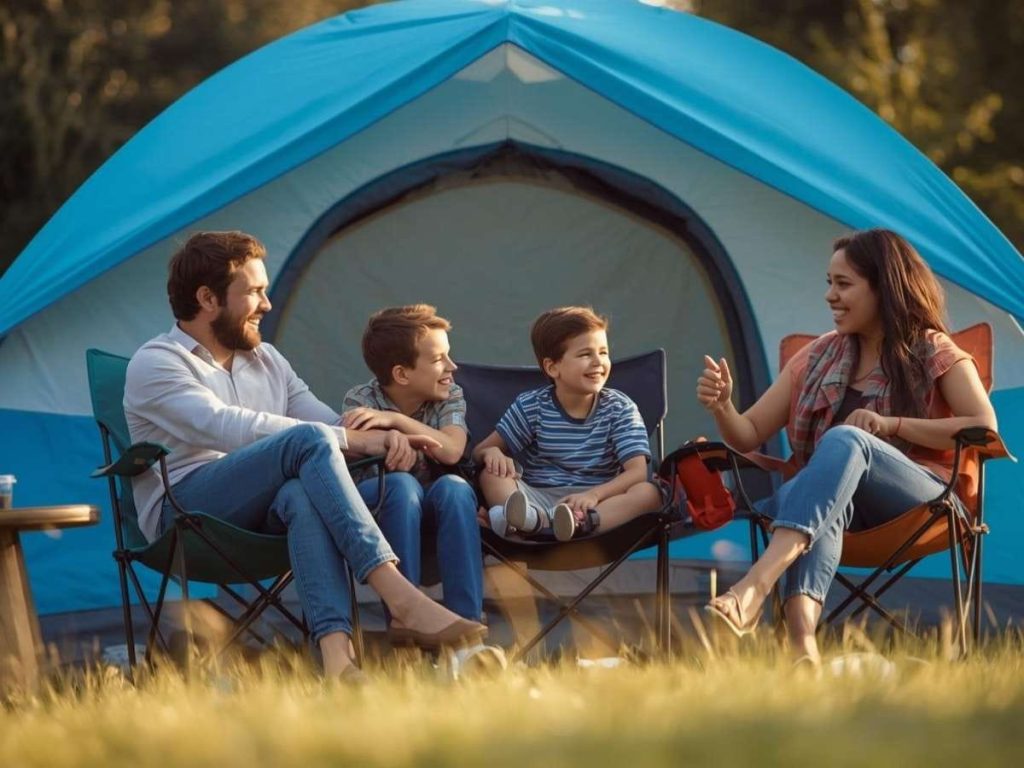
Here’s what actually helps.
Add a Simple Lumbar Roll
You don’t need a specialist insert.
A rolled-up towel, fleece, or small cushion placed in the curve of your lower back can transform a flat-backed chair, because it encourages a more neutral spine and reduces that rounded slump that creeps in after twenty minutes.
It’s the same idea as adjusting your sleeping position at night – small alignment changes often matter more than expensive gear.
Raise the Front Slightly on Uneven Ground
If you’re pitched on a slight slope and your knees are higher than your hips, your lower back works harder to stabilise you.
On uneven ground, placing something flat and stable under the front legs of your chair can subtly improve your posture. Even moving your chair a few inches to flatter ground can change how it feels.
A stable base matters more than people think.
Don’t Sit Still for Hours
Even the best camping chair for a bad back won’t save you if you sit rigidly in one position all evening. Stand up occasionally, stretch lightly, walk to the water tap, you get the idea.
Back pain while camping usually builds up slowly, and breaking the cycle early makes a big difference.
Keep Warm in the Evenings
Cold muscles tighten.
If you’re sitting around in the evening chill without enough layers, your lower back will stiffen long before you get into your tent.
A warm jacket, blanket, or even a hot drink can help your muscles stay relaxed. Comfort isn’t just structural; it’s environmental too.
Combine Chair + Mattress Thinking
If you’re already using a supportive camping mattress, don’t undo that work by collapsing into a poor chair.
Your evening posture affects how your back feels when you lie down later. Think of your chair and your mattress as part of the same system – if one is solid and the other isn’t, you’ll still feel it.
FAQ: Camping Chairs, Back Pain & Smart Decisions
Should I avoid camping altogether if I have chronic back pain?
Not necessarily.
Most people with ongoing back pain can still camp comfortably with sensible adjustments. The key is reducing aggravating factors rather than eliminating discomfort entirely, and that usually means:
- Prioritising sleep support
- Choosing sensible seating
- Avoiding very long periods of static posture
If you’re in the middle of an acute flare-up, it may be wise to postpone a trip. But for many people, staying active in a controlled way can actually be beneficial.
The NHS guidance on back pain generally encourages staying active within your limits rather than complete rest, which aligns well with smarter camping rather than avoiding it entirely.
Does sleeping on the ground make a bad back worse?
It can – especially if you’re using a thin or poorly insulated mat.
Hard ground increases pressure through the hips and shoulders, which can pull your spine out of alignment over the course of a night. Cold temperatures can also stiffen muscles, making you feel tighter the next morning.
If you’re unsure whether your sleep setup is part of the problem, it’s worth reading our breakdown of whether sleeping on the ground makes a bad back worse, because in many cases the issue isn’t camping itself – it’s what you’re sleeping on.
For most people, improving their mattress does more for back comfort than upgrading their chair. The chair helps, but sleep does the heavy lifting.
Are padded camping chairs better for back pain?
Not automatically.
Thicker padding can spread pressure more evenly, which helps some people. But excessive softness can allow you to slump, especially if the structure underneath isn’t supportive.
It’s firmness and shape that usually matter more than sheer cushioning.
Do zero-gravity camping chairs help with lower back pain?
Sometimes, but they’re not a magic solution.
Zero-gravity chairs shift your weight and reduce spinal compression while reclined, which can feel good for short periods. However:
- They’re bulky
- They encourage a static reclined position
- They’re rarely practical for small campsites or wild camping
They’re more of a campsite comfort item than a universal fix.
Can strengthening exercises make camping more comfortable for a bad back?
Yes, often more than gear upgrades alone.
Light core strengthening, hip mobility work, and general conditioning can reduce how reactive your back feels during trips. That doesn’t mean you need a gym programme before every weekend away, but basic strength and movement capacity do matter.
Gear helps, but resilience helps more.
What’s the biggest mistake people make when buying a camping chair for back pain?
Buying based on comfort for five minutes in a shop.
Most chairs feel fine when you sit down briefly, but the real test is how you feel after:
- 45 minutes
- An hour
- Standing up repeatedly
Stability, height, and structure become much more obvious over time.
Final Thoughts
Camping with a bad back isn’t about building the perfect setup or eliminating every ounce of discomfort. It’s about making sensible choices that reduce the unnecessary strain. A slightly higher chair, firmer support, and a bit more awareness about how long you’re sitting can make evenings around camp far more comfortable. None of it is glamorous, but those small margins are usually what separate an enjoyable trip from a stiff and frustrating one.
If you’ve already taken the time to sort your sleeping setup and think about how you move during the day, upgrading your chair is simply the next logical step. The goal isn’t luxury, it’s consistency. When your back isn’t constantly reacting to poor support, you’re free to focus on the reason you went camping in the first place – fresh air, good company, and not having to think about your spine every time you stand up.
