
The first time I lost a boot to deep mud was on a trek through Vermont’s Green Mountains during peak “mud season”. I took what looked like a harmless step into a dark puddle, only to sink past my ankle. When I pulled my leg back up, my sock came out clean, but my boot remained buried eight inches below the surface, swallowed whole by an airtight vacuum seal. Standing single-legged on a wet root while digging through freezing slurry with my bare hands was a memorable lesson in trail physics.
That distinct, sickening squelch-pop of a boot being pulled off is practically a rite of passage for backpackers, but losing your footwear doesn’t have to be inevitable. With the right biomechanics and a few simple gear tweaks, you can navigate saturated trails without leaving a shoe behind.
To hike through deep mud without losing your boots, break the vacuum seal by peeling your heel up first at a forward angle rather than pulling straight up. Lock your foot in place using a heel-lock lacing technique, secure your laces beneath knee-high gaiters, and walk on the balls of your feet while aiming for embedded rocks, solid roots, firmer patches within the path, or places where the mud is clearly shallower.
Below, we’ll break down the exact footwork tactics, emergency recovery steps, and gear setups I’ve refined over years of wet-weather trekking so you can conquer deep mud on your next hike.
Contents
- The Science of Mud Suction (And Why Boots Get Trapped)
- Dynamic Foot Placement & Terrain Reading
- Suction-Breaking Footwork Techniques
- Rigging Your Gear: Boots, Lacing, and Gaiters
- Emergency Protocol: How to Get Unstuck
- Leave No Trace: Mud Season Etiquette
- Post-Hike Boot Care & Maintenance
- Frequently Asked Questions
- Final Thoughts
The Science of Mud Suction (And Why Boots Get Trapped)
Understanding what’s actually happening under your feet makes avoiding the “mud trap” a whole lot easier. Thick trail mud doesn’t just hold onto your footwear; it actively fights to keep it.
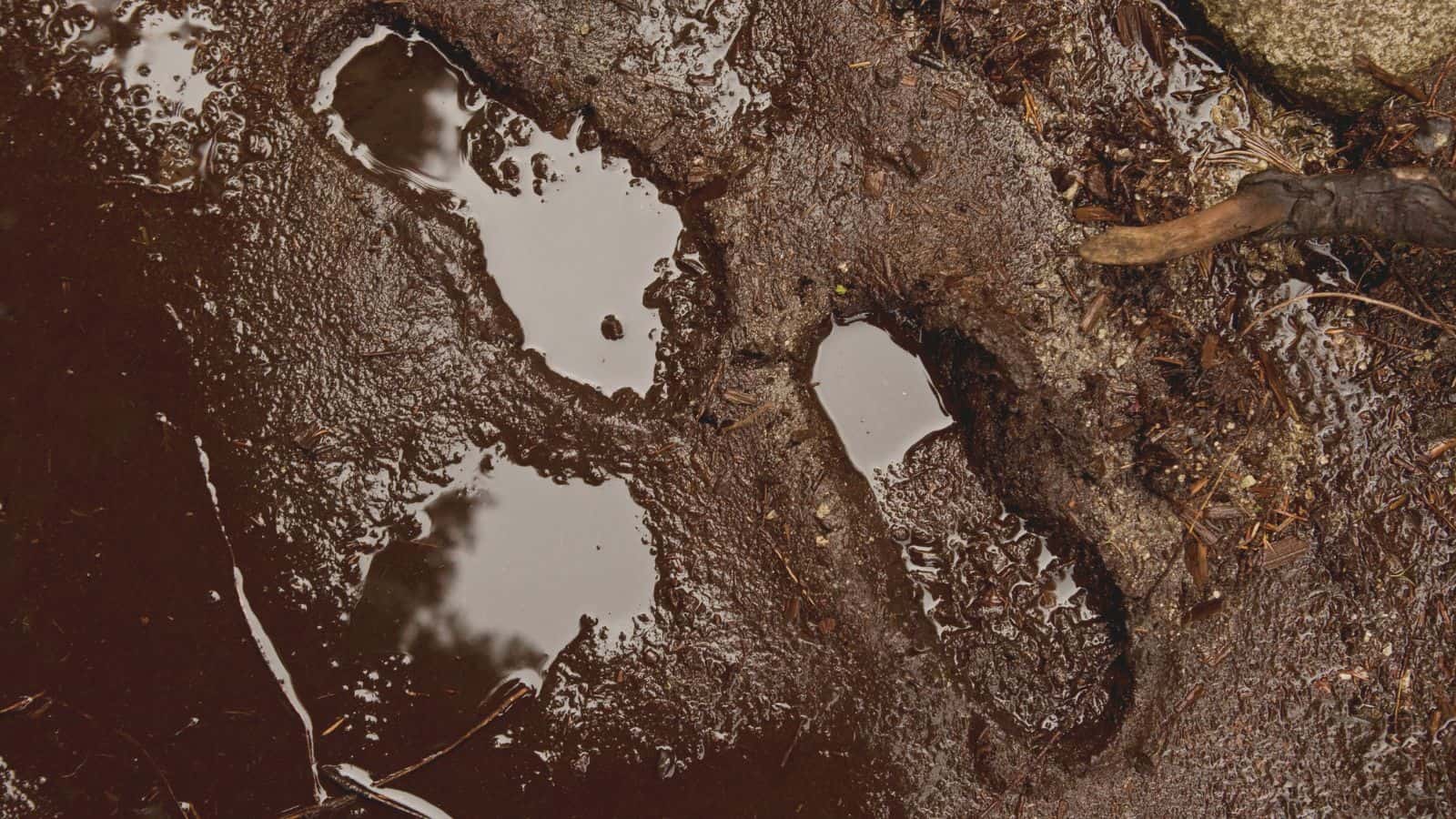
When your body weight drives a boot into wet soil and sticky clay, air and water are squeezed out from under the sole. This creates a low-pressure vacuum seal around your shoe, turning the mud into a high-powered plunger. When you try to yank your foot straight up, you end up pulling directly against that atmospheric seal and suction force.
How much surface area makes contact with the trail plays a huge role in how tight that seal gets. Stomping down completely flat-footed transforms your entire sole into one massive suction cup, giving the vacuum maximum area to grip.
This is also where your footwear choice makes a massive difference. Lightweight, low-cut trail runners are fantastic for speed, but their low ankle collars leave them vulnerable in deep slop. When thick mud grabs hold of the tread, your foot easily slides right out the top of the shoe. A sturdier, high-cut boot gives you the ankle support and heel leverage needed to resist that suction and keep your footwear where it belongs.
Quick Trail Rule: Never fight suction head-on by pulling straight up. It sinks your opposite foot deeper into the sludge, and usually leaves your boot behind. Breaking the seal at the edge takes a fraction of the effort.
Dynamic Foot Placement & Terrain Reading
Navigating a muddy trail isn’t about stomping through blind – it’s about choosing the right micro-targets with every single step. Instead of staring directly down at your toes, lift your gaze and scan the trail three to five feet ahead. You’re looking for firm substrates like embedded rocks, solid tree roots, or dense tufts of grass that can support your weight above the slop.
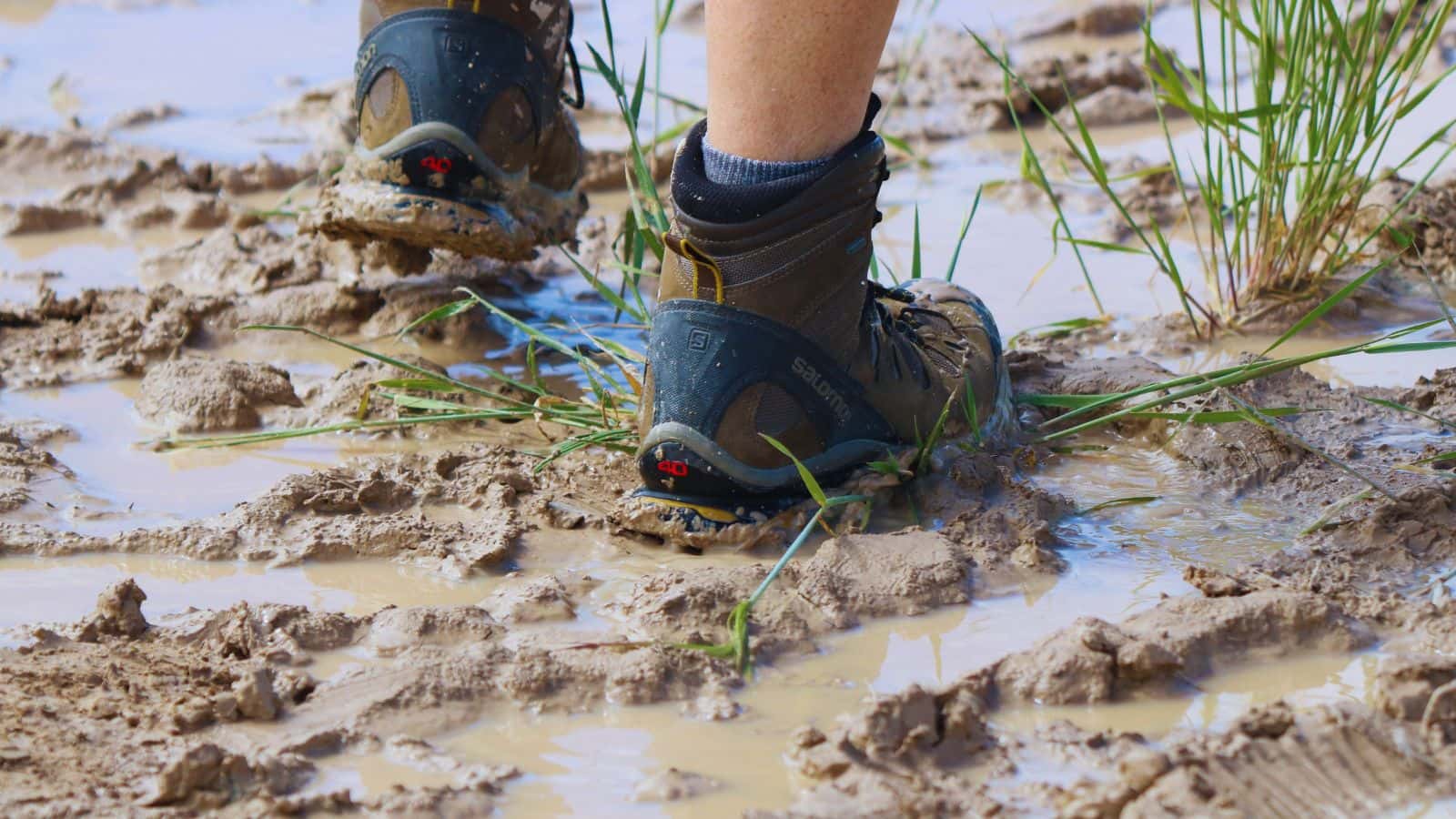
Just keep in mind that wet roots and mossy rocks are notoriously slick; try to place your foot perpendicular to the angle of the surface so your weight pushes straight down, reducing the chance of a side-slip.
How your foot hits the trail matters just as much as where it lands. Stomping in heel-first drives your boot deep into the soup, setting up that dreaded vacuum seal before you even realise what’s happening. A much better approach is landing lightly on the balls of your feet using shorter, more agile steps. Keeping a quick cadence also maintains your forward momentum, which prevents your boots from settling deep enough for the mud to grab hold.
Finally, let your trekking poles do some of the heavy lifting. Think of them as your early-warning system on questionable terrain. You can quickly probe the depth of a suspicious puddle before committing your full body weight to it. Plus, those two extra points of contact give you the balance you need to pick your steps thoughtfully, saving you from stomping down out of a sudden wobble.
Suction-Breaking Footwork Techniques
When you do step into a deep mud trap, your natural instinct is to panic and yank your foot straight upward, but trust me, resist that urge! That straight-up pulling motion only strengthens the vacuum seal beneath your sole. Instead, use a simple heel-lift strategy to gently peel your boot out of the slop.
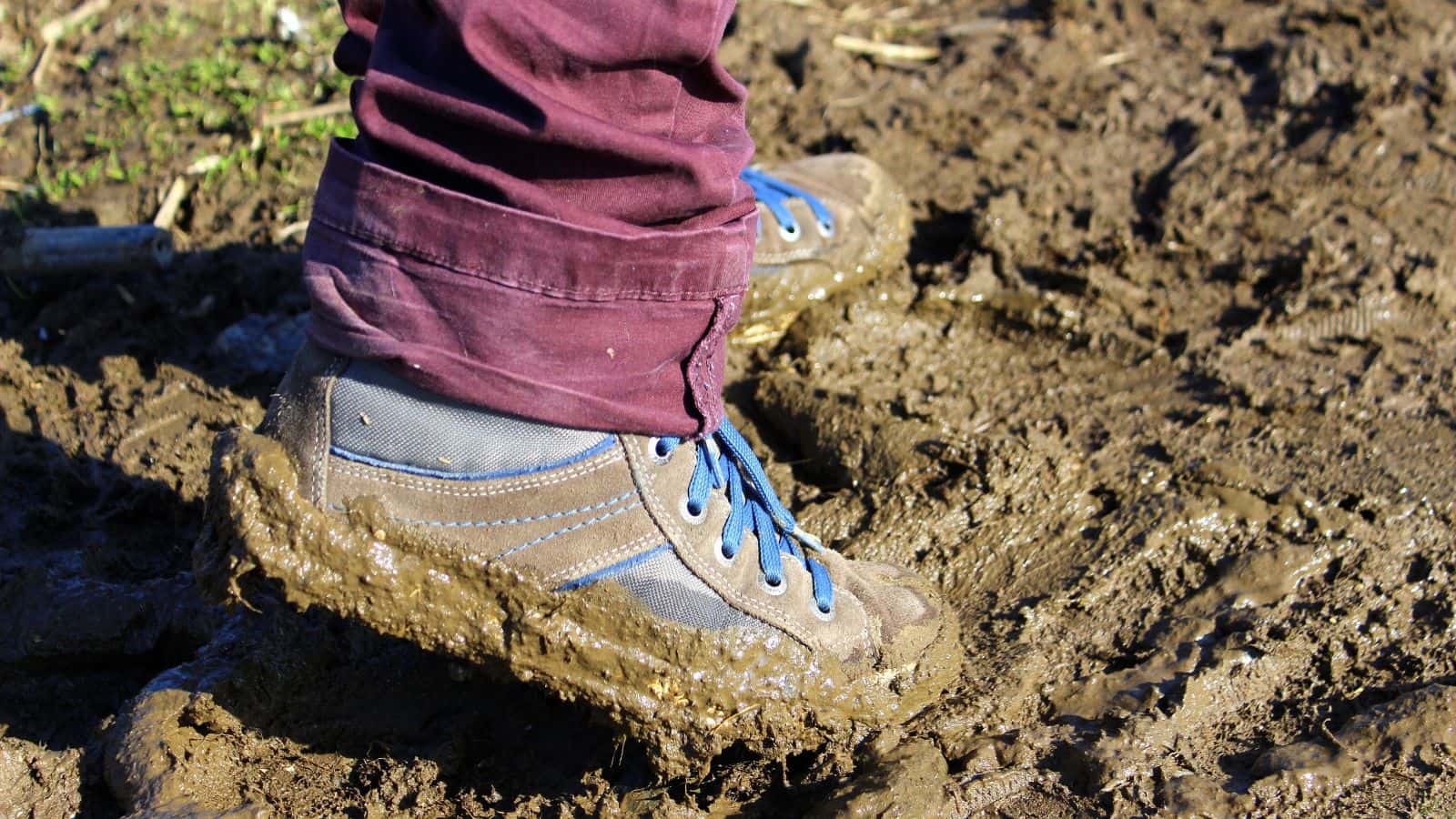
Roll your body weight forward onto the ball of your front foot and angle your heel upward first. This subtle tilt pulls the back of your boot away from the mud bed, allowing air to rush under the arch, instantly breaking the vacuum seal. Once that suction pops, the rest of your boot should lift out effortlessly. If you ever sink toe-first, you can apply the same logic in reverse by lifting your heel high and angling backward to let air in under the toe.
Continual straight-up yanking doesn’t just exhaust your legs – it also drives your opposite foot deeper into the sludge and rubs your foot against the inside of your footwear, quickly leading to friction blisters and heel discomfort.
Rigging Your Gear: Boots, Lacing, and Gaiters
Having the right footwork is only half the battle; how you prep your gear before hitting the trail dictates whether your boots stay locked on your feet or end up swallowed by the mud. It all starts with how you lace up… If your footwear has room to slide around, mud suction will easily pull the boot right off your heel. Tying a heel-lock knot (often called a surgeon’s knot) near the ankle bend pulls your heel firmly into the back cup of the boot, eliminating inner slippage.
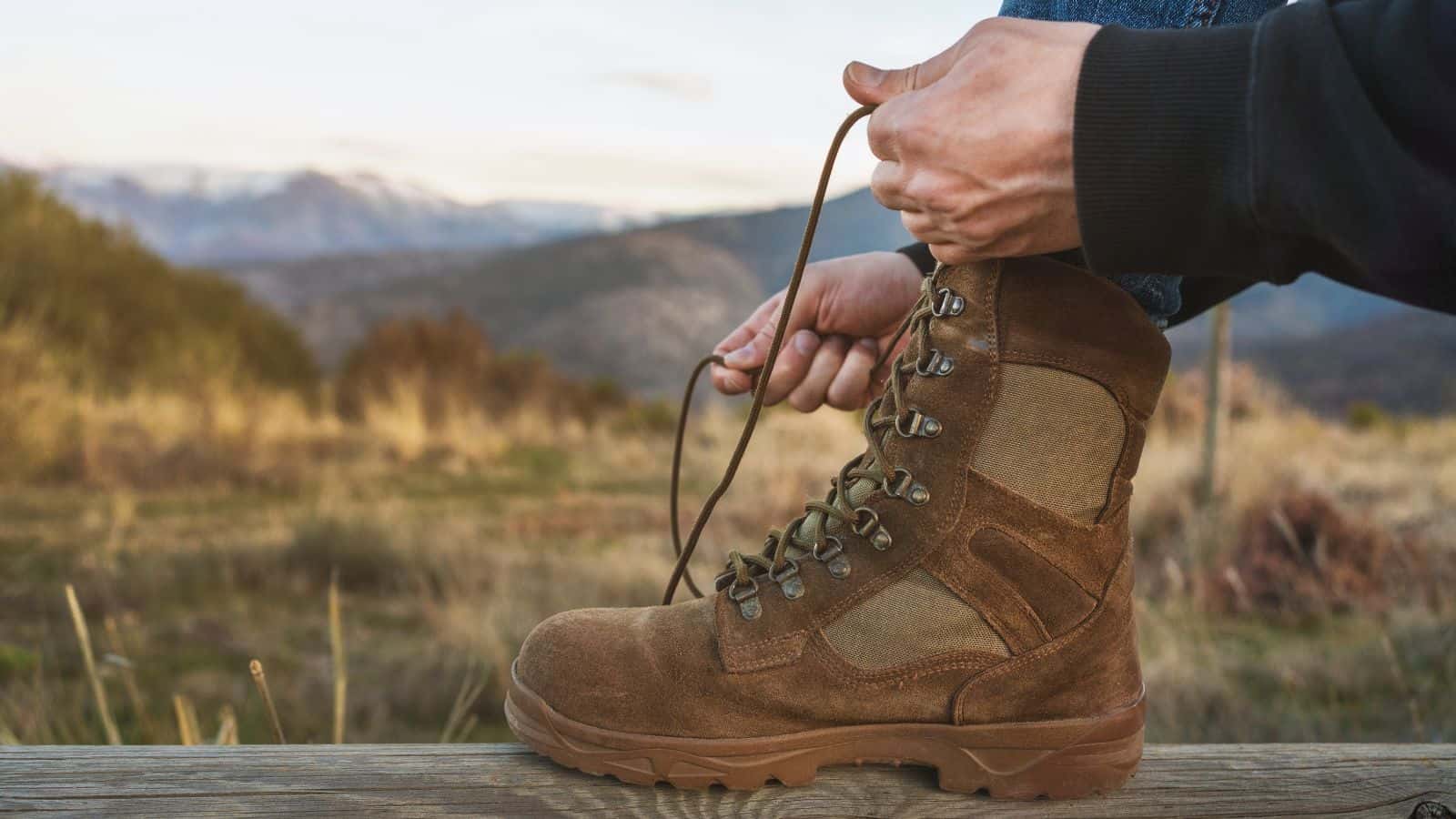
If you consistently deal with foot movement because your footwear feels a bit roomy, applying a few proven fixes for boots that are too big will make a massive difference in sloppy conditions.
Pairing your boots with a solid set of knee-high gaiters also adds an essential extra layer of defence. Gaiters seal off the ankle collar, preventing heavy liquid sludge from spilling inside your boots. To make sure your gaiters don’t get ripped off in deep mud, anchor the front hook securely to your bottom laces and route the under-boot strap tightly through the instep notch of your sole. Combining gaiters with a pair of hiking socks specially designed for wet feet ensures your feet stay warm and comfortable even if dampness eventually creeps in.
Finally, footwear choice is critical when trails turn into marshlands. While agile footwear is great for summer, weighing the trade-offs between hiking boots and trail runners shows why high-cut boots with deep lugs and firm ankle support reign supreme during mud season.
Emergency Protocol: How to Get Unstuck
Even with the best footwork, everyone eventually finds the one soft spot that swallows a leg up to the knee. If you find yourself firmly anchored in wet clay, the absolute worst thing you can do is panic and frantically thrash around. Frantic pulling only drives your opposite supporting foot deeper into the sludge, doubling your problem.
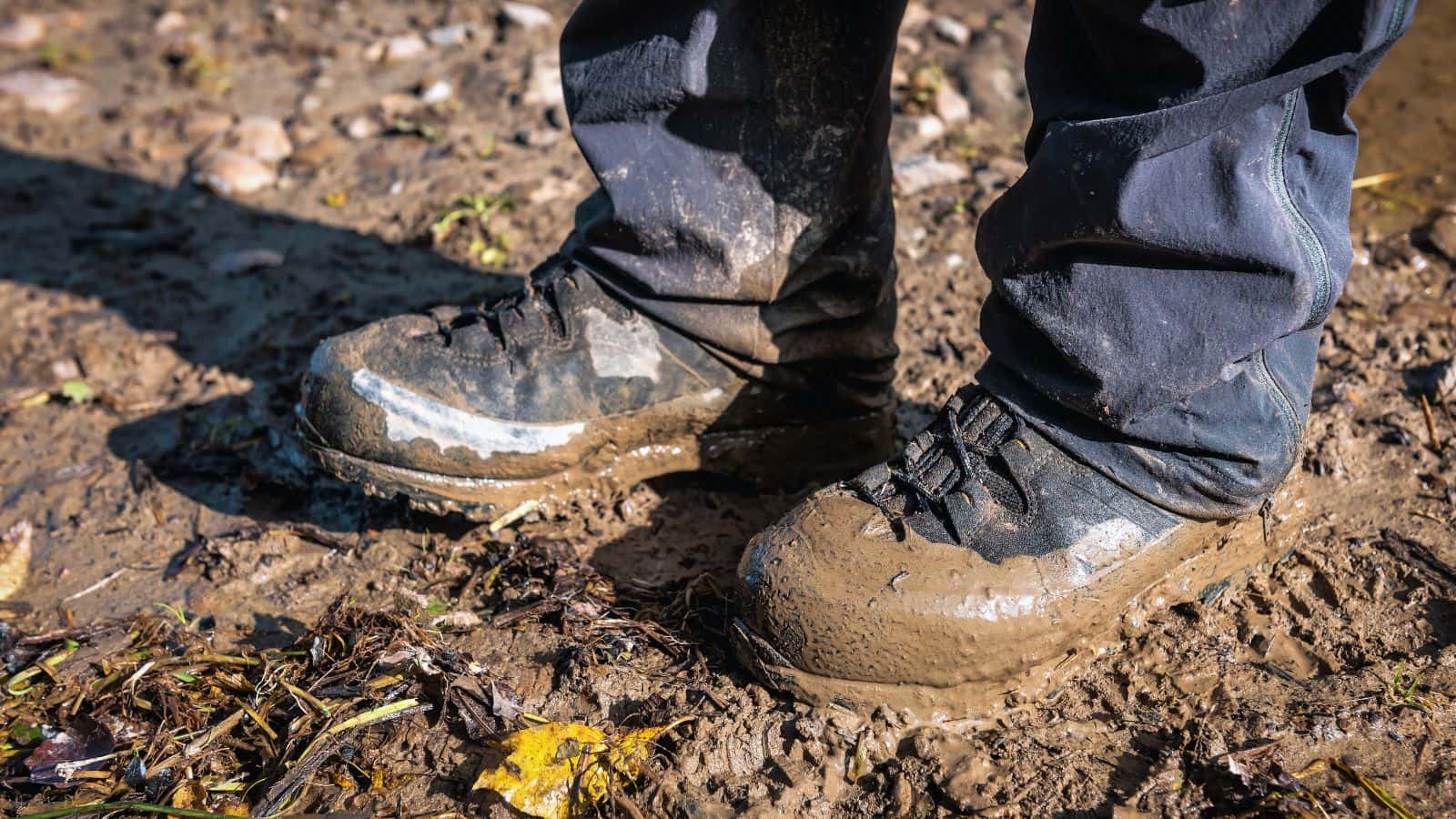
Instead, pause, take a breath, and rebalance. Shift your upper-body weight onto your trekking poles or toward a solid nearby tree. Once you’re stabilised, reach down along the front or side of your buried boot with a finger, a stick, or the handle of a trekking pole. Push down into the mud right alongside the upper leather until you reach the sole. This creates a manual air channel, breaking the vacuum seal from the outside and allowing you to lift your foot free using the heel-first technique.
In a worst-case scenario where the boot won’t budge and the tide of mud is rising over your ankle collar, don’t keep pulling against the resistance. Unlace the boot completely while it’s submerged, carefully slip your socked foot out, and step onto a dry pad, rock, or backpack. Once your foot is free, you can easily dig the boot out with your hands without your weight holding it down.
Leave No Trace: Mud Season Etiquette
When a trail turns into a soup of sloppy brown puddles, the natural human reaction is to skirt around the edges to protect our footwear. However, stepping off the main path causes serious long-term damage to delicate wilderness areas.
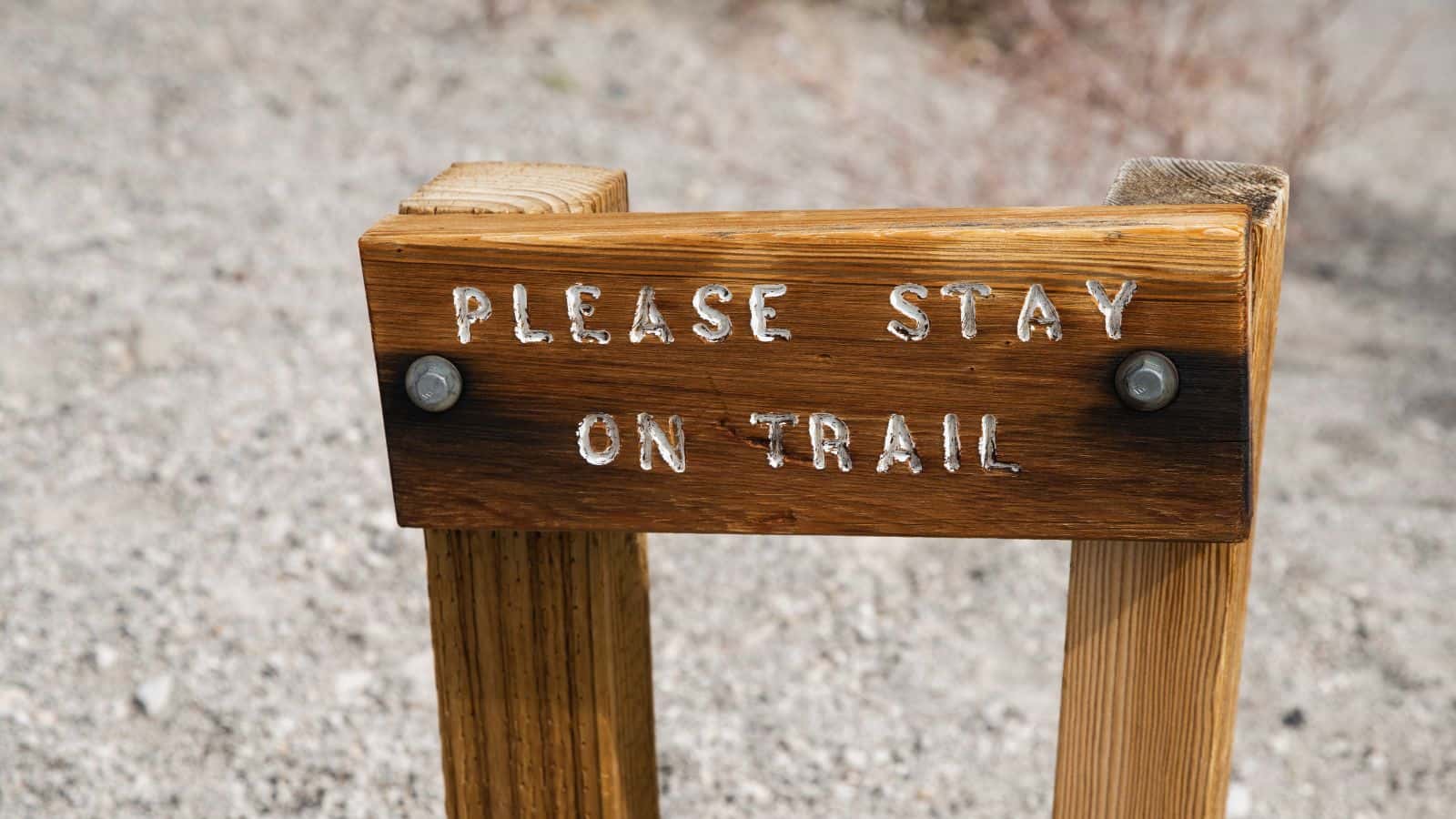
Walking along the edges of mud puddles widens the trail over time (a process known as trail braiding) which destroys surrounding plant life and causes severe soil erosion. Following the core principles established by the Leave No Trace Center for Outdoor Ethics means committing to walking straight through the centre of the mud, no matter how intimidating it looks. Wearing waterproof boots and knee-high gaiters gives you the protection you need to embrace the mess and keep the trail narrow for future hikers.
Post-Hike Boot Care & Maintenance
Once you make it off the trail, your job isn’t quite finished. Letting thick, mineral-rich mud dry on your boots acts like a sponge, drawing natural moisture out of leather and synthetic materials, causing them to stiffen and crack over time.
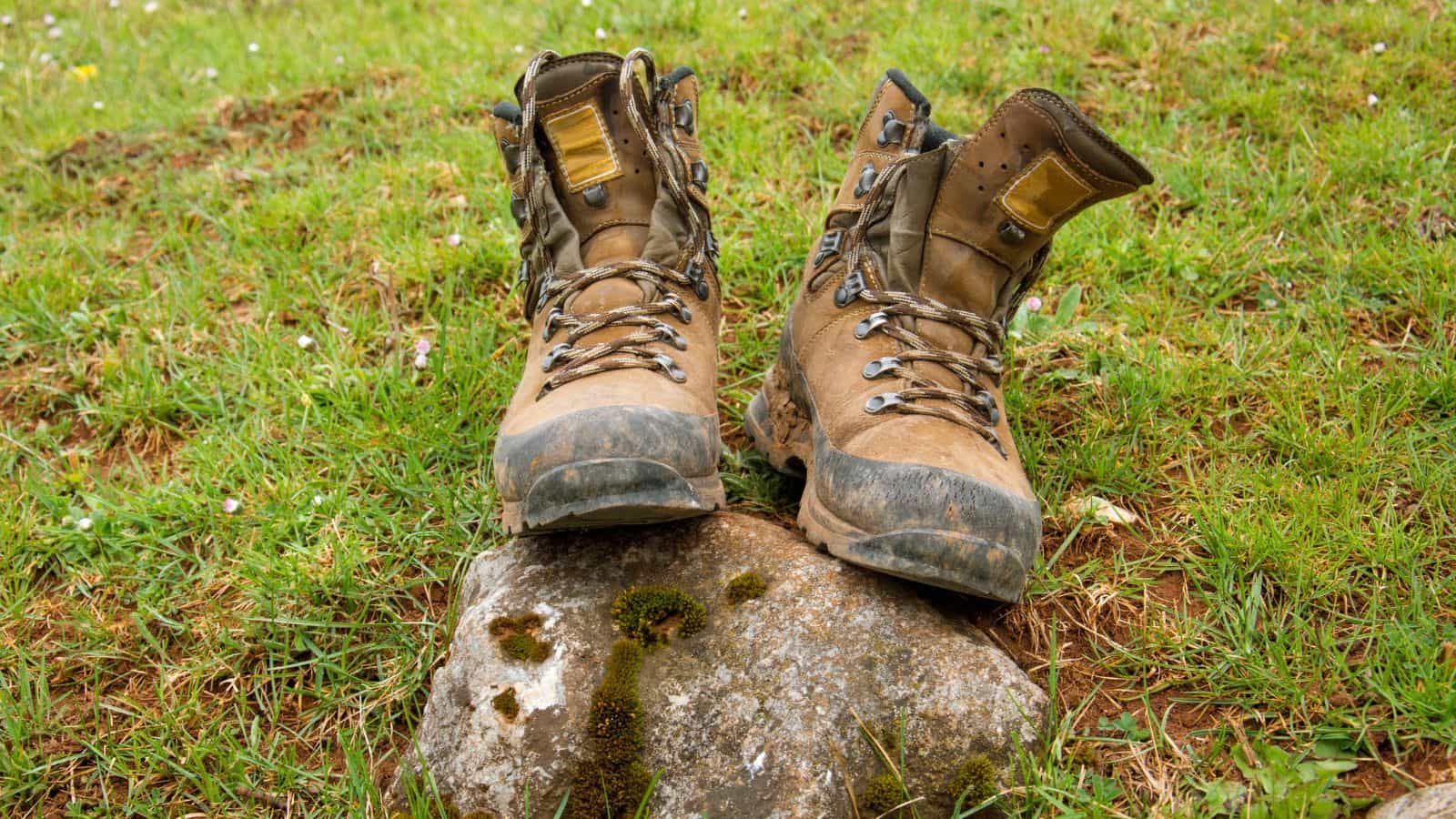
As soon as you get home, use a soft-bristled brush and cool water to scrub away all dried mud and dirt from the upper leather, seams, and sole lugs. Once clean, stuff the insides of your footwear with newspaper to absorb moisture from the inside out. Whatever you do, keep your wet footwear away from direct heat sources like radiators, campfires, or hot air vents, which can crack leather and degrade the adhesives holding your soles together. If you need your footwear ready for another trek the very next morning, follow a few gentle methods to dry your hiking boots overnight safely.
Finally, wet and muddy conditions create the perfect breeding ground for persistent odours. Taking a few proactive steps to make your hiking boots smell better after cleaning will keep your gear fresh and ready for your next rainy adventure.
Frequently Asked Questions
Should you walk through mud or around it?
If the mud is just a normal muddy section of trail, it’s usually better to go through the middle rather than trampling the edges.
I know that feels wrong, because every sensible part of your brain wants to keep your boots clean, but walking around mud widens the path and damages the ground beside it. Before long, one muddy puddle becomes a wide, churned-up mess where everyone has tried to dodge the same bit.
That doesn’t mean you should march blindly into anything that looks deep, unsafe or suspiciously capable of eating a Labrador. Use judgement. Aim for firmer patches, stones, gravelly sections or shallower parts of the path where you can, but don’t wreck the vegetation just to save your boots a wash later.
Are gaiters worth wearing in deep mud?
Yes, gaiters can be very useful in deep mud, especially if the path is wet, boggy or full of those innocent-looking puddles that turn out to be ankle-deep.
They won’t stop your boots sinking, and they won’t magically make bad footwear fit properly, but they can help keep mud, water, grit and plant debris from getting over the top of your boots. That matters because once mud gets inside, the whole walk changes. Your socks get heavy, your feet start sliding, and every step feels like you’re carrying a small wet compost heap around each ankle.
For short muddy patches, gaiters may be overkill. For winter walks, boggy moorland, woodland mud or long wet routes, they’re often worth having.
What should you do if mud goes over the top of your boot?
If mud or water goes over the top of your boot, stop when you can do so safely and sort it out before carrying on too far.
Take the boot off if needed, shake out any loose mud or grit, and check your sock. Mud inside a boot is not just uncomfortable, it can rub your foot raw surprisingly quickly. A tiny bit of grit under your heel or toes can become a blister machine once you’ve walked another mile on it.
If you’ve got spare socks, this is exactly why you packed them. If not, do the best you can: clear out the boot, wring out the sock if it’s soaked, and keep an eye on any rubbing. It’s not glamorous, but neither is hobbling back to the car because you tried to be heroic over a sock full of sludge.
Can deep mud damage hiking boots?
Yes, it can, especially if you leave the boots caked in mud afterwards.
Mud can work into stitching, laces, eyelets and creases in the leather or fabric. As it dries, it can stiffen the boot, pull moisture from leather, and leave grit sitting in all the little places that flex when you walk. One muddy hike probably won’t destroy a decent pair of boots, but repeatedly letting them dry filthy is not doing them any favours.
The fix is simple: clean them when you get home, remove the worst of the muck, let them dry naturally, and don’t bake them on a radiator like two muddy potatoes.
Is deep mud dangerous?
Normal trail mud is usually more annoying than dangerous, but there are exceptions.
Very deep mud, boggy ground, tidal mud, estuary mud and quicksand-like coastal mud are a different matter. If the ground looks unstable, the mud is very deep, you’re near the coast, or there’s any chance of the tide coming in, don’t treat it like an ordinary puddle.
If you get seriously stuck, stay calm, spread your weight as much as you can, and avoid thrashing around until you’ve made things worse.
Final Thoughts
Mud season has a notorious reputation among backpackers, but a sloppy trail doesn’t have to put an end to your hiking season or steal a boot in the process. Navigating deep slop simply comes down to outsmarting the terrain. By swapping straight-up yanking for smart footwork, locking your heels in place with proper lacing, and shielding your boot collars with a reliable set of gaiters, you can trek through saturated trails with total confidence.
Remember, embracing the mess is all part of the outdoor experience. As long as you’ve properly prepped your footwear and checked off your list of essential hiking gear, a bit of deep mud is just another fun obstacle to conquer on the path ahead.
