Choosing the best camping stove should be simple. You want something that lights when you ask it to, boils water without drama, and doesn’t feel like overkill for the kind of camping you actually do. Instead, a quick search drops you into a maze of fuel types, burner designs, weight claims, and strongly held opinions from people whose idea of “real world use” seems to involve a spreadsheet and a stopwatch.
The truth is, most people don’t need the most powerful stove on the market or the lightest thing ever made. They need a portable camping stove that suits how they camp, where they camp, and what they actually like cooking outdoors. The best camping stove for a solo backpacking trip can feel annoying on a relaxed campsite, and something that works brilliantly if space isn’t a major concern, can be a pain to carry if you’re camping without a car. That’s why talking about the best camping stove in 2026 only really makes sense once you accept that “best” depends on context.
This guide isn’t here to push you toward the most expensive option or drown you in specs. It’s here to help you choose a camping stove that works reliably, is easy to live with, and makes cooking outdoors feel straightforward rather than fiddly. We’ll look at portable camping stoves that are available internationally, explain the different fuel types without getting lost in the weeds, and point out what actually matters once you’re hungry and trying to get dinner on.
Quick answer: What’s the best camping stove in 2026?
There isn’t one single best camping stove for everyone. The best choice depends on how you camp, how much you carry, and what fuel is easy to get where you are. For most people, a compact gas stove offers the best balance of reliability, simplicity, and portability, while backpackers often prioritise weight and car campers value stability and cooking space.
But without further ado, let’s dive into it!
Contents
- How We Chose the Best Camping Stoves
- Best Overall Camping Stove
- Best Lightweight Camping Stove
- Best Budget Camping Stove
- Best Camping Stove When Weight and Space Aren’t a Factor
- Best Premium and No-Expense-Spared Camping Stoves
- Camping Stove Fuel Types Explained (Without the Headache)
- What to Think About Before Buying a Camping Stove
- Camping Stove FAQs
- Final Thoughts
How We Chose the Best Camping Stoves for 2026
Before getting into specific recommendations, it’s worth being clear about how we’re judging what counts as the best camping stove, because there’s no shortage of lists online that feel more like a generic checklist than a useful guide. Shiny specs and extreme edge cases don’t mean much if a stove is awkward to use, hard to fuel, or simply annoying once you’re cold and hungry.
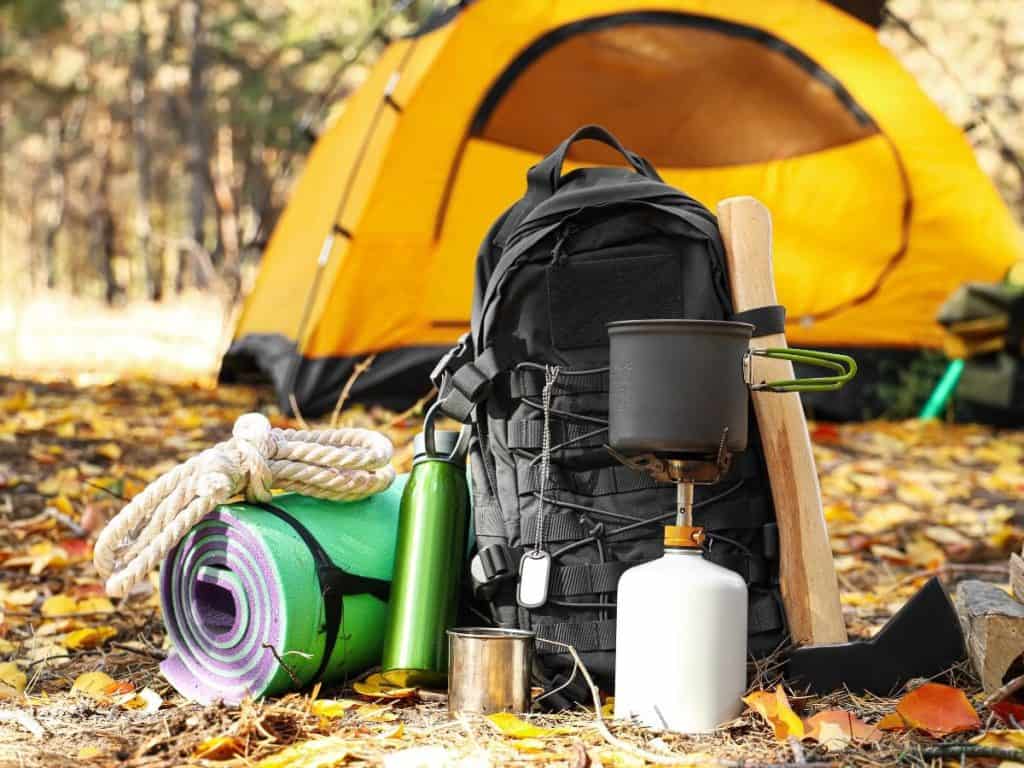
The first thing we looked at was real-world reliability. A camping stove should light easily, burn consistently, and keep working even when conditions aren’t perfect (when camping in the rain for example!). That matters far more than saving a few grams or squeezing out an extra percentage point of efficiency. If a stove is temperamental, needs constant fiddling, or feels fragile, it quickly stops being something you trust and starts being something you tolerate.
Availability also matters, especially in a global buying guide. The best camping stove in the world isn’t much use if it’s impossible to buy outside one country or relies on fuel you can’t easily replace. We’ve focused on models that are widely available in the UK, Europe, and the US, and that use fuel types most campers can actually find without hunting through specialist shops.
Weight is important too, but only in context. For backpackers and lightweight campers, shaving grams makes sense. For car camping or short walks from the car, stability and cooking space often matter more. Rather than ranking everything by weight alone, we’ve looked at how each stove fits different styles of camping, so you’re not pushed toward something that doesn’t suit the way you travel.
Ease of use is another big one. Some stoves are technically impressive but make simple tasks harder than they need to be. We’ve favoured camping stoves that are straightforward to set up, easy to pack away, and don’t require a learning curve just to boil water. When it’s raining, windy, or late in the day, simplicity wins every time.
Finally, we’ve avoided anything that feels disposable or poorly made. A good camping stove should last for years, not a single season. Build quality, sensible design, and replaceable parts all matter more than flashy features you’ll forget about once you’re out in the field.
With that in mind, the sections below break down the best camping stoves for 2026 by how people actually camp, starting with the option that suits the widest range of trips.
Best Overall Camping Stove for Most People
Most camping trips don’t start with a carefully planned menu or a perfect cooking setup. They start with you arriving tired, hungry, and wanting something warm without any drama. In that moment, the best camping stove for most people is the one that comes out of the bag, lights straight away, and gets on with the job. That’s where simple gas stoves still shine, and why they continue to be the safest all-round choice for so many campers in 2026.
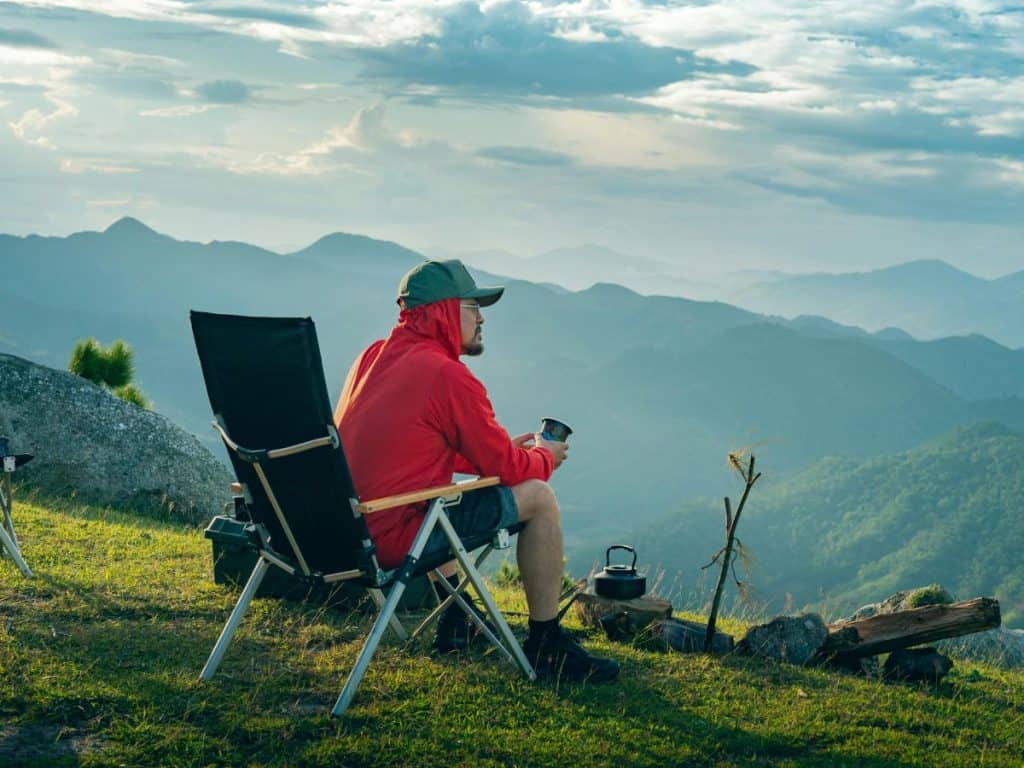
A stove like the MSR PocketRocket 2 sits right in that sweet spot. It’s light enough for backpacking, stable enough for campsite cooking, and simple enough that you don’t have to relearn how to use it every trip. Screw it onto a canister, light it, and you’re cooking. That reliability is exactly why it’s so often recommended, not because it’s exciting, but because it quietly does its job without creating problems.
What makes this style of stove work so well is the balance. You get fast boil times without excessive fuel use, enough flame control to cook something more involved than dehydrated meals, and a setup that packs down small enough to disappear into a side pocket. It’s also compatible with standard gas canisters you can find across the UK, Europe, and the US, which matters far more than people realise until they’re trying to replace fuel mid-trip.
There are plenty of similar alternatives that sit in the same category and perform just as well. The Fire Maple FMS-300T is a popular choice if you want something even lighter, while stoves from Jetboil trade a bit of weight for integrated systems that excel at quick, efficient boiling. All of them work on the same basic principle, and all of them suit people who want a portable camping stove that doesn’t overcomplicate things.
The reason this category wins for most campers is flexibility. You can take it on a lightweight backpacking trip, use it for car camping, or throw it in a rucksack for a quick overnight without feeling like you’ve chosen the wrong tool. It won’t be perfect for every situation, but it’s good enough for almost all of them, which is usually what people actually need.
Best Lightweight and Backpacking Camping Stove
When you’re carrying everything on your back all day, every ounce of extra weight starts to feel personal. This is where backpacking stoves come into their own, because the goal isn’t versatility, it’s efficiency. You want something that boils water reliably, packs down tiny, and disappears into your kit without making itself known every time you shoulder your pack.
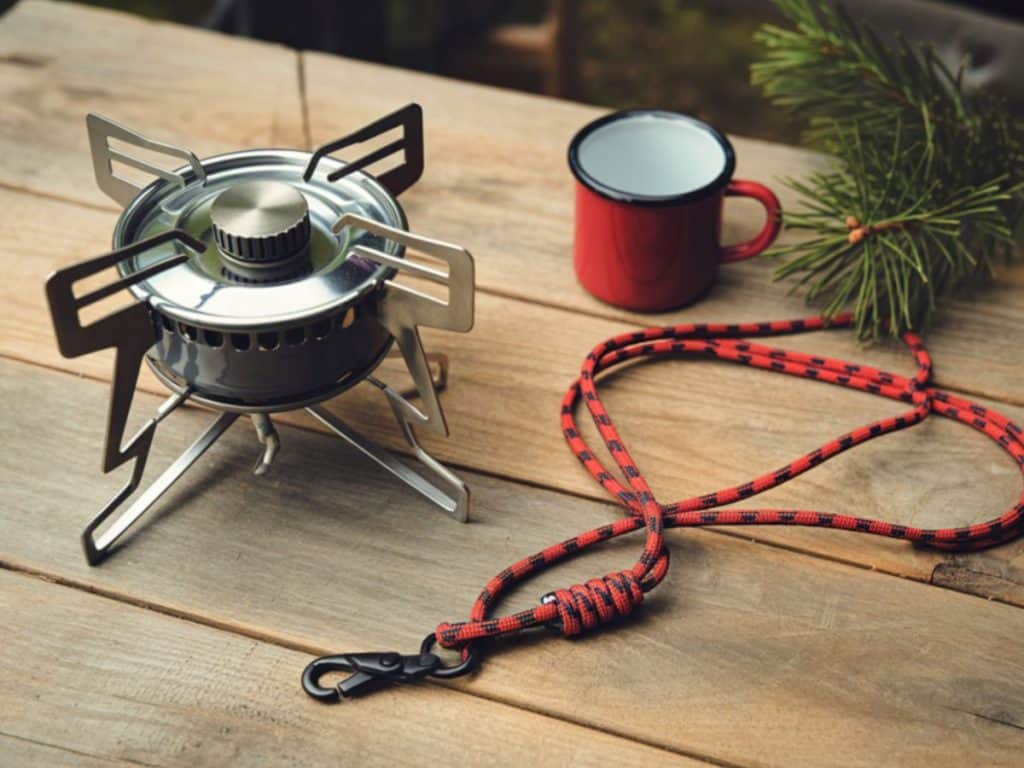
Stoves like the BRS BRS-3000T have become popular for exactly this reason. They weigh next to nothing, take up almost no space, and do one job very well. There’s no built-in wind protection, no fancy flame control, and no illusions about gourmet cooking. You screw it on, light it, and boil water. For solo backpackers or lightweight campers who keep meals simple, that’s often all you need.
A slightly more forgiving option is something like the Soto WindMaster, which adds better wind resistance and more stable pot support without becoming bulky. It costs a bit more and weighs a little extra, but it rewards you with more consistent performance when conditions aren’t ideal, which matters once you move beyond calm summer evenings.
The trade-off with lightweight camping stoves is always control versus simplicity. Ultra-light burners save weight by stripping things back, which means you give up some stability and fine flame adjustment. That’s rarely a problem if you’re boiling water for dehydrated meals or hot drinks, but it’s worth knowing before you expect to simmer sauces or cook anything delicate.
Fuel choice also matters more here. Lightweight stoves usually pair with small gas canisters, which are easy to carry but don’t last forever. Planning meals and fuel carefully becomes part of the system, especially on longer trips where resupply isn’t guaranteed. This is where lightweight camping rewards a bit of thought rather than last-minute improvisation.
For people who hike long distances, camp solo, or simply want to keep their pack as lean as possible, this category makes a lot of sense. You give up a bit of flexibility, but in return you get a cooking setup that feels almost weightless on the trail.
From here, it makes sense to swing the other way and look at stoves designed for relaxed trips where weight matters less and cooking comfort matters more.
Best Budget Camping Stove (Simple, Reliable, and Cheap Enough)
If you’re shopping on a budget, the good news is that camping stoves are one of the areas where spending less doesn’t automatically mean suffering. You don’t need cutting-edge materials or clever engineering just to boil water or cook a basic meal, and some of the most dependable stoves out there are also the most affordable. The trick is knowing which corners you can safely cut and which ones are worth avoiding.
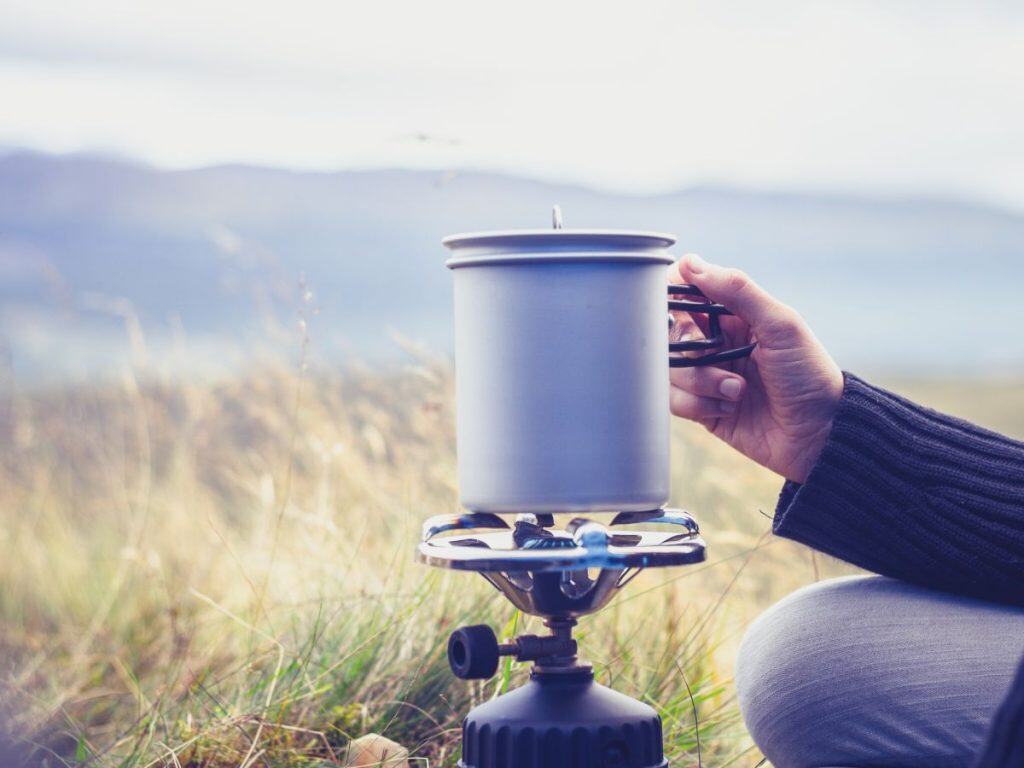
A good example is the Campingaz Bleuet Micro Plus. It’s small, inexpensive, and refreshingly straightforward. There’s no built-in wind protection and no luxury features, but it lights easily, runs on widely available gas canisters, and packs down small enough to throw into almost any bag. For solo campers, short trips, or anyone who just wants something reliable without paying extra for refinements they won’t use, it’s a solid choice.
If you want something cheaper and more portable, stoves from Decathlon under their Quechua or Forclaz ranges are well worth a look. They’re not glamorous, but they’re usually robust, easy to use, and backed by good availability across Europe and beyond. They also tend to be designed with beginners in mind, which means fewer fiddly parts and fewer ways to get things wrong when you’re tired or it’s raining.
Budget backpacking stoves exist too, but this is where it pays to be a little cautious. Ultra-cheap burners can work perfectly well, but quality control can be hit or miss, and stability is often the first thing to suffer. If you’re going this route, look for something with decent pot supports and simple controls rather than chasing the absolute lowest price. Saving a few pounds isn’t worth it if the stove feels sketchy every time you put a pan on it.
What budget stoves often lack is refinement rather than function. Flame control can be a bit coarse, wind resistance may be limited, and they’re rarely the most efficient with fuel. None of that is a deal breaker for casual trips or campsite cooking, but it’s worth knowing what you’re trading off. As long as you go in with realistic expectations, a budget camping stove can serve you perfectly well for years.
If you’re deliberately trying to keep costs down across your whole setup, this is also where choices start to link together. A cheaper stove paired with simple meals and basic cookware can work just as well as a premium setup if you’re not asking too much of it. We go into that mindset in more detail in our camping on a budget guide, which focuses on spending money where it actually makes a difference rather than everywhere at once.
Budget doesn’t have to mean compromise. It just means being honest about what you need. And for a lot of campers, a straightforward, affordable stove that works every time is more than enough.
Best Camping Stove When Weight and Space Aren’t a Factor
Once weight stops being the main concern, the priorities shift in a very noticeable way. For relaxed trips, short walks from the car, or campsite stays where you’re not counting grams, a good camping stove is less about disappearing into your pack and more about being stable, controllable, and easy to cook on without constant attention. This is where slightly larger stoves really start to earn their keep.
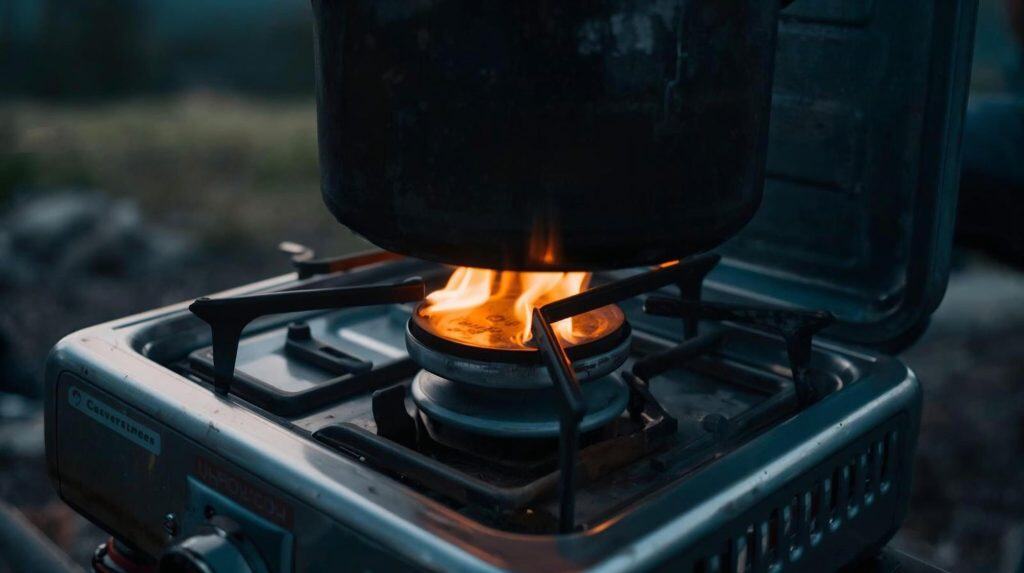
A stove like the Campingaz Camp Bistro 3 is a good example of what works well here. It’s not something you’d want to carry far, but that’s not the point. It’s solid, stable, easy to light, and gives you a wide, controllable flame that feels much closer to cooking at home than balancing a pot on a tiny burner. For campsite cooking, breakfasts, and anything that isn’t just boiling water, that extra control makes a big difference.
If you want something a little more compact but still comfortable to cook on, stoves like the Coleman Classic Camping Stove sit nicely in the middle ground. They’re designed to be used on picnic tables, tailgates, or flat ground, and they cope well with larger pans and longer cooking times. You don’t need to baby them, and you’re far less likely to knock something over mid-meal.
What really sets these stoves apart is stability. Larger burners, wider pot supports, and lower centres of gravity mean you can stir, flip, and adjust heat without feeling like you’re performing a balancing act. That’s especially welcome when you’re cooking for more than one person, or when the weather isn’t playing nicely and you want dinner done without stress.
Fuel choice is also simpler in this category. Cartridge-based systems are common, easy to replace, and widely available, which makes them ideal for casual trips where convenience matters more than efficiency. If you’re camping with friends or family, having a stove that anyone can use confidently is often more valuable than shaving a bit of weight.
These stoves suit trips where cooking is part of the enjoyment rather than a box to tick before crawling into a sleeping bag. If you like taking your time over meals, brewing coffee properly, or cooking something that doesn’t come out of a packet, this category makes far more sense than forcing a lightweight setup to do a job it was never designed for.
With that covered, there’s still one big factor that affects every stove choice, regardless of style or budget, and that’s fuel. Understanding how different fuel types behave will save you money, frustration, and a lot of guesswork.
Best Premium and No-Expense-Spared Camping Stoves
Most campers don’t need a premium camping stove, and that’s worth saying upfront. Budget and mid-range options already cover the basics extremely well. But if you camp often, enjoy cooking properly outdoors, or just like owning gear that feels genuinely well made, premium stoves start to make a lot more sense. What you’re paying for here isn’t novelty, it’s build quality, reliability in rough conditions, and a cooking experience that feels noticeably better and more controlled.
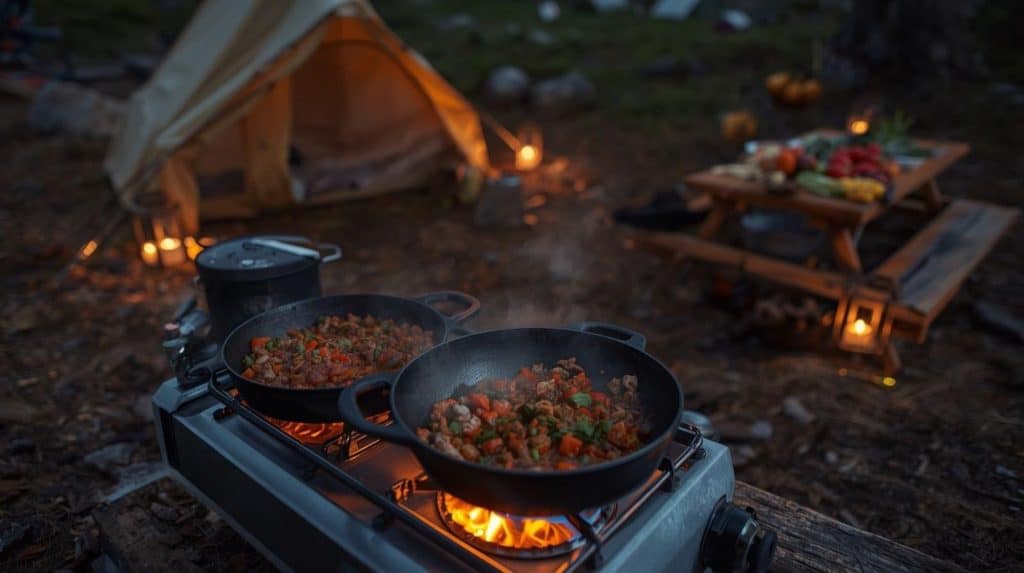
A good example of this category is the Primus Omnilite Ti. It’s a multi-fuel stove designed to work almost anywhere, from campsites to long, remote trips where fuel choice matters. It’s not the lightest option, and it’s certainly not cheap, but it’s incredibly versatile. The ability to run on different fuels, combined with excellent flame control and a solid, stable base, makes it a favourite for people who want one stove that can handle almost any situation without complaint.
Another premium option worth mentioning is the MSR WhisperLite Universal. It’s been around in various forms for years, and that longevity says a lot. This is a stove built for reliability rather than gimmicks. It performs well in cold weather, handles wind better than most small gas stoves, and feels reassuringly robust when everything else feels a bit fragile. It’s the sort of stove you buy once and then stop thinking about, because it just keeps working.
At the more comfort-focused end of the premium scale, integrated systems from brands like Jetboil come into their own. They’re not subtle, and they’re not especially light, but they excel at fast, efficient cooking with minimal effort. If your idea of a good morning includes coffee made quickly and reliably, even in poor weather, this style of stove earns its place. The higher price reflects how refined the whole system feels rather than raw performance numbers.
What all premium camping stoves have in common is confidence. They’re less fiddly, less temperamental, and far more forgiving when conditions aren’t ideal. You’re paying for materials that last, designs that have been refined over years, and a level of consistency that cheaper stoves sometimes struggle to match.
That doesn’t mean everyone should rush out and buy one. For many people, these stoves are overkill. But if you camp frequently, cook more than just basic meals, or head out in colder or more unpredictable conditions, a premium stove can quietly improve every trip without ever drawing attention to itself.
With that covered, the final piece of the puzzle is understanding fuel, because even the best camping stove in the world is only as useful as what you’re feeding it.
Camping Stove Fuel Types Explained (Without the Headache)
Once you start comparing camping stoves, fuel types are usually where things get confusing. It can feel like there are endless options, all with their own pros, cons, and strong opinions attached. In reality, most campers only need a basic understanding of how each fuel behaves and what it’s best suited for, because the right choice is usually obvious once you think about how and where you camp.
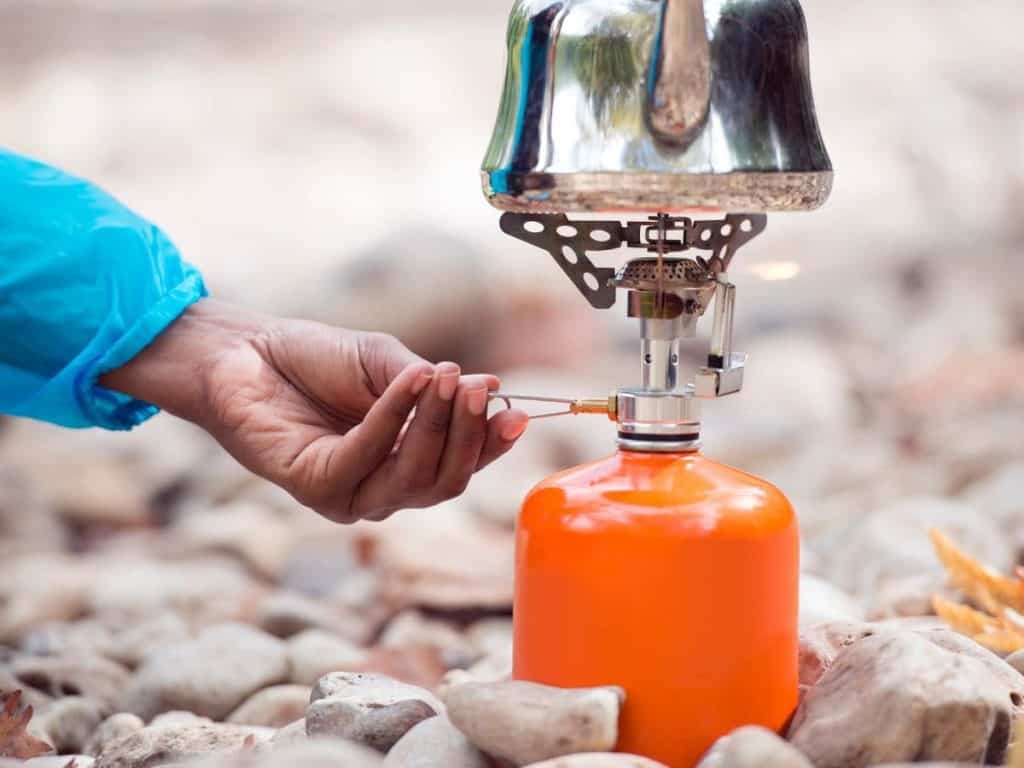
Gas canisters are by far the most common option, and for good reason. They’re easy to use, widely available, and require almost no effort beyond screwing the stove on and lighting it. For most people camping in the UK, Europe, or North America, gas is the simplest and least stressful choice. Flame control is good, setup is quick, and there’s very little that can go wrong. The main downsides are cold-weather performance and waste, which is why it’s worth knowing how to dispose of them properly. If you haven’t already, our guide on can camping gas canisters be recycled explains what you can and can’t do once they’re empty.
Liquid fuel stoves are a different beast altogether. They’re heavier, more involved to use, and far less forgiving if you’re new to them, but they shine in colder conditions and remote areas. Liquid fuel is often easier to find globally, performs better in low temperatures, and works well at altitude. This makes it popular with expedition-style campers and people who want one stove that can run almost anywhere. The trade-off is complexity. You need to prime the stove, manage fuel carefully, and accept that cooking becomes a slightly more hands-on process.
Alcohol stoves appeal to minimalist and lightweight campers who value simplicity over speed. They’re extremely light, quiet, and mechanically simple, with almost nothing to break. The downside is that they’re slow, offer very little flame control, and don’t perform well in wind or cold unless you’re careful with setup. They work best for solo trips with simple meals, where boiling water is the main goal rather than cooking properly.
Solid fuel stoves sit at the very basic end of the scale. They’re small, cheap, and reliable, but also slow and limited. Fuel tablets don’t burn particularly hot, they smell unpleasant, and cooking anything beyond basic meals can feel like hard work. They’re best viewed as backup options or emergency solutions rather than a main cooking system for most trips.
The key thing to remember is that fuel choice doesn’t need to be perfect, it just needs to be appropriate. Gas suits the majority of campers because it’s convenient and predictable. Liquid fuel suits harsher conditions and longer trips. Alcohol and solid fuel suit simplicity and weight-saving. Once you know which camp you fall into, a lot of the confusion disappears.
With fuel out of the way, the final step is pulling everything together and thinking about what actually matters when you’re choosing a camping stove, rather than getting lost in specs and comparisons.
What to Think About Before Buying a Camping Stove
By the time you’ve looked at stove styles, fuel types, and a few specific models, it’s easy to feel like you should now have a clear answer, and sometimes you do. Other times, you’re left with two or three options that all seem fine, which is usually where overthinking creeps in. This is the point where it helps to step back and think about how you actually camp, rather than how you imagine yourself camping on your best day.

The first thing to be honest about is how far you carry your gear. If most of your trips involve walking a long way with everything on your back, weight and pack size matter whether you like it or not. In that case, a compact stove that boils water efficiently will almost always be the right call, even if it feels a bit basic. If your trips are shorter, or you’re camping close to the car, those constraints loosen quickly and comfort starts to matter more than grams.
Next, think about what you actually cook. A lot of people buy stoves capable of far more than they ever use. If most meals are hot drinks, simple breakfasts, and evening boil-ups, you don’t need perfect flame control or a massive burner. If you enjoy cooking properly outdoors, with frying, simmering, or cooking for more than one person, stability and control suddenly matter far more than raw power or speed.
Weather also plays a bigger role than many people expect. A stove that feels fine on a calm summer evening can become frustrating once wind and rain show up. If you regularly camp in poor conditions, it’s worth prioritising stoves that cope well when things aren’t ideal.
Fuel availability is another quiet but important factor. Gas is easy and widely available, but not all canisters are the same, and availability can vary depending on where you’re travelling. Multi-fuel stoves offer flexibility, but only make sense if you actually need that flexibility. If you mostly camp locally or in well-served areas, simpler fuel systems are often the least stressful option.
Finally, think about how often you camp. If this is an occasional hobby, there’s no need to chase perfection. A solid, mid-range stove will do everything you need and then some. If you’re out regularly, in different seasons, or on longer trips, spending a bit more on something reliable and well-built often pays off quietly over time.
A good camping stove doesn’t need to impress anyone. It just needs to work when you’re hungry, tired, or cold, and once you choose with that mindset, the right option usually becomes obvious.
Camping Stove FAQs
Are camping stoves actually safe to use?
Camping stoves are safe when they’re used properly, but like anything involving heat and fuel, they reward a bit of care. Most accidents happen when stoves are used on uneven ground, too close to tents, or without enough ventilation. A stable surface, clear space around the burner, and never cooking inside an enclosed tent make a huge difference.
If you’re ever unsure, it’s worth following basic outdoor cooking safety advice rather than improvising. Organisations like the UK Fire Service regularly publish guidance on safe outdoor cooking, which is a sensible reference point rather than relying on guesswork.
Can you use a camping stove in the rain or wind?
Yes, but conditions matter. Light rain isn’t usually a problem, especially with gas stoves, as long as the burner stays dry and sheltered. Wind is the bigger challenge, because it robs heat and makes cooking inefficient or frustrating. This is where wind resistance and sensible positioning matter more than raw power.
If wet weather is common on your trips, it’s worth revisiting our guide on camping in the rain, because stove choice and setup play a bigger role in bad conditions than people expect.
Can you cook inside a tent with a camping stove?
Short answer, no. Cooking inside a tent is dangerous due to fire risk and carbon monoxide buildup, even with doors open. Many accidents happen this way, often when people are trying to shelter from bad weather.
If rain forces you to cook close to shelter, cook outside with good airflow, keep the stove well away from fabric, and never leave it unattended. Convenience isn’t worth the risk.
Can you take a camping stove on a plane?
Stoves themselves are usually fine if they’re completely clean and free from fuel residue, but fuel is a different story. Gas canisters are not allowed on planes at all, and liquid fuel stoves need to be thoroughly cleaned and aired before flying.
Airline rules vary, but this is one area where checking official guidance matters. The CAA’s dangerous goods guidance is a reliable reference before you travel, especially if you’re flying internationally.
Do camping stoves work in cold weather?
Some do, some struggle. Gas stoves can lose efficiency in colder temperatures, especially below freezing, while liquid fuel stoves tend to perform far better in cold and at altitude. Integrated systems and regulated burners can help gas perform better, but they don’t eliminate the issue entirely.
If you regularly camp outside summer conditions, this is one of the biggest factors to consider when choosing a stove.
How long does a camping gas canister last?
That depends on the size of the canister, the stove’s efficiency, and how you cook. Boiling water uses far less fuel than simmering or frying, and wind can dramatically increase consumption. For most casual trips, a single standard canister is enough for a weekend if meals are simple.
Is a more expensive camping stove always better?
Not necessarily. Expensive stoves usually offer better materials, smoother flame control, and improved performance in tough conditions, but they don’t automatically suit everyone. If your trips are short, infrequent, or fair-weather focused, a mid-range or budget stove may serve you just as well.
The best stove is the one that fits how you camp, not the one with the highest price tag.
What’s the biggest mistake people make when buying a camping stove?
Buying for an imagined version of themselves rather than how they actually camp. People often overbuy power, features, or versatility they’ll never use, and underbuy simplicity and reliability. A stove that feels boring but dependable often ends up being the one that gets used trip after trip.
Final Thoughts: Choosing a Camping Stove You’ll Actually Enjoy Using
By this point, it should be clear that finding the best camping stove in 2026 isn’t about chasing the most powerful burner or the lightest spec on paper. It’s about choosing something that fits the way you camp and quietly does its job without becoming the centre of attention. A good stove fades into the background. It lights when you need it, cooks what you expect it to cook, and lets you get on with enjoying being outdoors rather than managing equipment.
For some people, that means a lightweight stove that disappears into a pack and boils water quickly at the end of a long walk. For others, it’s a sturdier setup that makes campsite cooking feel relaxed and unhurried. And for many, it’s a simple, affordable option that works reliably without needing much thought. None of those choices are better or worse, they’re just different ways of solving the same problem.
If there’s one thing worth taking away, it’s this. Buy for the trips you actually take, not the ones you imagine yourself taking one day. Think about how far you carry your gear, what you like to eat, and the conditions you usually camp in. Once you’re honest about that, the right camping stove tends to stand out very quickly.
A stove doesn’t need to impress anyone. It just needs to make hot food and drinks feel easy, even when the weather isn’t playing along or the day has taken more out of you than expected. Get that part right, and everything else tends to fall into place.
If you want to keep building a setup that suits your style of camping, take a look through our other guides on choosing the right sleeping bag and essential camping gear. They’re all written with the same idea in mind, helping you spend less time worrying about gear and more time enjoying being outside.
And when your stove quietly does its thing while you sit back with a hot drink, that’s usually when you know you chose well.
