
There’s a particular kind of optimism that comes with putting on a fresh pair of hiking boots.
You lace them up, stand there for a moment, and think, yes… these are going to take me places. Hills, forests, maybe somewhere with a nice view and a flask of something warm at the top.
And then, about twenty minutes into the walk, the shooting pain in your heel is ruining your life.
It usually begins as a small, almost polite irritation. A slight rubbing. Nothing dramatic. Easy to ignore.
Until it isn’t.
By the time you properly notice it, every step feels like your boot has developed a personal grudge against the back of your foot.
If that sounds familiar, you’re not alone – and more importantly, it’s not something you just have to “put up with.”
Quick Answer: Why your heels hurt in hiking boots
Heel pain in hiking boots is usually caused by movement and friction at the back of your foot, often due to poor fit, heel slip, stiff materials, or the wrong socks. As your heel lifts or shifts inside the boot, it creates repeated rubbing, which quickly turns into soreness, hotspots, or blisters.
The good news is that in most cases, this isn’t a serious problem; it’s a fixable one.
And once you understand what’s actually causing it, the solution is often surprisingly simple.
The most common causes (in plain English)
If your heels are hurting in hiking boots, it’s almost always one of these:
- Your heel is lifting slightly as you walk, creating friction
- The boots are a bit too big (even if they don’t feel like it)
- The material is too stiff and hasn’t broken in yet
- Your socks aren’t doing you any favours
- A small hotspot has quietly turned into something far more aggressive
The tricky part is that these can feel very similar when you’re out on the trail.
But the fix depends on knowing which one you’re dealing with.
Before you blame the boots…
Here’s the slightly frustrating truth.
It’s not always the boots.
Sometimes it’s how they’re laced. Sometimes it’s the socks. Sometimes it’s just that your heel is moving a few millimetres more than it should – which is all it takes.
The good news is that you usually don’t need to rush out and buy a new pair.
Most heel pain problems can be fixed with a few small adjustments, once you know where to look.
What we’ll do in this guide
We’ll keep this simple.
First, we’ll break down the real reasons your heels hurt, without the usual vague advice.
Then we’ll go through a quick way to figure out exactly which problem you’ve got.
And finally, we’ll walk through practical fixes that actually work, so you can get back to walking without thinking about your feet every five seconds.
Because once your heels stop hurting, hiking becomes what it was supposed to be in the first place.
Quiet. Easy. Enjoyable.
And not a slow, painful negotiation between you and your footwear.
Contents
- The Real Reason Your Heels Hurt in Hiking Boots
- How to Tell What’s Causing Your Heel Pain (Without Guessing)
- How to Fix Heel Pain in Hiking Boots
- When It’s Not Fixable (And You Need New Boots)
- Common Mistakes That Make Heel Pain Worse
- Frequently Asked Questions
- Final Thoughts
The Real Reason Your Heels Hurt in Hiking Boots
Heel pain rarely shows up for no reason.
It’s usually the result of something small going slightly wrong, over and over again, until your heel decides it’s had enough and starts making formal complaints.
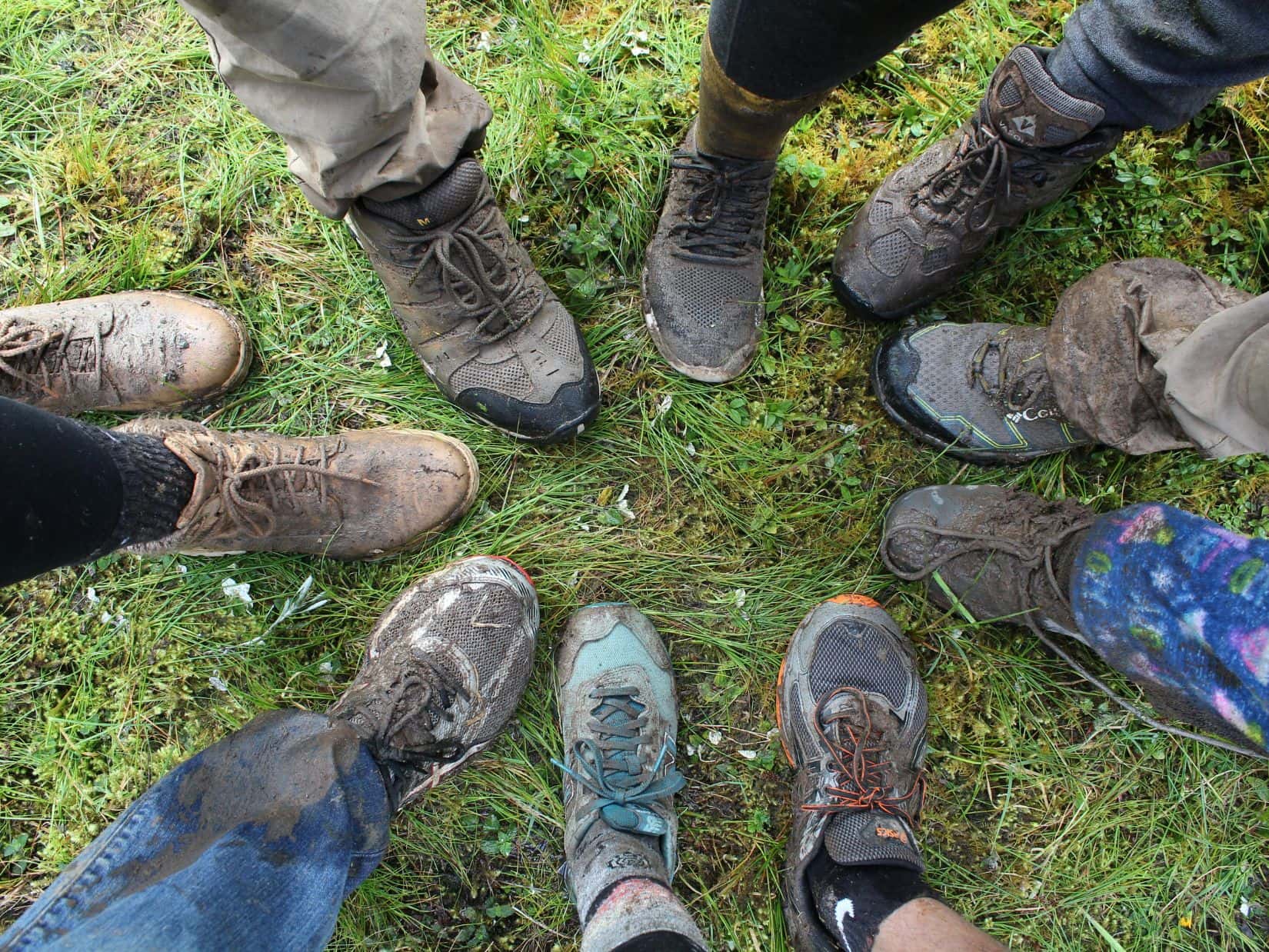
The tricky part is that most of these issues feel very similar when you’re walking. A bit of rubbing is just… rubbing, isn’t it?
Not quite.
Each cause behaves slightly differently, and once you spot the difference, the fix becomes much more obvious.
Heel Slip (The Most Common Culprit)
If there’s one thing that causes heel pain more than anything else, it’s this.
Your heel is lifting (just slightly) every time you take a step.
Not enough to feel noticeable. Not enough to immediately scream “this boot doesn’t fit.” But enough to create a tiny bit of movement inside the boot.
And that movement, repeated a few thousand times, turns into friction.
Friction turns into irritation.
And irritation, given enough time and stubbornness, turns into a blister that will absolutely ruin your day.
The frustrating part is that heel slip often hides in otherwise “comfortable” boots. They can feel fine when you’re standing still, but the moment you start walking, your heel begins that subtle up-and-down motion.
You don’t need much movement for this to become a problem. A few millimetres is plenty.
Boots That Don’t Quite Fit (Even If They Feel Fine)
This is where things get slightly deceptive.
A boot can feel comfortable when you first try it on and still be the wrong fit for your foot.
If it’s slightly too big, your heel has room to move. If it’s slightly too small or narrow, pressure builds in places it shouldn’t, which can also lead to pain at the back of the foot.
The issue is that most people judge fit while standing still in a shop, not while walking downhill on uneven ground, which is when your feet start sliding forward and your heels start doing things they weren’t designed to do.
A proper fit should hold your heel securely in place without feeling tight or restrictive.
If your heel feels like it’s negotiating its position inside the boot as you walk, something’s off.
Stiff, Unbroken-In Boots
New boots have a certain enthusiasm to them.
Unfortunately, that enthusiasm often comes in the form of stiffness.
Materials, especially leather, don’t always flex naturally straight out of the box. Instead, they resist movement slightly, and that resistance can create pressure and rubbing in specific spots, including the heel.
Over time, the boot softens, adjusts, and becomes far more agreeable.
But if you go straight into a long walk without giving them a chance to break in, your heels tend to pay the price.
This is one of those problems that often improves on its own — but only if you approach it sensibly rather than marching off for ten miles on day one.
The Wrong Socks (More Important Than People Think)
Socks are one of those things people don’t think about until something goes wrong.
Then suddenly they matter quite a lot.
Thin cotton socks, for example, tend to hold moisture and offer very little cushioning. That combination is ideal if your goal is to create friction.
Proper hiking socks, on the other hand, are designed to reduce rubbing, manage moisture, and add a bit of protection where you need it most.
If your boots are only slightly off in terms of fit, the right socks can often make the difference between a comfortable walk and a miserable one.
It’s not the most exciting fix, but it’s often one of the most effective.
Hotspots That Turn Into Something Worse
Heel pain doesn’t always appear suddenly.
More often, it starts as a hotspot – a small area that feels warmer, slightly irritated, maybe a bit sensitive.
Easy to ignore.
Very easy to ignore, in fact.
The problem is that a hotspot is basically your foot giving you an early warning. It’s telling you that friction is building and something needs adjusting.
If nothing changes, that small patch of irritation gradually escalates into something far more unpleasant.
By the time it becomes properly painful, the damage is usually already done.
Catching it early is one of the simplest ways to avoid the whole situation.
Why This Matters
All of these causes come back to the same underlying issue – movement where there shouldn’t be movement, or pressure where there shouldn’t be pressure.
That’s it.
Once you understand that, the whole problem becomes much easier to deal with.
Because instead of guessing, you can start to pinpoint exactly what’s going on, and fix the right thing.
Next, we’ll make that even easier.
We’ll look at how to quickly figure out which of these is actually causing your heel pain, so you’re not trying random fixes and hoping something works.
How to Tell What’s Causing Your Heel Pain (Without Guessing)
This is the part most guides skip.
They list a few possible causes, throw in some generic advice, and leave you to figure it out somewhere halfway up a hill while your heel is falling apart.
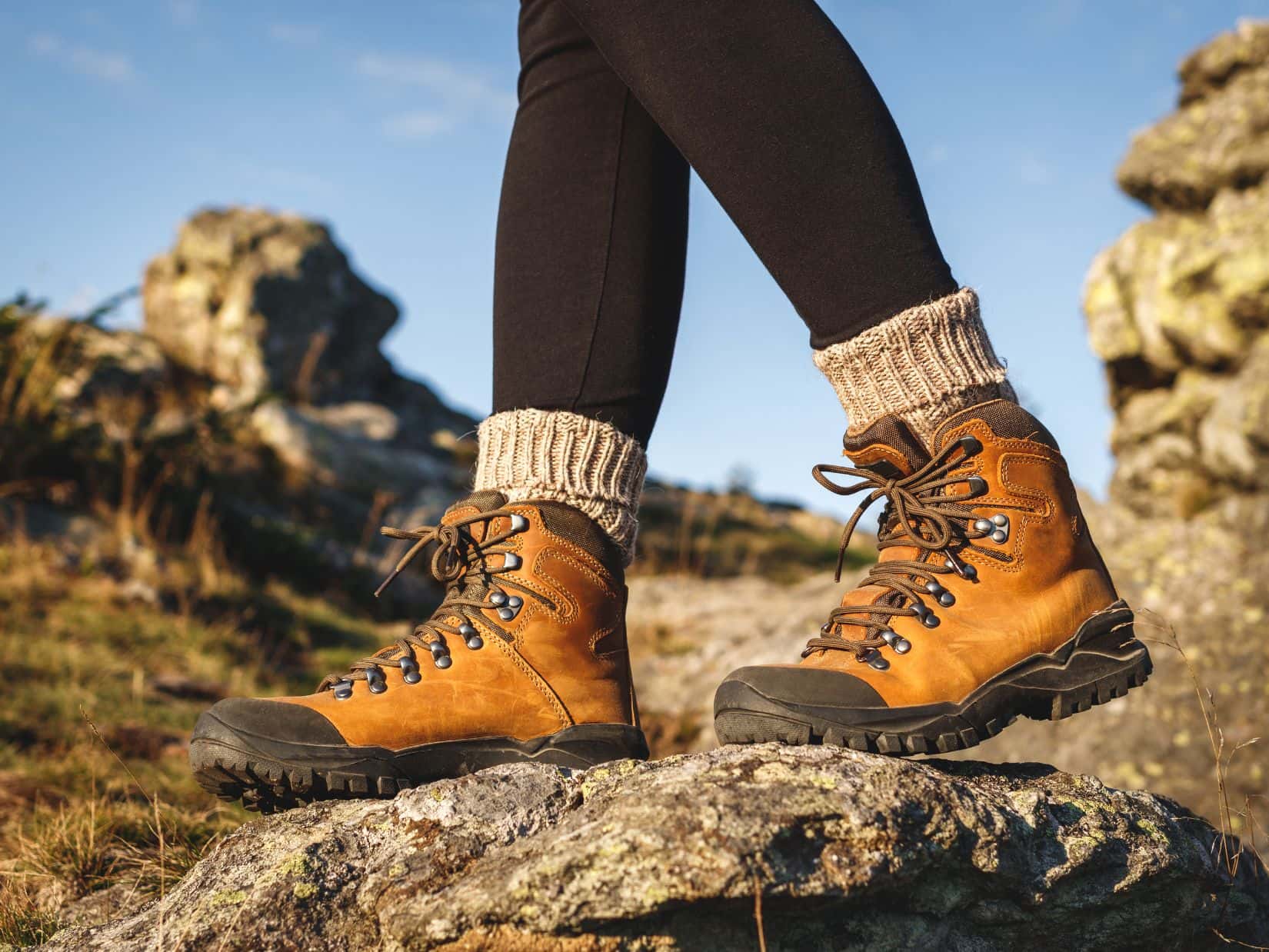
It doesn’t need to be that complicated.
Heel pain usually follows a pattern. If you pay attention to how it feels, and when it shows up, you can narrow it down pretty quickly.
If your heel lifts slightly as you walk…
You’ll notice a subtle up-and-down movement with each step. It might be barely noticeable, just enough to feel like your foot isn’t completely “locked in.”
It often feels fine at first, then gradually turns into rubbing.
This is almost always heel slip.
If it feels like a burning or rubbing in one exact spot…
It’s very localised. You could probably point to it with your finger.
It starts mildly, then gets sharper as you keep walking.
This is a hotspot caused by friction.
If it feels like a dull ache or pressure at the back of your heel…
Less rubbing, more of a deep discomfort.
Often worse when going downhill, when your foot slides forward slightly inside the boot.
This is usually a fit issue or internal pressure problem.
If it only happens with new boots…
And gradually improves over time (or at least changes slightly)
You’re likely dealing with stiff, unbroken-in boots
If it seems random… but gets worse the longer you walk
Starts as “nothing”, becomes “annoying”, and ends as “I would quite like to stop now”.
That’s usually a combination of small issues building up, often including socks, fit, and movement.
A Quick Reality Check (From Experience)
I learned this the painful way.
I once bought a pair of hiking boots that felt perfect in the shop. Walked around in them, stood on the little ramp thing they sometimes have, convinced myself I’d made an excellent decision.
Took them out for a proper walk not long after.
About half an hour in, I noticed a bit of rubbing on my heel. Nothing major. The sort of thing you ignore because stopping to deal with it feels unnecessary at the time.
Another half an hour later, I was very aware of it.
By the time I got back, I had a blister that made every step feel like I’d taped a small, angry marble to the back of my foot.
The boots weren’t terrible, and they weren’t even that badly fitted.
My heel was just moving slightly more than it should have been.
A tiny issue, repeated enough times, turned into something that completely dominated the walk.
And that’s usually how this goes.
The Good News
Once you’ve got a rough idea of what’s causing the problem, you’re no longer guessing.
You’re not trying random fixes.
You’re just making small adjustments to stop either:
- movement
- or pressure
Which is all this really comes down to.
How to Fix Heel Pain in Hiking Boots
Now we can actually do something about it.
And in most cases, you won’t need new boots.
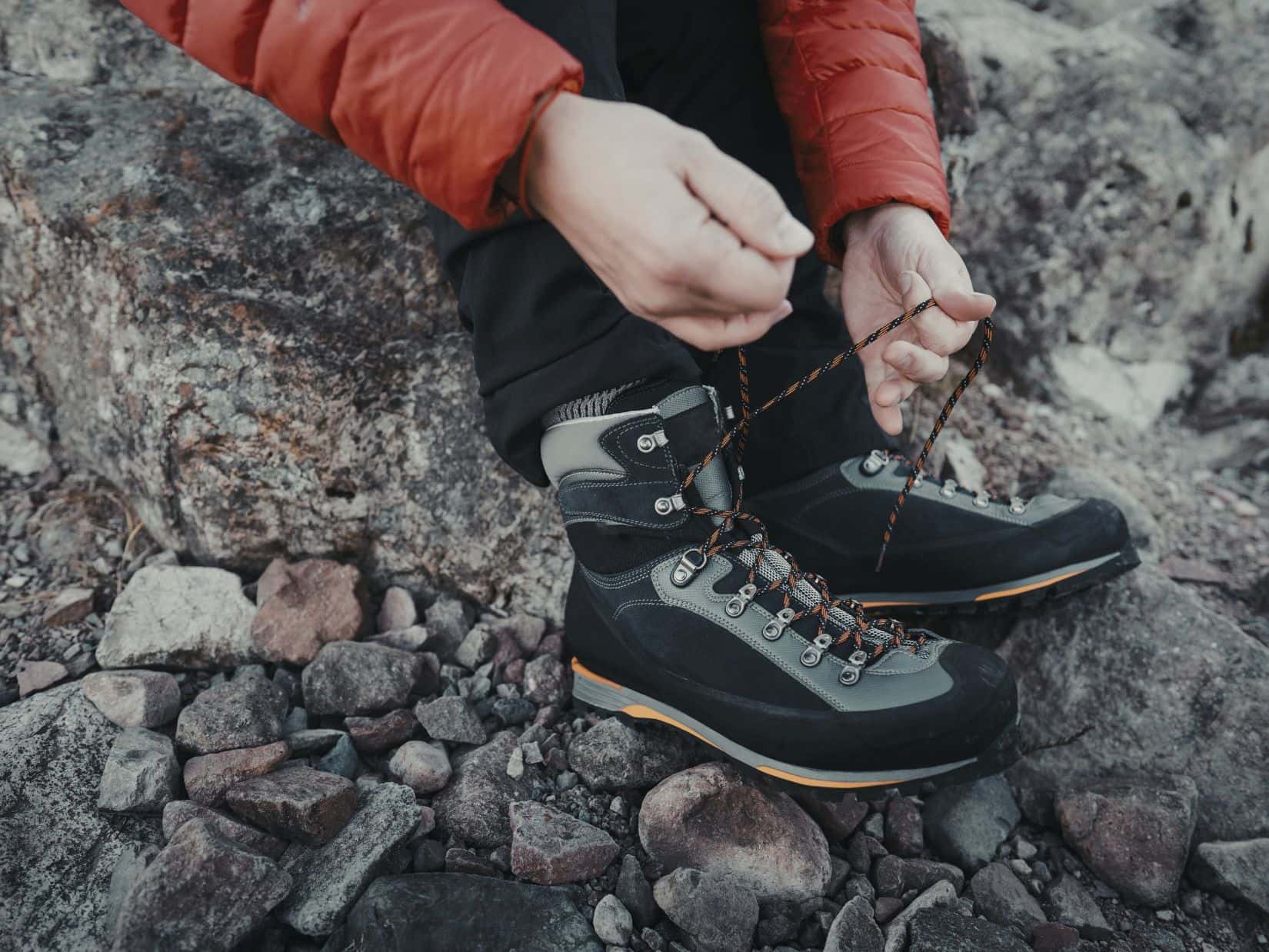
You just need to stop your heel doing what it’s currently doing.
Fix Heel Slip (The One That Solves Most Problems)
If your heel is lifting, even slightly, this is the first thing to fix.
Because as long as that movement is there, the friction won’t go away.
The simplest and most effective way to deal with it is adjusting how your boots are laced.
A lot of people lace their boots evenly all the way up, which feels fine, but doesn’t really lock the heel in place.
What you want instead is a heel lock.
This creates extra tension around the ankle, holding your heel down without crushing the front of your foot.
It sounds technical, but it’s just a small change in how you lace the top section of your boots.
Once it’s done properly, you’ll usually notice the difference almost immediately.
Improve the Fit (Without Buying New Boots)
If your boots are slightly too roomy, you can often fix it without replacing them.
A few small adjustments can make a surprising difference:
- A slightly thicker pair of hiking socks
- Adding a supportive insole
- Using a volume reducer to take up extra space
The goal isn’t to make the boot tight.
It’s to remove just enough space so your heel stops moving around.
That’s it.
Break Your Boots In Properly
If the issue is stiffness, the solution isn’t to push through it.
It’s to ease into it.
Short walks. Gradual use. Let the material soften and adapt.
Most boots become far more comfortable once they’ve had a bit of time to loosen up.
Trying to rush that process usually just leads to sore feet and regret.
Sort Your Socks Out
This is one of those fixes that feels almost too simple.
But it matters.
A proper pair of hiking socks can:
- reduce friction
- manage moisture
- add cushioning in the right places
If you’re currently using thin cotton socks, switching to proper hiking socks can make a noticeable difference straight away.
Deal With Hotspots Early (This Changes Everything)
If you feel a hotspot starting, don’t ignore it.
That’s the moment you can prevent the entire problem.
Stop. Adjust your laces. Change your socks if needed. Add a bit of protection.
Because once it turns into a blister, you’re no longer fixing the problem – you’re just managing the damage.
Where We Go Next
At this point, you’ve got two things:
- A clear idea of what’s causing the pain
- A set of practical ways to fix it
Next, we’ll look at the situations where none of this quite works – and how to tell when it’s actually time to rethink your boots entirely.
Because sometimes, despite your best efforts, the problem isn’t small.
And it’s better to recognise that early than keep trying to force something that isn’t quite right.
When It’s Not Fixable (And You Need New Boots)
Most heel pain problems can be sorted with a few small adjustments.
That’s the good news.
The slightly less convenient news is that sometimes… they can’t.
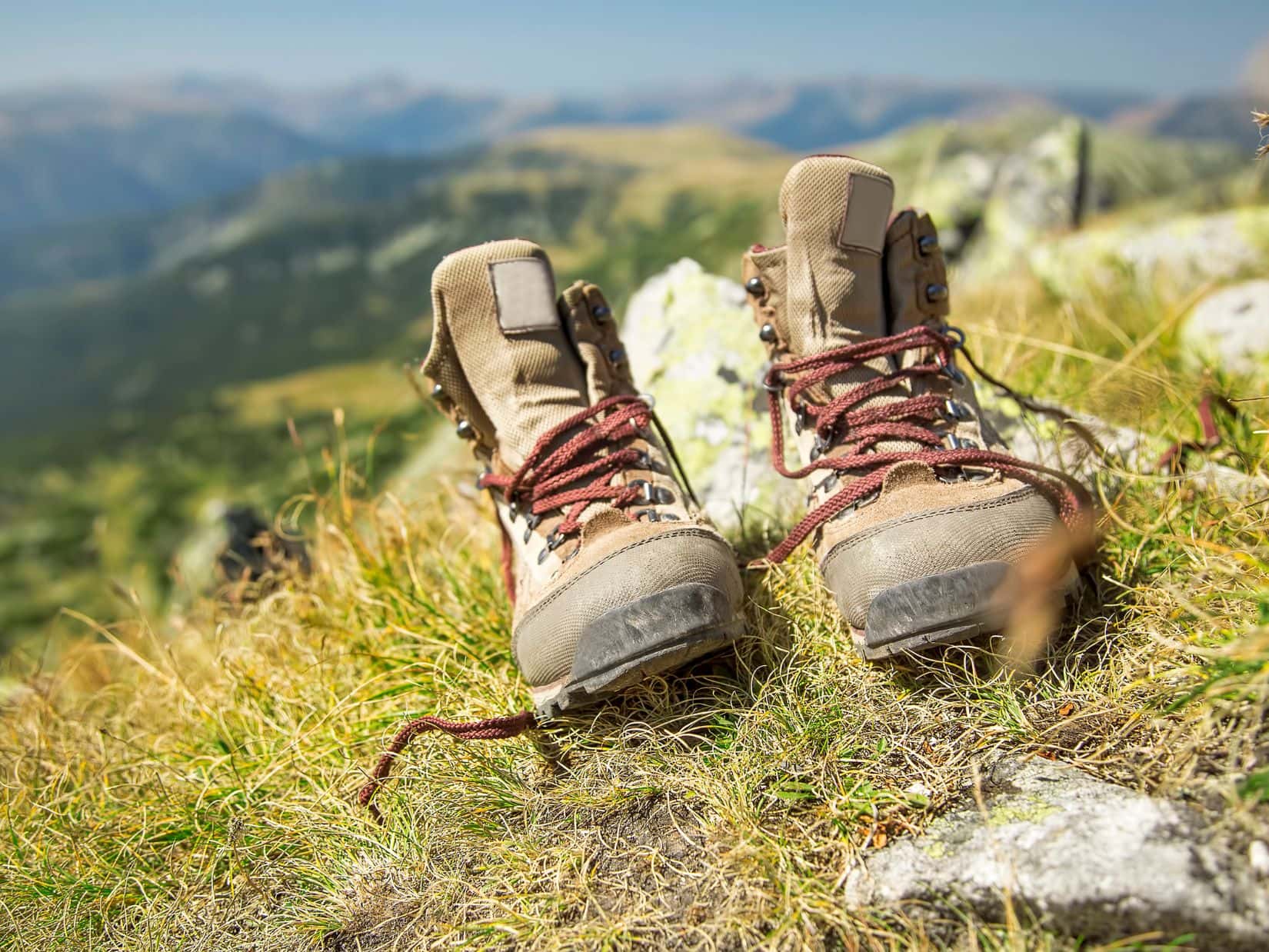
Not because you’ve done anything wrong, or because you haven’t tried hard enough, but because the boot simply isn’t right for your foot.
And once that’s the case, you can tweak laces, change socks, and experiment with insoles as much as you like, but the problem never quite goes away.
It just becomes something you manage rather than fix.
Your Heel Never Feels Secure (No Matter What You Try)
If your heel continues to lift, even after adjusting your lacing properly and trying thicker socks or insoles, that’s usually a sign the boot shape doesn’t match your foot.
Some boots have a wider heel cup.
Some are narrower and more structured.
If yours doesn’t hold your heel naturally in place, there’s only so much you can do.
You might improve it slightly, but you won’t eliminate the movement completely.
And if the movement’s still there, the friction will be too.
You Keep Getting Blisters in the Same Spot
This is one of the clearest signs.
If the exact same area on your heel keeps getting irritated every time you walk, despite trying different fixes, it usually means the boot is creating pressure or movement in that specific point.
Your foot and the boot just aren’t getting along.
At that stage, it’s less about adjustment and more about acceptance.
The Pain Shows Up Early, Every Time
If your heel starts hurting within the first 10–15 minutes of walking, and it happens consistently, that’s not a break-in issue.
That’s a mismatch.
Well-fitting boots tend to feel neutral at the start and gradually adapt to your movement.
Poorly matched boots make themselves known almost immediately.
You’re Constantly “Managing” the Problem
If every walk involves:
- adjusting your socks
- re-lacing your boots halfway through
- thinking about your heel far more than you’d like
Then something isn’t quite right.
Hiking shouldn’t feel like a maintenance routine.
Once your setup is dialled in, it should largely disappear into the background.
If it doesn’t, there’s usually a reason.
The Shape Just Doesn’t Suit Your Foot
This is the one people often overlook.
Feet aren’t standardised, and neither are boots.
Some brands suit wider feet, some suit narrow heels, some have more volume, some less.
You can have the “right size” and still have the wrong shape.
And unfortunately, shape matters just as much as size.
The Key Takeaway
If you’ve:
- sorted your lacing
- tried proper socks
- adjusted the fit
- given the boots time to break in
And your heel is still causing problems…
It’s probably not you.
It’s the boots.
And recognising that early can save you a lot of discomfort on future walks.
Common Mistakes That Make Heel Pain Worse
Before we wrap this up, it’s worth quickly covering a few things that tend to make the situation worse, often without people realising it.
Ignoring Early Warning Signs
That slight rubbing you noticed early on?
That was your opportunity.
Once it turns into a proper blister, you’re no longer preventing the problem – you’re dealing with the consequences.
Stopping early might feel unnecessary at the time, but it’s almost always worth it.
Over-Tightening the Entire Boot
It’s a natural reaction.
Something feels loose, so you tighten everything.
The problem is that this often creates pressure elsewhere, especially around your toes, while doing very little to properly lock your heel in place.
Targeted tension works better than just pulling everything tighter.
Wearing the Wrong Socks (and Hoping for the Best)
It’s easy to assume socks don’t matter much.
Until they do.
The wrong material or thickness can quietly undo everything else you’ve tried to fix.
Going Too Far, Too Soon in New Boots
New boots need time.
Not miles.
Jumping straight into a long walk before they’ve softened up is one of the quickest ways to create problems that didn’t need to exist.
Trying to “Push Through It”
This one rarely works.
Heel pain doesn’t usually settle down if you ignore it.
It tends to escalate.
And by the time it forces you to stop, you’re already dealing with something more difficult than it needed to be.
Frequently Asked Questions
Should hiking boots hurt your heels at first?
No, they shouldn’t.
New boots can feel slightly stiff, but they shouldn’t cause pain or rubbing straight away. If your heel is hurting early on, it’s usually a sign of movement, friction, or poor fit rather than something you need to “break through.”
A well-fitting boot should feel secure from the start, even if it softens over time.
How tight should hiking boots be around the heel?
Your heel should feel secure and stable, without lifting as you walk.
You shouldn’t feel pressure or pinching, but there should be very little movement. If your heel slides up and down even slightly, that’s where friction starts to build.
This is why lacing technique matters just as much as size.
Can insoles fix heel pain in hiking boots?
They can help, but only in certain situations.
If your boots are slightly too roomy, insoles can reduce internal space and improve stability. This can limit heel movement and reduce friction.
However, if the overall shape of the boot doesn’t suit your foot, insoles won’t completely solve the problem.
Why do my heels hurt more when walking downhill?
When you walk downhill, your foot naturally slides forward inside the boot.
If there’s any extra space or poor heel hold, this increases pressure and movement at the back of your foot, which can quickly lead to pain or blisters.
It’s often one of the easiest ways to expose a poor fit.
Are blisters inevitable when hiking?
Not at all.
Blisters are usually the result of unmanaged friction, not something that just “happens.”
With the right fit, proper socks, and a bit of attention to early hotspots, most people can hike comfortably without getting them.
For a deeper medical explanation of blisters and how friction affects the skin, the NHS has a clear and reliable guide.
What’s the quickest way to stop heel pain while hiking?
If you’re already out walking:
- Stop as soon as you feel a hotspot
- Adjust your lacing (focus on locking the heel)
- Check your socks for moisture or bunching
- Add protection if you have it (plasters, tape, etc.)
Acting early makes a huge difference.
When should I replace my hiking boots?
If you’ve:
- adjusted your lacing
- tried proper socks
- experimented with insoles
- and the problem keeps coming back
…it’s probably time.
At that point, it’s less about fixing the issue and more about recognising the boots aren’t quite right for your foot.
Final Thoughts
Heel pain in hiking boots is one of those problems that feels bigger than it is.
When it’s happening, it can dominate the entire walk. Every step becomes a reminder that something isn’t quite right.
But in most cases, it comes down to a handful of small, fixable issues.
A bit of movement. A bit of pressure. A setup that’s just slightly off.
Once you understand that, and make a few simple adjustments, things usually improve quickly.
And when they do, you stop thinking about your feet altogether.
Which is exactly how it should be.
Because the best walks are the ones where your boots quietly do their job… and stay out of the way.
